

Last Updated: October 24, 2026
Quick Summary
To choose a chemical peel for beginners, start with the mildest depth that still targets your concern: a superficial peel with a low acid concentration, matched to one specific skin concern. Pick salicylic acid for acne-prone skin or glycolic acid for dullness, and patch test 48 hours before use.
- Superficial peels remove only the top skin layer, with redness fading within hours.
- Glycolic acid suits normal to dry skin, while salicylic acid is best for oily, acne-prone skin.
- Stop retinoids and strong exfoliants two weeks before your peel.
- Wait five to seven days after a superficial peel before resuming actives.
- Skip at-home peels if pregnant, breastfeeding, or taking prescription retinoids.
Table of Contents
- Start With Depth: The Three Chemical Peel Types
- Match the Acid to Your Skin Concern and Skin Type
- The Best Chemical Peel for Beginners Is the Mildest One That Works
- Chemical Peel Preparation: What to Do Two Weeks Before
- Chemical Peel Recovery Time and What to Expect Day by Day
- At-Home Peel Safety, Patch Testing, and When to See a Professional
- Build Your First Peel Into an Ageless Glow Routine
- Frequently Asked Questions
Start With Depth: The Three Chemical Peel Types
Choosing a chemical peel for beginners comes down to one principle: start with the mildest depth that still targets your concern. Chemical peels fall into three categories, and each one carries a different level of strength and downtime.
A chemical peel is a skin resurfacing treatment that applies an acid solution to remove damaged outer layers and trigger skin renewal. Depth decides everything else: how much peeling you get, how long recovery takes, and who is a safe candidate.
Here is the breakdown:
- Superficial peel: light exfoliation, little to no downtime
- Medium peel: reaches deeper layers, causes visible peeling
- Deep peel: strong resurfacing, reserved for professional settings
Superficial and Light Peels
Superficial peels are the entry point for almost every beginner. They remove only the top layer of skin, so redness fades within hours. A light peel can improve dullness, uneven skin tone, and mild texture. The risk of side effects is low. If you have sensitive skin, this is where you begin.
Medium and Deep Peels
Medium peels use stronger acids to reach the dermis. You will see real peeling for several days. Deep peels go further still. For a first-timer, a medium or deep peel is rarely the right call. If you are still weighing your options, this overview of non-invasive skin rejuvenation for beginners can help you compare treatments before committing to a peel.
Match the Acid to Your Skin Concern and Skin Type
The acid matters as much as the depth. Each one targets a different skin concern, and your skin type decides how well you tolerate it. Matching the two is the whole game.
Glycolic, Salicylic, and TCA at a Glance
Here is how the three main acids compare for a beginner:
| Acid | Type | Best For | Beginner-Friendly? |
|---|---|---|---|
| Glycolic acid | Alpha hydroxy acid (AHA) | Dullness, fine lines, uneven tone | Yes, at low strength |
| Salicylic acid | Beta hydroxy acid (BHA) | Acne-prone skin, clogged pores | Yes, at low strength |
| Trichloroacetic acid (TCA) | Stronger resurfacing acid | Sun damage, deeper texture | No, professional only |
Glycolic acid suits normal to dry skin. Salicylic acid is the pick for oily and acne-prone skin because it cuts through oil in the pores. TCA is powerful, and beginners should not apply it at home. If you are unsure where to start, a gentle at-home option such as our Orange Facial Exfoliating Gel offers mild exfoliation without the intensity of a peel.

The Best Chemical Peel for Beginners Is the Mildest One That Works
The best chemical peel for beginners is a superficial peel with a low acid concentration, chosen to match one specific skin concern. That is the whole rule.
The mistake most often made is stacking goals.
Ask yourself three questions before you buy:
- What is my main skin concern right now?
- How sensitive is my skin day to day?
- How much downtime can I actually accept?
If the answers point to acne, choose salicylic. If they point to dullness, choose glycolic. If your skin stings easily, go lower in strength and patch test first.
Chemical Peel Preparation: What to Do Two Weeks Before
Good preparation lowers your risk of irritation, uneven results, and post-peel hyperpigmentation. Start two weeks out and keep your routine boring and gentle. The goal is a calm, intact skin barrier on the day of your peel, not a freshly exfoliated one.
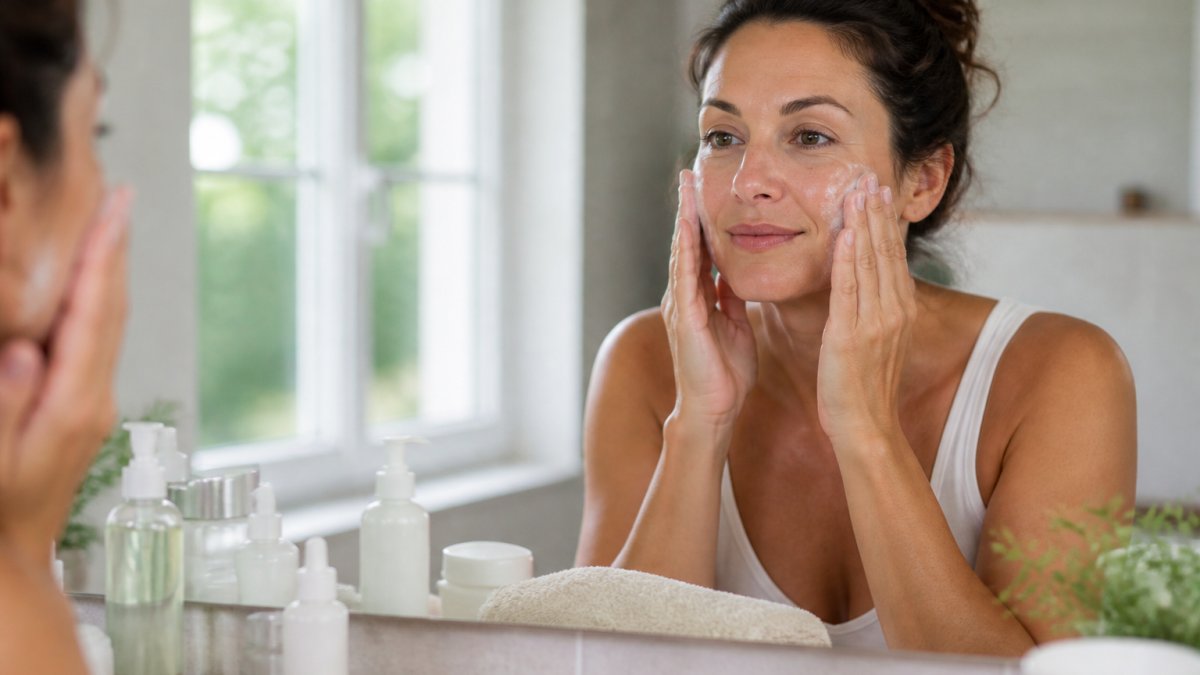
The Two-Week Pre-Peel Timeline
Two weeks before
- Stop retinoids and any prescription acne treatments.
- Pause strong exfoliants: AHAs, BHAs, scrubs, cleansing brushes, and at-home dermaplaning.
- Skip waxing, threading, and laser hair removal on the treatment area.
One week before
- Keep cleansing and moisturizing simple, no new products, no experiments.
- Avoid prolonged sun exposure and tanning beds.
- Hydrate: a well-moisturized barrier tolerates acid better than a dry one.
48 hours before
- Patch test on the jawline or behind the ear and observe for 48 hours.
- Skip alcohol-based toners and any product with high fragrance content.
Day of
- Arrive with clean, dry skin. No makeup, no moisturizer, no sunscreen on the treatment area unless the label says otherwise.
- Do not shave or exfoliate the area that morning.
If you already exfoliate regularly, over-exfoliation is a common reason a mild peel still stings. For guidance on how to exfoliate mature skin without overdoing it, review the best methods for aging skin before your peel.
What to Pause and Why
Retinoids and strong exfoliants thin the stratum corneum and increase permeability. That is useful for results but risky right before a peel, because the acid penetrates faster than the label anticipates. Pausing them gives your barrier time to recover so the peel behaves predictably.
Orange Facial Exfoliating Gel – Deep Moisturizing & Gentle Pore Cleansing Scrub →
Post-Peel Routine: The First Seven Days
Recovery is where beginners undo their results. Keep it simple:
- Cleanse with a gentle, non-foaming cleanser and lukewarm water.
- Moisturize with a plain barrier cream, ceramides and glycerin are your friends.
- Protect with broad-spectrum SPF 30 or higher every morning, reapplied through the day.
When to Resume Actives
Wait until redness and flaking have fully resolved before reintroducing retinoids or exfoliants, then restart at half your previous frequency for one to two weeks. If irritation returns, back off again. Calming a reactive complexion if recovery goes sideways requires a gentle approach.
Chemical Peel Recovery Time and What to Expect Day by Day
Recovery depends on depth. A superficial peel usually means mild redness for a few hours and light flaking over two to three days. Medium peels bring visible peeling for about a week.
A typical light-peel timeline:
- Day 1: slight tightness and pinkness
- Day 2-3: light flaking, skin feels dry
- Day 4-7: fresher, smoother texture appears
Keep it simple during recovery. Use a gentle cleanser, a plain moisturizer, and sunscreen. Skip actives until your skin settles. If irritation lingers, calming a reactive complexion requires a gentle approach.
At-Home Peel Safety, Patch Testing, and When to See a Professional
At-home peels are safe for most beginners when you read the label correctly and start lower than you think you need to. The problem is that acid concentration is often treated as the only number that matters. It is not. Strength is a function of four things working together, and ignoring any one of them can lead to undesirable results.
How to Read a Peel Label Like a Beginner
Before you buy, find these four data points on the product page or box:
- Acid type and concentration. A 10% glycolic peel and a 10% TCA peel are not remotely the same strength. Concentration only means something in the context of which acid it is.
- pH level. Free-acid availability drives how much of the acid actually penetrates. A glycolic product at pH 3.5 is meaningfully gentler than the same concentration at pH 2.5.
- Contact time. One minute versus ten minutes changes the effective dose far more than a small concentration difference. Follow the label exactly, never "leave it on a little longer for better results."
Do not buy a peel that requires a neutralizer, ships as a multi-step professional kit, or lists TCA above 15% for at-home use.
Patch Test the Right Way
A 48-hour patch test is the minimum, not the finish line. Here is a practical protocol:
- Apply a small amount to the jawline or behind the ear, following the label's contact time.
- Rinse and observe at 24 and 48 hours for redness, swelling, stinging that does not fade, or blistering.
- If clear, do a second test on a small area of the cheek before treating the full face.
- Stop immediately at the first sign of a reaction, do not "wait and see."
Reaction Signs and What to Do
Mild pinkness and a light tingling that fades within minutes are normal. Escalation signs that warrant stopping include:
- Pain that intensifies after rinsing
- Blistering, oozing, or crusting
- Swelling around the eyes or mouth
- Redness that spreads or lasts more than 48 hours
If any of these appear, rinse with cool water, skip all actives, apply a plain barrier moisturizer. Do not apply another peel to "fix" the reaction.
Contraindications and Medication Checklist
Skip at-home peels and get professional guidance first if any of the following apply:
- You are pregnant or breastfeeding
- You have active eczema, psoriasis, rosacea flares, or broken skin in the treatment area
- You have a history of keloids or hypertrophic scarring
- You have had a recent procedure (laser, microneedling, waxing, or dermabrasion) in the same area
If you check any box above, the right first step is a consultation, not a purchase.
When to See a Professional Instead
Book a professional for your first peel if you want a medium or deep result, have a pigmentation history, are treating a medical skin condition, or simply want someone to assess your skin before you commit. Before deciding between at-home and in-office treatment, review the common side effects of non-invasive cosmetic procedures.
Build Your First Peel Into an Ageless Glow Routine
A peel works best as part of a steady routine, not as a one-off event. Space light peels a few weeks apart, and keep the days between them focused on hydration and sun protection. Our Korean Retinol Moisturizing Essence and Exfoliating Eye Cream hydrates while retinol supports smoother texture, and the Retinol Face Cream keeps skin soft between treatments.


If you want the full picture, consider how your first peel fits into a beginner anti-aging routine.
Frequently Asked Questions
How do I prepare my face for a chemical peel?
Stop retinoids, exfoliating acids, and any at-home scrubs about a week before, and skip waxing or shaving the treatment area for a few days. Keep skin moisturized and wear sunscreen daily, since sun-damaged skin reacts more sharply to acids.
Which chemical peel is best for beginners?
A light superficial peel with glycolic or salicylic acid is usually the safest starting point. These peels sit on the surface, cause little to no downtime, and let you see how your skin tolerates exfoliation before trying anything stronger. Start at a low concentration and space sessions four to six weeks apart. If your skin handles two or three light peels well, you can consider stepping up to a medium peel.
How long does it take to recover from a chemical peel?
Light peels typically cause mild redness for a few hours to a day, with light flaking around days two through five. Medium peels bring more visible peeling for about a week, and deep peels can take two weeks or more with significant redness. Recovery depends on peel depth, your skin type, and how well you protect your skin from the sun afterward. Plan your first peel for a week when you do not have major events.
Can I use a chemical peel if I have sensitive skin?
Yes, but choose carefully. Sensitive skin does better with lower-strength superficial peels, and salicylic acid is often gentler than glycolic for reactive skin. Perform a patch test on a small area before a full treatment. Skip peels entirely during an active flare. Building tolerance with a gentle exfoliating routine at home, like the Orange Facial Exfoliating Gel, can help your skin adjust before your first peel.
Your first peel does not have to be a gamble. Start mild, match the acid to one concern, prep for two weeks, and protect your barrier during recovery. Ageless Glow carries gentle exfoliating formulas and nutrient-rich moisturizers designed to support visible results without harsh downtime. Add to cart and build a routine that treats your skin with patience.
