

Table of Contents
- Why Does My Skin Feel Tight After Using a New Serum?
- Dehydrated vs. Dry Skin: What the Tightness Is Telling You
- Signs of a Damaged Skin Barrier (And How to Tell It Apart From Normal Tightness)
- How to Layer Serums Correctly So Tightness Does Not Happen
- Ingredient Interactions: When Your Serum Is Fighting Another Product
- How Long to See Skincare Results (And When to Stop a New Serum)
- What to Do Tonight If Your Skin Still Feels Tight
- Frequently Asked Questions
Last Updated: September 25, 2026
Why Does My Skin Feel Tight After Using a New Serum?
Tightness after a new tight skin serum usually means the product pulled water out of your skin instead of holding it in. This is one of the most common complaints about a tight skin serum, and it rarely means the formula is "working." At Ageless Glow, we hear this often: a customer starts a hydrating serum, and within minutes her face feels shrink-wrapped.

The cause is almost always one of four things:
- The serum is a humectant applied to dry skin
- It was layered over an acid or active that disrupted the moisture barrier
- A second product is fighting it
- Your skin is genuinely dehydrated skin, not dry skin
Dehydrated vs. Dry Skin: What the Tightness Is Telling You
Dehydrated skin lacks water. Dry skin lacks oil. That single difference decides whether your serum needs a partner or a replacement.
Here is how to tell them apart:
| Sign | Dehydrated Skin | Dry Skin |
|---|---|---|
| Feel | Tight, dull, crepey | Rough, flaky, itchy |
| Oil | Often oily or combo | Low everywhere |
| Trigger | Weather, actives, over-cleansing | Genetics, aging, hormones |
| Fix | Water + seal | Oil + seal |
Signs of a Damaged Skin Barrier (And How to Tell It Apart From Normal Tightness)
A damaged skin barrier stings, burns, or reddens. Normal tightness just feels dry and fades within 15 minutes of moisturizer.
Signs the barrier is compromised:
- Stinging or burning when you apply anything
- Redness that lasts more than an hour
- Flaking or rough patches that were not there before
- Products that used to be fine now sting
- Sensitization: your skin reacts to things it used to tolerate
How to Layer Serums Correctly So Tightness Does Not Happen
The correct order is thinnest to thickest: cleanser, toner, water-based serum, oil-based serum, moisturizer, then occlusive at night. But order alone will not stop tightness. The two variables that actually decide whether a serum hydrates or pulls are how wet your skin is when the serum goes on and how fast you seal it afterward. Most tightness complaints trace back to one of those two steps, not to the serum itself.
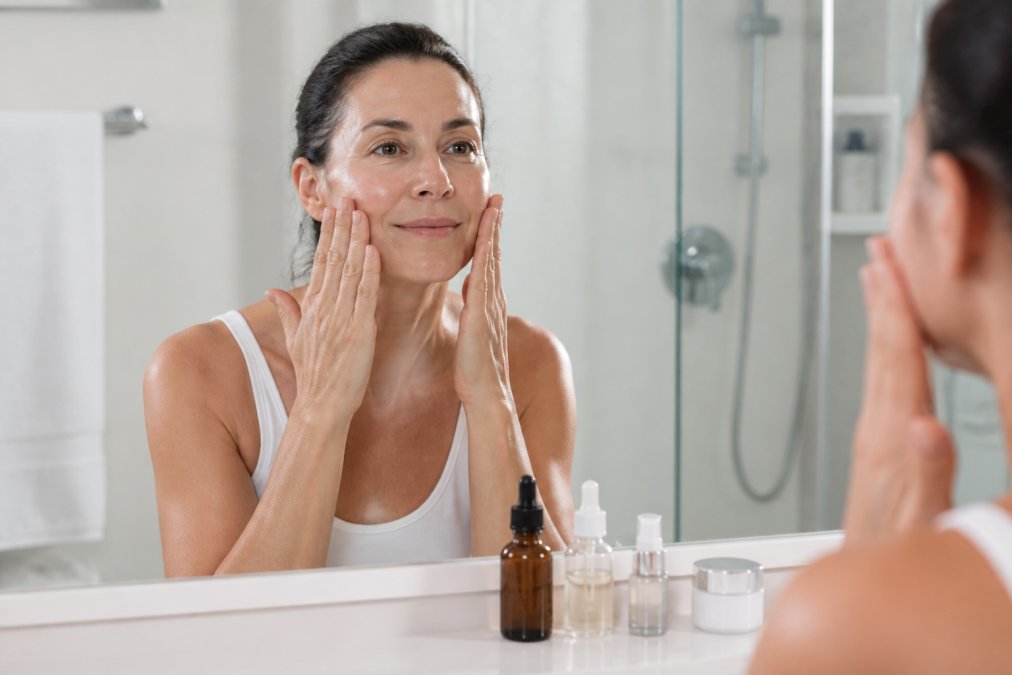
Here is the step-by-step routine:
- Cleanse with a gentle, low-foaming cleanser
- Pat skin until it is damp, not dry
- Apply your water-based serum while skin is still damp
- Wait 60 seconds, then apply moisturizer
- Finish with an occlusive balm at night if you are very dry
The Damp Skin Technique: A Step-by-Step Protocol
Hyaluronic acid and glycerin are hygroscopic, which means they attract and hold water. That property cuts both ways. On damp skin, a humectant pulls the surface water into the upper layers and holds it there. On bone-dry skin, it has nothing to grab, so it draws moisture from deeper layers toward the surface, where it evaporates, and that is the shrink-wrapped feeling you are trying to avoid.
- Cleanse and leave the skin wet. Do not towel dry. If you must blot, blot only the drips.
- Apply serum within 60 seconds of cleansing. The window matters, once the surface reads dry to the touch, you have lost the water you needed.
- Use the right amount. Three to four drops for the full face and neck is typical. More serum does not mean more hydration; it means more humectant competing for the same water.
- Press, do not rub. Pat and press the serum in with flat palms. Rubbing drags on a barrier that is already stressed.
- Re-wet if needed. If your skin dries before you finish, mist with plain water or a fragrance-free hydrating mist and continue. One spritz is enough.
- Seal within 60 to 120 seconds. This is the step beginners skip. A humectant without a seal is a net water loser.
Post-Serum Sealing: Why the Next Step Is Not Optional
Sealing means adding a moisturizer or emollient on top within a minute or two of the serum. This traps the water your serum just attracted. Without a seal, that water evaporates and you feel tight again, often within 10 to 15 minutes.
Match the seal to your skin:
| Skin situation | Seal to use | Why |
|---|---|---|
| Oily or combo, mild tightness | Light gel-cream with glycerin or squalane | Seals without heaviness |
| Normal to dry | Cream with ceramides and cholesterol | Replaces barrier lipids |
| Very dry or barrier-stressed | Cream plus a thin layer of occlusive (petrolatum, shea, or squalane oil) at night | Cuts water loss overnight |
Layering Order When You Use More Than One Serum
If you are using two serums, apply the thinner, more water-based one first and the thicker, more oil-based one second. A general order that works for most people:
- Water-based hydrating serum (hyaluronic acid, glycerin, panthenol)
- Water-based treatment serum (niacinamide, vitamin C, peptides)
- Oil-based serum or facial oil
- Moisturizer
- Occlusive at night
Ingredient Interactions: When Your Serum Is Fighting Another Product
Two good products can still clash. The most common conflicts involve active ingredients that disrupt the barrier, surfactants that strip lipids, and pH-dependent formulas that stop working, or start irritating, when layered in the wrong order.
Watch for these pairings:
| Combination | What Happens | Fix |
|---|---|---|
| Hyaluronic acid + strong acid (AHA/BHA) | Acid lowers pH and strips lipids; humectant then pulls water from a compromised surface, stings and tightness | Use the acid at night only, and apply the hydrating serum to damp skin afterward, then seal |
| Niacinamide + vitamin C (L-ascorbic acid) | Some people flush or sting, especially at high concentrations of both | Space them out, vitamin C in the morning, niacinamide at night |
| Retinol + exfoliating acid | Doubles the barrier stress; tightness, flaking, and stinging follow | Alternate nights; never layer in the same routine |
| Benzoyl peroxide + retinol | BPO oxidizes and deactivates many retinoids, and both dry the skin | Use at different times of day, or alternate |
| Serum + no moisturizer | Water evaporates off the surface; humectant pulls from deeper layers | Always seal within 1 to 2 minutes |
| Vitamin C + benzoyl peroxide | BPO can oxidize vitamin C, reducing its effect and increasing irritation | Separate into morning and night |
Tight vs. Stinging: Two Different Reactions
This is the distinction most guides skip, and it changes what you do next.
- Tight is a dehydration signal. It feels like a pull or a shrink-wrap sensation. It usually fades within 15 minutes of applying moisturizer. The fix is water plus a seal.
- Stinging is an irritation signal. It feels like a sharp prickle, burn, or tingle that does not go away when you moisturize. It can be a sign of allergic contact dermatitis or a barrier that is too compromised to tolerate the product. The fix is to stop the product and patch test before restarting.
Patch Testing: How to Tell Sensitivity From Dehydration
Before you decide a serum is wrong for you, patch test it properly:
- Apply a small amount behind your ear or on your inner forearm.
- Wait 24 to 48 hours.
- Check for redness, bumps, itching, or a burning sensation, not just tightness.
- If nothing happens, apply a small amount to one cheek and wait another 24 hours before using it on your full face.
How Long to See Skincare Results (And When to Stop a New Serum)
Give a new hydrating serum 2 to 4 weeks to show results. Stop it immediately if it causes stinging, redness, or breakouts that last more than a few days.
How long to see skincare results depends on what you are trying to change:
- Hydration: same day to 1 week
- Skin texture and pore congestion: 4 to 6 weeks
- Fine lines and skin elasticity: 8 to 12 weeks
What to Do Tonight If Your Skin Still Feels Tight
Tonight's plan is simple: strip your routine back to three steps and give your barrier a break.
- Cleanse with lukewarm water and a gentle cleanser
- Skip all actives: no acids, no retinol, no vitamin C
- Apply a hydrating serum to damp skin
- Seal with a rich moisturizer
- Repeat for 3 to 5 nights
Frequently Asked Questions
Why does my skin feel tight after hyaluronic acid serum?
Hyaluronic acid is a humectant, which means it pulls water into the skin. If you apply it to completely dry skin in a dry room, it can draw moisture from deeper layers instead of the air and leave the surface feeling tight. The fix is simple: apply it to damp skin, then seal it with a moisturizer or face oil within a minute. A hydrating serum like the Hyaluronic Acid & Niacinamide Hydrating Serum works best when it is layered this way, not used alone on dry skin.
Is it good for your skin to feel tight after skincare?
No. That tight, squeaky-clean feeling is a sign that your moisture barrier has been stripped, not that your skin is clean or the product is working. A healthy routine leaves skin soft and comfortable within a few minutes. If tightness lasts more than 10 to 15 minutes after applying a serum, your skin is telling you something in the routine is too harsh or is being applied in the wrong order.
How do I know if my skin barrier is damaged?
Common signs of a damaged skin barrier include persistent tightness, flaking, redness, stinging when you apply products that used to feel fine, and skin that looks shiny but feels dry. These symptoms often show up together rather than one at a time. If you notice two or more, pause active ingredients like retinol or exfoliating acids for a week and focus on gentle cleansing plus a barrier-supporting moisturizer such as the All-Day & Night 2-Pack Cream for Face.
Should I stop using a serum if it makes my face feel tight?
Pause it for 5 to 7 days and see if the tightness goes away. If it does, the serum is likely the cause, and you can either drop it or reintroduce it at half strength every other day. If tightness continues without the serum, the problem is probably elsewhere in your routine, such as your cleanser or the order you layer products. Patch test any new serum on your inner forearm for 24 hours before putting it on your face.
Tightness after a new serum is your skin asking for water and a seal, not another product. Ageless Glow makes that step easy with targeted formulas built for hydration and visible results. Start with the Hyaluronic Acid & Niacinamide Hydrating Serum on damp skin, lock it in with the All-Day & Night 2-Pack Cream, and give your barrier the few quiet nights it needs. Get started with Ageless Glow and build a routine your skin can actually hold onto.