

Table of Contents
- Hyaluronic Acid vs Glycerin for Hydration: At a Glance
- What Is Hyaluronic Acid and What Does It Do for Skin?
- What Is Glycerin and How Does It Hold Moisture?
- How to Layer Hyaluronic Acid and Glycerin in Your Routine
- Glycerin vs Hyaluronic Acid for Oily Skin: Which One Wins?
- How Long to See Skincare Results From Each Ingredient
- Climate, Concentration, and Sourcing: What Changes the Outcome
- Conclusion
- Frequently Asked Questions
Last Updated: September 22, 2026
Hyaluronic Acid vs Glycerin for Hydration: At a Glance
The hyaluronic acid vs glycerin for hydration debate comes down to how each pulls water into your skin. Hyaluronic acid holds up to 1,000 times its weight in water and works on the surface, while glycerin is a smaller molecule that draws moisture deeper and costs far less.

Hyaluronic acid is a humectant that occurs naturally in your skin, joints, and connective tissue. It binds water and plumps skin by supporting the stratum corneum, the outer layer that controls moisture loss.
Glycerin is a humectant too, but a humbler one. Its small molecule slips past the surface and pulls water into the dermal layers, while strengthening the barrier to slow transepidermal water loss.
Here's the part most guides skip: neither ingredient hydrates on its own.
| Feature | Hyaluronic Acid | Glycerin |
|---|---|---|
| Molecule size | Larger, stays near the surface | Smaller, reaches deeper layers |
| Water binding | Holds up to 1,000x its weight | Draws water from air and skin |
| Best for | Plumping fine lines, dehydrated skin | Barrier repair, dry and sensitive skin |
| Texture | Lightweight, can feel tacky in high humidity | Slightly sticky in high concentrations |
| Cost | Higher per ounce | Lower, widely available |
| Works best with | An occlusive seal on top | Water and a humectant partner |
What Is Hyaluronic Acid and What Does It Do for Skin?
Hyaluronic acid is a glycosaminoglycan that holds water between skin cells, keeping the surface plump and smooth. Your body makes it naturally, but production drops with age, which is why fine lines and dryness show up more after 40.
What Is Glycerin and How Does It Hold Moisture?
Glycerin is a humectant that draws water from the air and your skin's deeper layers up toward the surface. It's one of the most studied skincare ingredients in existence, appearing in everything from budget moisturizers to prescription formulas.
How to Layer Hyaluronic Acid and Glycerin in Your Routine
Layer hyaluronic acid first on damp skin, then follow with a glycerin-rich cream to seal the water in. The humectant pulls water in, and the cream holds it there, reverse it and the glycerin has nothing left to trap.
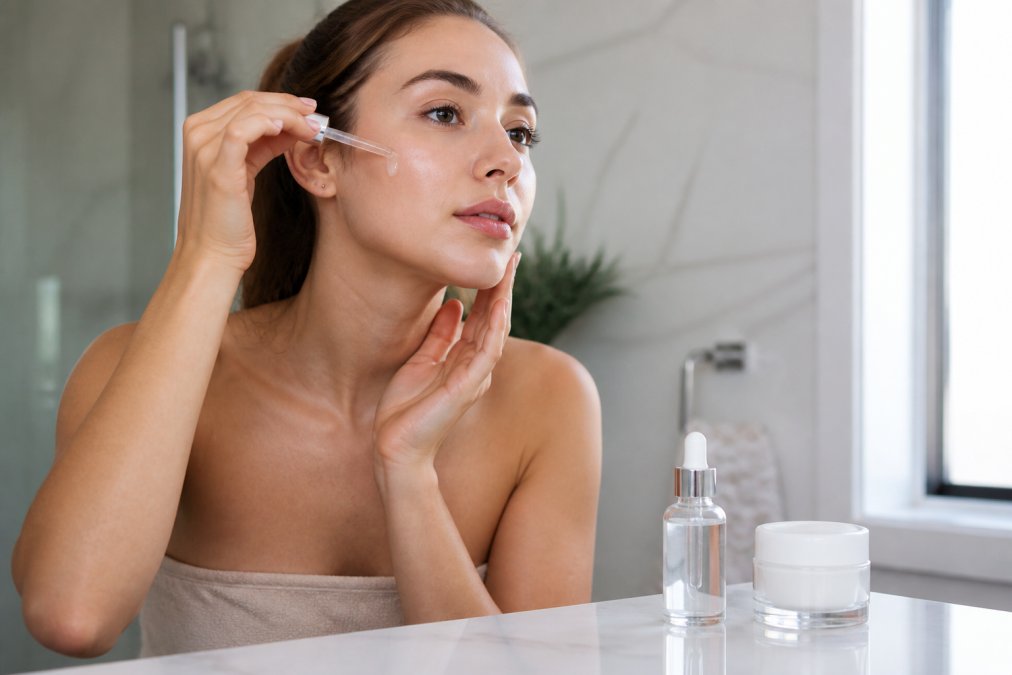
Here's the sequence that works for most skin types:
- Cleanse and leave skin slightly damp. Don't towel dry completely.
- Apply hyaluronic acid serum to your face and neck while skin is still wet. Pat, don't rub.
- Wait 30 to 60 seconds for the serum to absorb and settle.
- Mist with water or a hydrating toner if your skin feels tight. This gives the HA more to bind.
- Apply a glycerin-based moisturizer to lock in moisture and support the barrier.
- Finish with SPF in the morning or a facial oil at night if your skin runs very dry.
Glycerin vs Hyaluronic Acid for Oily Skin: Which One Wins?
Glycerin hydrates without the heavy, tacky residue high-molecular-weight hyaluronic acid can leave behind, and it won't clog pores the way richer formulas might.
For oily and combination skin, look for:
- Gel-based or water-based serums rather than creams
- Glycerin as an early ingredient, since it's light and effective
- Low-molecular-weight hyaluronic acid, which absorbs fast and doesn't sit on the surface
- Niacinamide, which helps balance oil while supporting the barrier
How Long to See Skincare Results From Each Ingredient
You'll see hydration results from both ingredients within days, but barrier and elasticity changes take longer. Surface hydration from hyaluronic acid shows up within minutes; barrier repair from glycerin builds over two to four weeks of consistent use.
Here's what the timeline typically looks like:
Hyaluronic Acid & Niacinamide Hydrating →
| Timeframe | Hyaluronic Acid | Glycerin |
|---|---|---|
| First application | Instant surface plumping | Softer, calmer skin |
| 1 week | Less visible flaking | Reduced tightness |
| 2-4 weeks | Smoother fine lines | Stronger barrier, less sensitivity |
| 6-8 weeks | Improved skin elasticity | Sustained moisture retention |
Concentration Is the Variable Most Timelines Ignore
Two products with identical "hyaluronic acid" front labels can perform completely differently: the one with a meaningful concentration and multi-weight blend will plump; the one with a token amount mostly delivers the glycerin and water it's suspended in.
What Actually Speeds Up Results
Three habits reliably shorten the timeline:
- Apply to damp skin. Both humectants need available water to bind. Dry application forces HA to pull from your skin instead of the surface film.
- Seal with an occlusive or emollient. Without a cream, oil, or balm on top, the water you just attracted evaporates and you're back where you started.
- Don't stack five humectants. Layering HA, glycerin, panthenol, and a humectant toner in one sitting doesn't compound the effect, it just increases the chance of pilling and stickiness. Two is usually enough.
Climate, Concentration, and Sourcing: What Changes the Outcome
Climate and concentration change how well each ingredient performs. Hyaluronic acid works best in humid air and can backfire in dry, heated rooms. Glycerin performs more consistently because it pulls water from deeper layers, not just the air.
Humidity and Dew Point: The Real Variable
The number that matters isn't temperature, it's the dew point, which tells you how much moisture is available in the air for a humectant to grab.
- Dew point above roughly 60°F: The air is loaded with water vapor. Hyaluronic acid has plenty to pull from, and a lightweight HA serum performs at its best. This is the condition most HA marketing assumes.
- Dew point between roughly 40°F and 60°F: Borderline. HA still works, but it needs damp skin and a seal on top to avoid pulling from your skin instead of the air.
- Dew point below roughly 40°F: The air is drier than your skin. A high-concentration HA serum applied to dry skin in this range can draw moisture out of the stratum corneum, which is why the same serum that felt plump in July feels tight in January.
Concentration: What's Actually in the Bottle
The takeaway: two products with identical "hyaluronic acid" front labels can perform completely differently. The one with a meaningful concentration and a multi-weight blend will plump; the one with a token amount will mostly deliver the glycerin and water it's suspended in.
Sourcing and Sustainability
Glycerin in skincare is typically vegetable-derived, most commonly from soybean, palm, or coconut oil, produced as a byproduct of biodiesel and soap manufacturing. That byproduct status is why it's inexpensive and low-footprint: it captures a stream that would otherwise be waste. "Vegetable glycerin" means plant-derived rather than the older tallow route; quality varies by refinement, but the functional molecule is the same.
Conclusion
The hyaluronic acid vs glycerin for hydration question isn't about picking a champion. It's about matching each humectant to your skin type, climate, and routine. Use HA for surface plumping on damp skin, layer a glycerin cream on top to seal it in, and adjust the balance when seasons change.
Frequently Asked Questions
Can I use glycerin and hyaluronic acid together?
Yes. The two work on different layers: hyaluronic acid draws water into the upper layers of the skin, while glycerin holds moisture there and supports the skin barrier. Apply a hyaluronic acid serum to damp skin, then follow with a glycerin-containing moisturizer to seal it in. This layering approach is one of the most effective ways to reduce transepidermal water loss (TEWL) and keep skin supple through the day.
What's more hydrating than hyaluronic acid?
Panthenol and urea are also effective. If your skin still feels tight after a hyaluronic acid serum, switching to or adding a glycerin-rich moisturizer usually closes the gap, especially in dry indoor air where HA can pull moisture from deeper layers instead of the environment.
Does glycerin work better in dry or humid climates?
Glycerin performs well in both, but it has an edge in dry climates because it can draw moisture from the deeper layers of the skin when the air is low in humidity. Hyaluronic acid works best in humid conditions where there is water in the air to bind. In dry winters or air-conditioned rooms, layer a glycerin moisturizer over your HA serum to prevent the serum from pulling water out of the skin.
How long does it take to see results from a hyaluronic acid and glycerin routine?
You'll notice immediate plumping and smoother texture within minutes of applying a hyaluronic acid serum, because it binds water to the stratum corneum. Lasting changes in fine lines, elasticity, and barrier repair typically take 4 to 8 weeks of consistent use. Glycerin's effect on barrier function shows up sooner, often within 1 to 2 weeks, as skin feels less tight and flaky.
Is hyaluronic acid or glycerin better for oily, acne-prone skin?
Glycerin is usually the safer pick for oily skin because it is non-comedogenic and lightweight at low concentrations. Hyaluronic acid is also oil-free and non-comedogenic, but high-molecular-weight formulas can feel tacky or sticky on oily skin. Look for a lightweight gel cream or a serum with niacinamide to balance oil while still delivering hydration without clogging pores.