

Table of Contents
- Dehydrated vs Dry Skin: Understanding the Difference
- Signs Your Skin Is Dehydrated and Dull
- Best Ingredients for Dehydrated Skin
- Step-by-Step Routine to Restore Skin Hydration
- How Long to See Skincare Results
- Lifestyle Changes That Support Skin Hydration
- Common Mistakes to Avoid When Treating Dehydrated Skin
- Conclusion
Last Updated: August 24, 2026
Dehydrated vs Dry Skin: Understanding the Difference
Dehydrated skin is a temporary condition caused by lack of water in the skin's outer layers, while dry skin is a persistent skin type determined by genetics and sebum production. Though they share similar symptoms like tightness and flaking, they require completely different treatment approaches.
Dehydrated skin occurs when your skin loses transepidermal water loss, moisture that evaporates through the stratum corneum, the outermost layer of your epidermis. This can happen to anyone, regardless of natural skin type. You might have oily skin genetically but still experience dehydration from environmental stressors, harsh cleansing, or insufficient hydration practices.
Dry skin, by contrast, is a skin type characterized by low sebum production. Your skin doesn't generate enough natural oils to maintain its lipid barrier, the protective layer that locks in moisture. This is often genetic and tends to worsen with age.
The practical difference matters enormously. Treating dehydrated skin with heavy oils alone won't solve the problem, you need humectants like hyaluronic acid and glycerin to draw moisture into the skin, plus occlusives to seal it in. Treating dry skin requires nourishing oils and ceramides to rebuild the lipid barrier.

Signs Your Skin Is Dehydrated and Dull
Dehydrated skin sends specific signals most people mistake for dryness or aging. The first sign is usually tightness, that uncomfortable pulled feeling, especially after cleansing or in the morning. Your skin might also feel sensitized, reacting to products that normally don't bother you.
Visually, dehydrated skin looks dull and lacks luminosity. The texture becomes rough, and fine lines appear more pronounced because the skin isn't plump with water. You might notice your makeup sitting unevenly or not blending smoothly.
Another telltale sign is that your skin feels better immediately after applying water-based products, but the improvement is temporary. If hydration fixes the problem for a few hours, you're dealing with dehydration, not a fundamental skin type issue.
Inflammation and sensitivity often accompany dehydration. Your skin barrier isn't functioning optimally, so it becomes reactive. You might experience redness, irritation, or breakouts. Some people also notice their pores look larger when dehydrated because the skin around pores appears less plump and defined.
Best Ingredients for Dehydrated Skin
The most effective ingredients for dehydrated skin work in two phases: humectants pull moisture into the skin, and occlusives seal it in place.
Hyaluronic acid is the gold standard humectant for dehydrated skin. This ingredient can hold up to 1000 times its weight in water, making it exceptionally effective at drawing moisture into the epidermis. Look for it listed early in ingredient lists. The Ageless Glow Hyaluronic Acid & Niacinamide Hydrating Serum combines this powerhouse ingredient with niacinamide, which strengthens the skin barrier while reducing inflammation.
Glycerin works similarly to hyaluronic acid by drawing water into the stratum corneum and helping maintain hydration levels throughout the day. Many dermatologists recommend glycerin as one of the most reliable, non-irritating hydrating ingredients.
Ceramides are lipids that form part of your skin's natural barrier. When your barrier is compromised, ceramides help restore it, allowing your skin to retain moisture more effectively. They work best in combination with humectants.
Niacinamide (vitamin B3) strengthens the skin barrier by increasing ceramide and free fatty acid production. It also reduces transepidermal water loss and has anti-inflammatory properties, making it ideal for dehydrated, irritated skin.
Avoid strong exfoliants, high-concentration vitamin C, and potent actives like retinoids when your skin is dehydrated. These can further compromise an already weakened barrier.
Step-by-Step Routine to Restore Skin Hydration
Restoring hydration requires a methodical approach. The order matters because each step builds on the previous one.
Step 1: Cleanse Gently Without Stripping
Start with a gentle cleanser that removes makeup and impurities without disrupting your skin barrier. Use a creamy, non-foaming cleanser or gentle gel formula. Avoid anything with sulfates, which strip natural oils and worsen dehydration. Massage the cleanser in for 30-45 seconds, then rinse with lukewarm water. Hot water opens pores and increases water loss.
Pat your skin dry gently. Your skin should still be slightly damp when you move to the next step because damp skin absorbs serums more effectively.
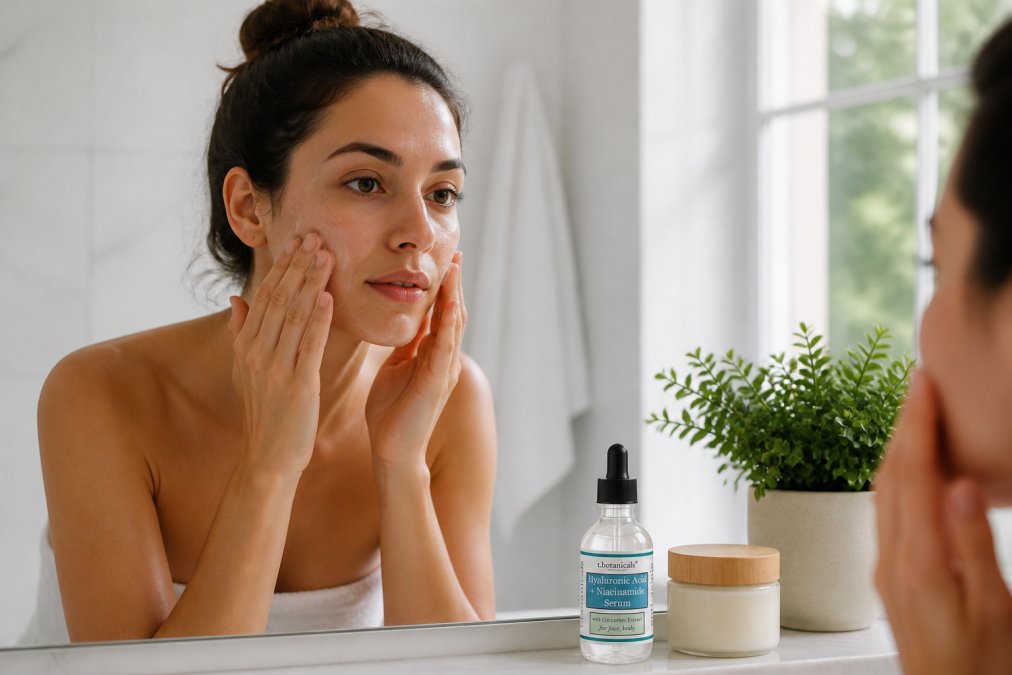
Step 2: Apply Hydrating Serums and Humectants
Apply a hydrating serum with hyaluronic acid, glycerin, or both while your skin is still slightly damp. The Ageless Glow Hyaluronic Aqua Boost Ampoule is specifically formulated as a serum booster with low molecular weight hyaluronic acid that absorbs efficiently. Use about 3-4 drops and press gently into your skin rather than rubbing.

If you're dealing with dullness alongside dehydration, consider layering a second serum. The Ageless Glow Rice Raw Pulp Face Serum combines rice extract with glycerin and hyaluronic acid to address both concerns simultaneously.

Step 3: Seal with Occlusive Moisturizers
After applying your hydrating serums, lock in that moisture with an occlusive moisturizer. This prevents transepidermal water loss and allows your skin barrier to repair itself. Apply your moisturizer to damp skin, this is the key technique most people miss. Use an upward, pressing motion rather than tugging or rubbing.
How Long to See Skincare Results
Most people expect immediate results and give up after two weeks. Understanding the timeline prevents frustration.
In the first 3-5 days, you'll notice your skin feels less tight immediately after applying your routine. This is the humectants drawing water into the epidermis, but it's not yet lasting change.
By week two, the tightness should ease noticeably, and your skin should look slightly less dull. Fine lines may appear less pronounced because plumped skin naturally smooths them temporarily.
Real, lasting improvement happens between weeks three and six. This is when your skin barrier actually repairs and strengthens. Your natural moisturizing factors rebuild, ceramide production increases, and your skin's ability to retain water improves independently.
Most people see significant improvement in skin texture, elasticity, and luminosity by week six to eight. The dullness lifts, skin feels comfortable, and the overall appearance improves substantially.
Lifestyle Changes That Support Skin Hydration
Your skincare routine handles external hydration, but internal and environmental factors dramatically impact how well your skin maintains moisture.
Water intake supports skin hydration from the inside out. Most people need at least 8-10 glasses daily, though individual needs vary based on activity level, climate, and overall health.
Humidity levels in your environment directly affect transepidermal water loss. If you live in a dry climate or spend hours in air-conditioned spaces, your skin loses moisture faster. Use a humidifier, especially in your bedroom at night.
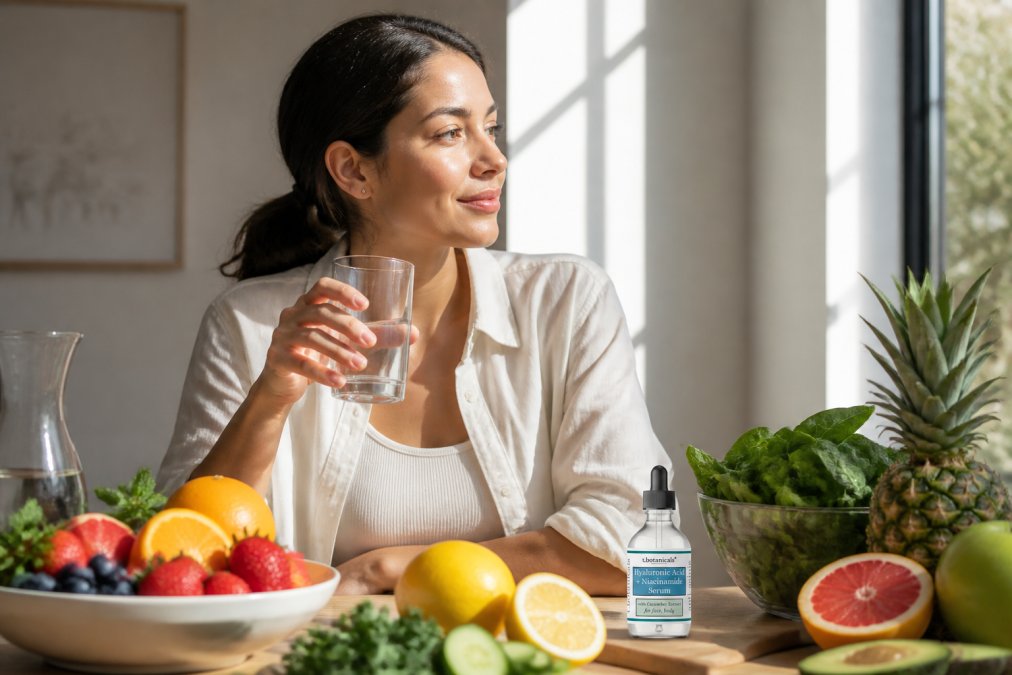
Diet rich in water-dense foods supports skin hydration. Cucumbers, watermelon, oranges, and leafy greens contribute to overall hydration. Foods rich in omega-3 fatty acids like salmon and walnuts support lipid barrier function.
Sleep quality directly impacts skin barrier function. Your skin repairs and regenerates during sleep. Aim for 7-9 hours nightly. During sleep, your skin's transepidermal water loss naturally decreases, making nighttime optimal for intensive hydration treatments.
Stress management affects skin hydration. Chronic stress increases cortisol, which can compromise barrier function and increase inflammation. Meditation, yoga, or breathing exercises support both stress reduction and skin health.
Sun protection prevents environmental damage that increases water loss. Use a broad-spectrum SPF 30 or higher daily.
Common Mistakes to Avoid When Treating Dehydrated Skin
The biggest mistake is using heavy oils and butters as your primary treatment. While these feel moisturizing, they don't address the actual problem, lack of water in the skin. Oil sits on top of the skin; it doesn't pull water in or strengthen barrier function.
Another common error is over-exfoliating. When skin is dehydrated and irritated, exfoliation further compromises the barrier. Stop exfoliating entirely until your skin is properly hydrated. This typically takes 4-6 weeks.
Skipping serums is another mistake. Many people jump straight to moisturizer, skipping the hydrating serum step. Serums deliver concentrated humectants that moisturizers alone can't provide.
Using too many active ingredients simultaneously damages your barrier further. If your skin is dehydrated, simplify your routine to cleanser, hydrating serum, and moisturizer until your skin recovers.
Not adjusting your routine seasonally is also problematic. Dehydration worsens in winter and in dry climates. You might need to add an extra hydrating layer or switch to a richer moisturizer during these periods.
Many people also apply products to completely dry skin, which reduces absorption. Damp skin absorbs serums and treatments far more effectively.
Fixing dehydrated dull skin requires patience and the right combination of hydrating ingredients applied in the correct order. The Ageless Glow Full-Size Korean Skincare Set for Dark Spots, Fine Lines & Glass Skin provides a complete routine designed specifically to address hydration and dullness simultaneously. With consistent application over 6-8 weeks and the lifestyle adjustments outlined above, you'll see your skin transform from tight and lackluster to plump, glowing, and genuinely healthy.
| Step | Timeline | Key Focus |
|---|---|---|
| Gentle Cleansing | Daily, AM & PM | Remove impurities without stripping barrier |
| Hydrating Serum | Daily, AM & PM | Apply to damp skin for maximum absorption |
| Occlusive Moisturizer | Daily, AM & PM | Seal in hydration and support barrier repair |
| Lifestyle Support | Ongoing | Water intake, humidity, sleep, stress management |
| Visible Results | Weeks 3-6 | Barrier repair, improved texture and elasticity |
| Lasting Improvement | Weeks 6-8+ | Stable hydration, reduced dullness, plumped skin |
According to dermatological research on skin barrier function, the stratum corneum requires proper hydration and lipid balance to function optimally. When this barrier is compromised, transepidermal water loss increases dramatically.
Research from the Journal of Cosmetic Dermatology demonstrates that combining humectants like hyaluronic acid with occlusive moisturizers produces significantly better results than either approach alone.
Studies published in the International Journal of Cosmetic Science show that consistent hydration routines produce measurable improvements in skin barrier function within 4-6 weeks, with continued improvement through week 8 and beyond.
Frequently Asked Questions
Can you reverse skin damage from dehydration?
Yes, dehydrated skin is reversible because it involves transepidermal water loss rather than permanent damage to skin structure. When you restore your skin barrier function with consistent hydration, humectants like hyaluronic acid, and occlusive moisturizers, most signs of dehydration, dullness, fine lines, and tightness, improve within 2-4 weeks. However, if dehydration has persisted for months, deeper lines may take 6-8 weeks to soften noticeably.
What's the difference between dehydrated and dry skin?
Dehydrated skin lacks water and appears dull, tight, and flaky despite having natural oils; it's a temporary condition caused by barrier damage or environmental stressors. Dry skin is a skin type with naturally low sebum production and requires ongoing moisture management. You can have oily, dehydrated skin or dry, dehydrated skin simultaneously. The fix for dehydration focuses on water retention and barrier repair using humectants and occlusives, while dry skin benefits from richer, oil-based moisturizers.
How long does it take to see results from a dehydration skincare routine?
Most people notice improved skin texture, reduced dullness, and softer skin within 7-10 days of consistent hydration. Fine lines and tightness typically ease in 2-4 weeks. Full barrier restoration and visible plumping effects take 6-8 weeks. Results depend on routine consistency, ingredient quality, and whether you're also addressing internal hydration and environmental stressors. Using targeted products like the Hyaluronic Acid & Niacinamide Hydrating Serum accelerates visible improvements.
Can drinking more water alone fix dehydrated skin?
Drinking water helps overall skin health and supports hydration from within, but it won't fix dehydrated skin on its own. Dehydration is primarily a barrier function issue, water applied topically or consumed internally escapes through the epidermis unless the lipid barrier is sealed. You need both internal hydration (water and water-rich foods) and external hydration (serums with humectants plus occlusive moisturizers) to restore skin. The combination is what produces visible results.
This article was written using GrandRanker