

Last Updated: November 4, 2026
Quick Summary
Your skin needs a nutrient rich serum if you notice two or more signs such as persistent tightness after moisturizing, dullness, flaky patches, uneven tone, or pores that look more visible. A serum delivers concentrated actives like hyaluronic acid and niacinamide deeper than a cream can reach, while a moisturizer only seals them in.
- A serum carries actives and hydration, while a moisturizer seals everything in and slows water loss.
- Apply serums from thinnest to thickest, then seal with moisturizer and finish with sunscreen in the morning.
- Consistent use over several weeks is typically needed before you notice changes from a serum.
- Introduce one new serum at a time and wait a week before adding another if your skin reacts easily.
- The Firming Facial Serum with salicylic acid, hyaluronic acid, and vitamin C is priced at $14.99 for 30 ml.
Table of Contents
- What a Nutrient-Rich Serum Actually Does for Your Skin
- 7 Signs Your Skin Needs a Nutrient-Rich Serum
- How to Choose a Face Serum for Your Skin Type
- Ingredient Synergy: Which Actives Work Better Together
- How to Layer Face Serums in the Right Order
- How Long Does Serum Take to Work?
- Seasonal Skin Shifts: Adjusting Your Serum Year-Round
- Budget vs. Luxury Serums: What You Actually Pay For
- Frequently Asked Questions
What a Nutrient-Rich Serum Actually Does for Your Skin
A nutrient rich serum is a lightweight, fast-absorbing formula that delivers a concentrated dose of active ingredients, such as hyaluronic acid, vitamin C, niacinamide, and antioxidants, deeper into the skin than a cream can reach. A serum is the layer that carries the actives, while a moisturizer is the layer that seals everything in. That division of labor is why so many people who "use moisturizer religiously" still feel tight and dull by mid-afternoon.
Serums are formulated with a thin viscosity, which lets them spread over the skin's surface and sit in the layers where hydration and skin texture are addressed. Moisturizers, by contrast, sit higher up and focus on moisture retention by reinforcing the lipid barrier. Both matter. Only one of them is doing the repair work.
Serum vs. Moisturizer: Why the Difference Matters
Think of it as water versus a lid. A serum delivers hydration and actives; a moisturizer locks them in and slows transepidermal water loss. Skip the serum and you're sealing in nothing. Skip the moisturizer and your serum evaporates before it finishes the job.
If your skin runs dry, our comparison of face oil vs serum for dry skin breaks down which format suits which concern.
7 Signs Your Skin Needs a Nutrient-Rich Serum
If you spot two or more of the following, your routine is missing an active layer, not more cream. Each sign points to a specific job a nutrient-rich serum is built to do:
- Persistent tightness even after moisturizing, especially after cleansing. This is transepidermal water loss outpacing your barrier's ability to hold water. A humectant-led serum (hyaluronic acid, glycerin) pulls water into the upper layers; a moisturizer alone can only slow its escape.
- Dullness that a night's sleep no longer fixes. Dullness can be associated with uneven skin surface and dryness. A serum with hydrating and tone-focused ingredients can be a suitable choice here.
- Fine lines that look deeper in the morning and soften by noon. Lines that look deeper in the morning can be a sign of dehydration. A hyaluronic acid serum applied to damp skin before bed is one option to help hydration.
- Flaky patches around the nose, mouth, or brows that foundation clings to. Look for serums with niacinamide, centella, or cucumber extract when skin feels irritated or dry.
- Uneven skin tone or new dark spots that seem to appear faster than they fade. Uneven tone can be addressed with tone-focused ingredients such as vitamin C, niacinamide, and glutathione, used consistently.
- Loss of bounce, where skin doesn't spring back when you press it. Skin firmness can change over time, and consistent use of a firming serum may be part of a routine aimed at a firmer look.
- Pores that look more visible as oil production and hydration fall out of balance. Pores can look more noticeable when skin lacks hydration. A niacinamide-based serum is designed to help refine the look of pores and balance oil.
A common mistake is treating all seven as separate problems and buying seven products. Once you recognize the signs, it helps to see which nutrient-rich face serums are worth buying before you commit.

Signs Your Skin Needs Hyaluronic Acid
Hyaluronic acid is an ingredient often used for hydration, and it attracts and holds water in the skin, which can help skin look plumper (Hyaluronic acid: A key molecule in skin aging). Our Hyaluronic Aqua Boost Ampoule is designed for absorption and is sized for multiple uses. It's made in South Korea and cruelty free.

How to Choose a Face Serum for Your Skin Type
Match the formula to your skin's behavior, not its label. Here's how we sort it:
| Skin Type | Primary Need | Ingredients to Look For | Watch Out For |
|---|---|---|---|
| Dry | Moisture retention | Hyaluronic acid, glycerin, plant collagen | Alcohol-heavy formulas |
| Oily | Oil balance, texture | Niacinamide, salicylic acid, rice powder | Heavy oils and thick textures |
| Combination | Balanced hydration | Hyaluronic acid, niacinamide | Over-cleansing |
| Sensitive | Barrier support, calming | Cucumber extract, centella, niacinamide | Fragrance and strong acids |
Matching Serums to Dry, Oily, Combination, and Sensitive Skin
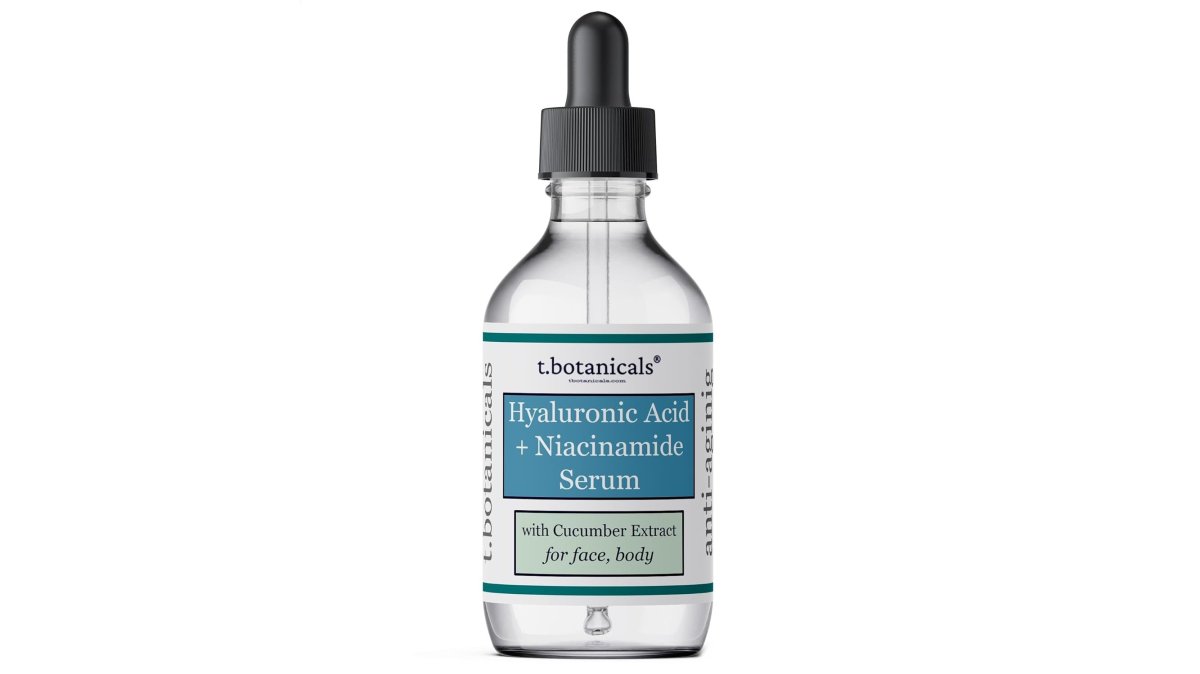
For dry and mature skin, our Firming Facial Serum with vitamin C, vitamin E, and hyaluronic acid is designed for a firmer, more hydrated look. Oily and combination skin does well with the Rice Raw Pulp Face Serum, where rice powder absorbs excess oil while glycerin and hyaluronic acid hydrate. The Hyaluronic Acid & Niacinamide Hydrating Serum pairs cucumber extract with niacinamide and is formulated as a gentle option for sensitive skin.
What If Your Skin Doesn't Fit One Category?
Most people are a blend, oily in the T-zone, dry on the cheeks, sensitive after actives. In that case, choose a serum that addresses your most persistent complaint and keep the rest of your routine gentle. A common pattern is to use a niacinamide-forward serum for oil balance and a separate hyaluronic acid layer for hydration, rather than hunting for one product that does everything. If your skin reacts easily, introduce one new serum at a time and wait a week before adding another so you can tell what is helping and what is not.
Hyaluronic Aqua Boost Ampoule →
Ingredient Synergy: Which Actives Work Better Together
Ingredient synergy is the reason two well-chosen actives outperform four random ones. Our Vitamin C Brightening Facial Serum pairs vitamin C and vitamin E with hyaluronic acid. Niacinamide and hyaluronic acid are commonly combined for hydration and tone. Our Vitamin C Brightening & Tone Repair Serum stacks vitamin C derivatives, niacinamide, and glutathione for dullness and uneven tone.
Layering many strong actives at once can irritate skin, so a simpler routine is often easier to maintain. For a deeper look at hyaluronic acid versus glycerin, we've compared how each one hydrates.
How to Layer Face Serums in the Right Order
Apply from thinnest to thickest, and give each layer a moment to absorb. The order that works for most routines:
- Cleanse and pat dry.
- Apply your thinnest, most watery serum first.
- Follow with a treatment serum, such as vitamin C in the morning.
- Add a hydrating serum if your skin still feels tight.
- Seal with moisturizer to lock in moisture.
- Finish with sunscreen in the morning.
Watch out: applying a thick cream before a watery serum blocks absorption and wastes the product. If you want the full walkthrough, our step-by-step serum application guide covers timing and technique.
How Long Does Serum Take to Work?
Results vary by person and product. Consistent use over several weeks is typically needed before changes are noticed. Serums are not instant fixes, and consistent use is generally more important than using large amounts. Photograph your skin in the same light each week; it's the only honest progress tracker.
Seasonal Skin Shifts: Adjusting Your Serum Year-Round
Your skin's needs change with the weather, and your serum should too. Winter air and indoor heating can leave skin feeling drier, so hydrating ingredients and a richer moisturizer may help. Summer weather can bring extra oil, so lightweight formulas are often a comfortable choice. In spring and fall, transition gradually rather than swapping your whole routine in a week, since sudden changes can trigger sensitivity.
Budget vs. Luxury Serums: What You Actually Pay For
Price does not always reflect the ingredients inside a product, so it can help to compare ingredient lists and textures. Our Firming Facial Serum with salicylic acid, hyaluronic acid, and vitamin C is priced at $14.99 for the 30 ml size.
The real test isn't the price tag; it's whether the nutrient rich serum matches what your skin is actually asking for. At Ageless Glow, we build nutrient-rich formulas and pair them with tools designed for low-effort routines, from targeted serums to facial devices, so you can see visible results without a ten-step regimen. Start with one serum that solves your main concern, layer it correctly, and give it eight weeks. Explore the collection and add to cart when you're ready.
Frequently Asked Questions
How do you know what serum your skin needs?
Start with what your skin is doing, not what a label promises. Tightness after cleansing and flaking point to hydration needs, so a nutrient rich serum built around hyaluronic acid fits. Visible pores and midday shine call for niacinamide. Dark spots and uneven tone point to vitamin C. If your skin stings easily, choose a soothing formula with cucumber or centella and skip strong exfoliating acids until the barrier settles.
Which two serums should not be used together?
Strong exfoliating acids and retinoids are the classic clash. Layering salicylic acid directly with a retinoid in the same step raises the chance of redness, peeling, and a compromised skin barrier. If you use both, split them: acids in the morning, retinoids at night, and keep a hydrating serum in between. Vitamin C and benzoyl peroxide also work against each other, since peroxide can oxidize the vitamin C before it does its job.
Can a serum help with dry or dull-looking skin?
Yes, and it usually works faster than a moisturizer alone. A nutrient rich serum can be a hydrating addition to your routine, and hyaluronic acid and glycerin are commonly used for moisture. The Centella 5% Niacinamide Radiance Gel Cream at $38.99 is a hydrating gel cream you may pair with a serum.
How long does it take to see results from a face serum?
Results vary by person and product, and consistent use over several weeks is typically needed before changes are noticed. Photograph your skin in the same light each week so you can judge real change instead of guessing.
