

Table of Contents
- Face Oil vs Serum for Dry Skin: Key Differences
- How Molecular Weight and Penetration Affect Results
- Best Ingredients for Dry Skin
- Skincare Routine Order for Dry Skin
- How Long to See Skincare Results
- Cost-Per-Use Analysis: Serums vs Oils
- Which Should You Choose for Dry Skin?
- Frequently Asked Questions
Last Updated: September 19, 2026
Face Oil vs Serum for Dry Skin: Key Differences
Choosing between a face oil and a serum for dry skin often feels like picking between two equally good options, but they work in fundamentally different ways. At Ageless Glow, we help customers understand that this isn't an either-or decision; it's about knowing what each product does and when to use it. A face oil vs serum comparison matters because dry skin needs both hydration and barrier protection, and these products deliver each in distinct ways.
The core difference comes down to how they interact with your skin. Serums are water-based or lightweight formulations designed to penetrate quickly and deliver active ingredients deep into the skin. Oils are occlusive products that sit on the surface, sealing in moisture and creating a protective barrier. For dry skin, understanding this distinction changes everything about your routine.
What Is a Face Serum?
A face serum is a lightweight, fast-absorbing liquid formulation designed to deliver concentrated active ingredients into the deeper layers of skin. Serums typically have a lower molecular weight than creams, which allows them to penetrate efficiently without leaving a heavy residue.
Serums work as hydrating and treatment products. They contain humectants like hyaluronic acid that draw water into the skin, along with active ingredients such as vitamins, antioxidants, and peptides. The Rice Raw Pulp Face Serum from Ageless Glow, for example, combines hyaluronic acid with glycerin and plant collagen to deliver deep hydration while soothing irritated skin. This type of serum addresses the core problem dry skin faces: insufficient water content in the epidermis.

The strength of serums lies in their absorption rate. Because they're water-based or gel-like, they sink into skin quickly, typically within seconds to a minute. This makes them ideal for layering under other products. They're also versatile enough for all skin types, even oily or combination skin, since they hydrate without adding excess oil.
What Is a Face Oil?
A face oil is an emollient product composed of plant-derived or mineral oils that sit on the skin's surface to seal in moisture and nourish the outer layers. Unlike serums, oils have a larger molecular weight, which means they don't penetrate deeply but instead create a protective occlusive barrier.
Face oils work through a different mechanism than serums. While serums deliver water and active ingredients, oils prevent transepidermal water loss, the process where moisture evaporates from your skin. They're rich in fatty acids and lipids that mimic your skin's natural barrier and help repair a compromised lipid barrier. This is especially important for dry skin, where the barrier function is often weakened.
Oils feel richer and more luxurious than serums. They take longer to absorb and leave a subtle sheen on the skin. This isn't a flaw; it's the point. That occlusive layer is what keeps dry skin hydrated throughout the day and night. Many people with dry skin find that oils alone aren't enough, they need hydration first, then an oil to lock it in.
How Molecular Weight and Penetration Affect Results
Molecular weight is one of the most misunderstood concepts in skincare, but it's crucial for understanding why a serum and oil produce different results. Smaller molecules penetrate deeper into the skin, while larger molecules sit on the surface. This isn't better or worse; it's simply different work.
Serums typically contain ingredients with lower molecular weight, hyaluronic acid, niacinamide, and glycerin all fall into this category. These molecules can travel through the epidermis and into the dermis, where they deliver hydration and active benefits. This deeper penetration is why serums feel more "effective" for treating specific skin concerns like fine lines or uneven texture.
Oils, by contrast, have a much higher molecular weight. They sit on the stratum corneum (the outermost layer of skin) and create a seal. This isn't a limitation; it's their job. By preventing water loss, oils allow hydration to accumulate in the skin over time. The Hyaluronic Acid & Niacinamide Hydrating Serum from Ageless Glow penetrates quickly due to its low molecular weight formulation, while an oil would sit on top and protect that hydration from evaporating.
For dry skin, this distinction matters enormously. If you use only an oil without first delivering water to the skin, you're sealing in dryness. If you use only a serum without an occlusive barrier, the hydration evaporates. This is why the most effective approach for dry skin combines both: serum first for hydration, then oil to lock it in.
Best Ingredients for Dry Skin
Not all serums and oils are created equal. The ingredients matter more than the product type. For dry skin, look for specific actives that address dryness at different levels.
Hyaluronic acid is the gold standard for serums targeting dry skin. This humectant can hold up to 1000 times its weight in water, making it exceptionally effective at plumping dehydrated skin. Glycerin works similarly, drawing moisture from the air and deeper skin layers into the epidermis. Niacinamide supports the skin barrier while balancing oil production, which is useful even for dry skin that may have compromised barrier function.
Plant collagen and peptides strengthen the skin barrier and improve elasticity, addressing the texture issues that often accompany dryness. The Rice Raw Pulp Face Serum includes plant collagen specifically for this purpose, along with rice powder's anti-inflammatory benefits for irritated, dry skin.
Hyaluronic Acid & Niacinamide Hydrating →

For oils, fatty acids and ceramides are essential. These lipids directly repair the lipid barrier and prevent water loss. Natural oils like jojoba, rosehip, and squalane are popular because they're lightweight and absorb reasonably well while still providing occlusive benefits. Antioxidants like vitamin E in oils add nourishment and protect against environmental damage.
The Firming Facial Serum from Ageless Glow combines vitamin C, E, and hyaluronic acid, three powerful ingredients for addressing dryness while also supporting collagen production for firmness and elasticity.
Skincare Routine Order for Dry Skin
The order in which you apply serums and oils determines how effective they'll be. This is where most people get it wrong, and it's why your routine might not be delivering results.
The correct order is: cleanse, tone (optional), serum, moisturizer, then oil. Serums go on damp or clean skin first because they need direct contact to penetrate. Applying a serum after an oil is pointless, the oil barrier prevents penetration. Your serum should absorb fully (usually 30-60 seconds) before you apply anything else.
After your serum absorbs, apply a lightweight moisturizer if you're using one. This adds another layer of hydration and helps seal in the serum. Finally, apply your oil as the last step. The oil sits on top, creating an occlusive barrier that prevents all that hydration from evaporating overnight or throughout the day.
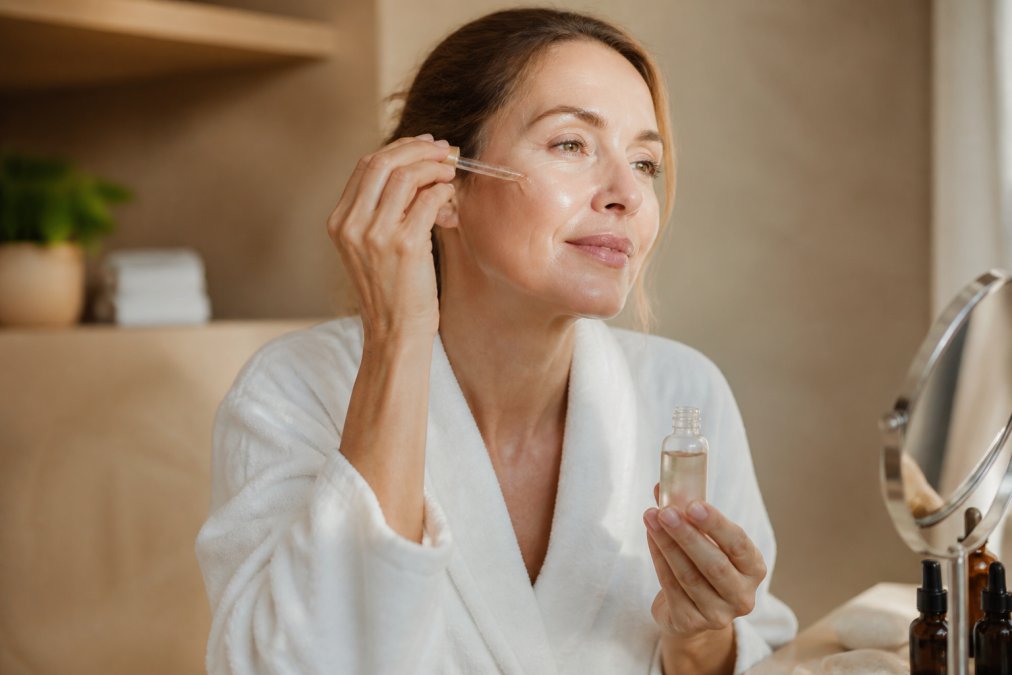
For dry skin specifically, you might skip the separate moisturizer and use a richer serum like the Hyaluronic Aqua Boost Ampoule, which has low molecular weight for penetration but delivers substantial hydration. Then follow with an oil to lock everything in. This two-step approach is often more effective than a three-step routine for severely dry skin.

Can You Use Both Face Oil and Serum Together?
Yes, and for dry skin, you probably should. This is the most important insight for anyone struggling with persistent dryness. Using both a serum and an oil isn't redundant; it's strategic. They serve different functions and work synergistically.
The serum delivers water and active ingredients deep into the skin. The oil prevents that water from evaporating. Together, they address dryness from both directions: hydration plus barrier repair.
How Long to See Skincare Results
This is the question that determines whether people stick with a routine or abandon it. The honest answer: it depends on what you're trying to fix, but most people see noticeable improvements within 4-6 weeks of consistent use.
Cost-Per-Use Analysis: Serums vs Oils
Price matters, but cost-per-use is what actually determines value. A serum that costs more upfront might deliver better value than a cheaper oil if it lasts longer and delivers more noticeable results.
| Product Type | Starting Price (Ageless Glow) | Typical Duration | Cost Per Day |
|---|---|---|---|
| Hyaluronic Acid Serum | $95.99 | 3-4 months | ~$0.08 |
| Rice Pulp Serum | $41.99 | 2-3 months | ~$0.05 |
| Firming Serum | $48.99 | 2-3 months | ~$0.05 |
| Aqua Boost Ampoule | $125.99 | 4-6 months | ~$0.09 |
| Budget Firming Serum | $14.99 | 2-3 months | ~$0.02 |
Which Should You Choose for Dry Skin?
For most people with dry skin, the answer is: both. But if you had to choose one, choose the serum first. Hydration is the foundation. An oil without hydration just seals in dryness.
Frequently Asked Questions
Can you use face oil and serum together for dry skin?
Yes, you can use both together, in fact, layering them is highly effective for dry skin. Apply your serum first, as its lower molecular weight allows it to penetrate deeper and deliver humectants like hyaluronic acid. Once the serum absorbs, layer a face oil on top to seal in moisture and strengthen your lipid barrier. This combination addresses both hydration and nourishment, making it ideal for dehydrated or compromised skin.
Do you use serum or face oil first in your skincare routine?
Always apply serum first, then face oil. Serums have smaller molecular weight and water-based formulas that absorb quickly into the skin. Oils are occlusive and heavier, so applying them first creates a barrier that prevents serums from penetrating properly. Following this skincare routine order for dry skin maximizes the effectiveness of both products.
What are the best ingredients for dry skin?
The best ingredients for dry skin include hyaluronic acid (a powerful humectant that attracts moisture), ceramides and fatty acids (which repair and strengthen the skin barrier), glycerin (which draws water into the skin), niacinamide (which balances oil production and reduces irritation), and antioxidants like vitamin C and E (which protect against environmental damage). Look for serums and oils that combine multiple ingredients from this list for maximum hydration and barrier support.
How long does it take to see skincare results for dry skin?
Most people notice initial improvements in skin texture and hydration within 1-2 weeks of consistent use. However, more significant results like reduced fine lines, improved elasticity, and visible smoothness typically appear after 4-6 weeks. Deeper concerns like severe dryness or loss of firmness may take 8-12 weeks. Consistency matters, daily application yields faster, more noticeable results than sporadic use.