

Table of Contents
- Sephora vs Independent Beauty Retailers: Core Differences
- Is Professional Skincare Worth It? Sephora's Premium Positioning
- Benefits of Independent Skincare Brands and Retailers
- Pricing, Loyalty Programs, and Customer Acquisition
- Curated Beauty Shopping Guide: How to Choose
- Sephora vs Independent Retailers: Pros and Cons
- Conclusion: Which Retailer Fits Your Skincare Goals
- Frequently Asked Questions
Last Updated: August 31, 2026
Sephora vs Independent Beauty Retailers: Core Differences
The beauty retail landscape has fractured into two distinct ecosystems. Sephora dominates the mass-market prestige space with its omnichannel strategy, while independent beauty retailers have carved out curated niches built on direct relationships with emerging brands and ethical sourcing. Understanding which serves your skincare goals requires looking beyond convenience to ask what you're actually paying for.
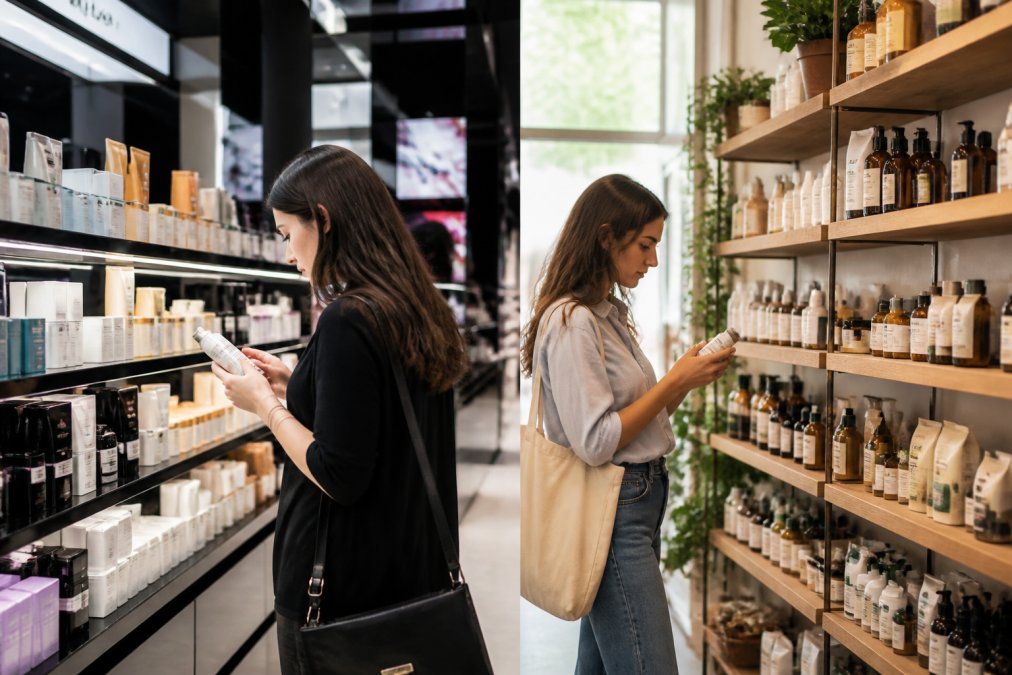
Scale and Market Positioning
Sephora operates thousands of locations globally and carries over 25,000 SKUs across makeup, skincare, fragrance, and tools (sephora.com). This inventory depth lets you compare dozens of brands in one visit, from mass-market to luxury. The trade-off: curation becomes algorithmic rather than editorial.
Independent beauty retailers stock 500-2,000 SKUs, emphasizing skincare and emerging brands (nrf.com). This constraint forces real curation. A boutique retailer likely knows their inventory intimately, has tested products, and built relationships with brand founders, the opposite of Sephora's "stock everything" model.
Sephora and similar chains control the retail footprint for prestige beauty. Independent retailers survive by serving specific segments: niche Korean skincare seekers, clean beauty advocates, customers wanting expert consultation, or shoppers valuing supply chain transparency.

Shopping Experience: In-Store vs Online
Sephora's in-store experience is designed for self-service discovery. You can test products and compare finishes independently. The downside: if you have specific skin concerns, you're mostly navigating thousands of options alone.
Independent retailers invert this. Many operate as consultation-focused spaces where staff ask about your routine, concerns, and skin type, then recommend three products instead of thirty. For customers tired of decision paralysis, this is relief.
Online, the gap narrows. Sephora's website offers strong filtering by skin type, concern, and price. Independent retailers' e-commerce varies, but many publish detailed skincare guides, ingredient breakdowns, and founder interviews that Sephora's algorithm-driven site can't match.
Is Professional Skincare Worth It? Sephora's Premium Positioning
Professional skincare is worth it if you understand what "professional" means. At Sephora, it usually signals higher price points and prestige positioning, not necessarily clinical efficacy. Professional lines are shelved alongside mass-market brands at similar prices.
Independent retailers' professional skincare has clearer meaning. These lines are often formulated with dermatologists, backed by clinical studies, or designed for treating skin conditions rather than preventing them. A professional serum from an independent retailer is more likely to contain active ingredients at therapeutic concentrations.
Sephora's prestige brands cost more because of brand equity and marketing. Independent retailers' professional lines cost more because of ingredient quality, clinical backing, and smaller production runs. For someone with deep lines, post-menopausal dryness, or stubborn dark spots, the independent retailer's approach often delivers better results because products address specific concerns rather than appeal broadly.
Benefits of Independent Skincare Brands and Retailers
Independent beauty retailers serve a market Sephora structurally cannot: customers wanting transparency, specificity, and relationship.
Curation and Product Discovery
Independent retailers excel at curation because they must. With limited shelf space, they make deliberate choices about what to stock. When a boutique carries only five moisturizers instead of fifty, each solves a specific problem or represents a specific value proposition.
This curation extends to emerging brands. Independent retailers are where new skincare lines launch. They're willing to take risks on unknown founders and champion brands before they reach Sephora's scale. If you're seeking the next generation of skincare innovation, Korean brands before mass market, or clean beauty founders with novel approaches, independent retailers are where you find them first.
The downside: if a boutique stops stocking a product you love, finding it elsewhere may be difficult. Sephora's scale guarantees consistency; independent retailers offer discovery but not always reliability.
Supply Chain and Ethical Sourcing
Independent retailers claim genuine differentiation here. Many can tell you exactly where ingredients come from, whether they're ethically sourced, and what manufacturing practices are used. Some specialize in clean beauty, sustainable packaging, or fair-trade sourcing.
An independent retailer might stock a Korean skincare brand sourcing ginseng from a specific region with minimal packaging and direct farmer partnerships. That narrative is often unavailable at Sephora because the store doesn't curate around it.
For health-conscious consumers or those concerned about synthetic additives, independent retailers often provide third-party certifications, ingredient sourcing documentation, and founder transparency that mass-market retailers don't prioritize.
Direct-to-Consumer vs Retail Shelf
Many skincare brands operate both DTC and retail channels, but products and pricing differ. DTC brands often bypass retail entirely or sell through select independent retailers. Sephora carries some DTC brands, but the relationship requires the brand to accept Sephora's margins, meaning higher prices or smaller sizes.
Independent retailers often carry true DTC brands at better pricing than the brand's website because the retailer negotiates volume discounts. You're supporting the brand directly while getting a better deal.
Sephora's model is fundamentally retail-first. The store is the customer touchpoint; the brand is secondary. This disadvantages emerging DTC brands. If you want to discover and support emerging skincare founders, independent retailers are the distribution channel.
Pricing, Loyalty Programs, and Customer Acquisition
Sephora's loyalty program is extensive. Members earn points, access exclusive products, and receive birthday gifts. For frequent beauty shoppers, rewards accumulate meaningfully.
Independent retailers rarely match this infrastructure. Some offer basic points programs or referral discounts, but sophistication is lower. This reflects both economics and philosophy, independent retailers compete on service and curation rather than points accumulation.
Pricing at Sephora is standardized. Most brands maintain the same retail price across channels. Independent retailers sometimes negotiate better pricing for emerging brands, but established prestige brands maintain consistent pricing. You're paying for curation and service, not savings.
Sephora invests heavily in marketing and paid advertising. Independent retailers rely on word-of-mouth, local reputation, and content marketing. This shapes the customer base: Sephora attracts browsers and impulse buyers; independent retailers attract intentional shoppers seeking specific solutions.
Curated Beauty Shopping Guide: How to Choose
The choice between Sephora and independent retailers depends on what you're optimizing for: convenience, curation, expertise, or discovery.

Evaluating Product Selection and Inventory
Define what you're looking for. Are you seeking a specific product category? Targeting a particular concern? Interested in a specific brand or ingredient profile?
If you know exactly what you want, Sephora's inventory depth is an advantage. You can compare five serums for dark spots, test them, and make an informed choice in one visit. If you're exploring and want guidance, an independent retailer's curated selection is less overwhelming and more likely to include expert recommendations.
For emerging brands or niche products, independent retailers win. For established prestige brands, both channels carry them at identical pricing.
| Consideration | Sephora | Independent Retailers |
|---|---|---|
| Product Selection | 25,000+ SKUs, all categories | 500-2,000 SKUs, skincare-focused |
| Emerging Brands | Limited, after mass-market adoption | Early access, founder relationships |
| Prestige Brands | Complete selection, standardized pricing | Selective, may have gaps |
| Niche/Specialty | Limited (clean beauty, K-beauty mixed in) | Often central to curation |
| Inventory Consistency | Guaranteed across locations | Varies by retailer |
| Price Negotiation | None; standardized pricing | Possible for emerging brands |
Customer Service and Expert Support
This distinction matters most for customers with specific concerns or sensitive skin. Sephora staff are trained but managing thousands of products and high volume. If you need deep expertise, understanding retinol protocols for mature skin with deep lines or how to layer actives without irritation, Sephora staff can help, but they're not incentivized to spend 30 minutes on one customer.
Independent retailers often build their business on expertise. Staff may have personal testing experience and relationships with brand founders. They're more likely to ask detailed questions and recommend a targeted routine instead of ten products.
For customers nervous about trying new products or worried about irritation, independent retailers' consultation approach reduces risk. You're being guided, not guessing.
Sephora vs Independent Retailers: Pros and Cons
Sephora Advantages and Limitations
Advantages:
Sephora's scale creates real benefits. You can test products before buying, compare dozens of options, and access virtually any prestige brand in one location. The loyalty program rewards frequent shoppers. Online shopping is seamless with strong filtering and customer reviews. Physical locations are convenient, and the return policy is generous.
For customers who know what they want and prefer self-service discovery, Sephora is efficient.
Limitations:
With 25,000 products, curation is algorithmic. If you're overwhelmed by choice or uncertain about what your skin needs, you're mostly on your own. Staff are stretched thin during peak hours.
Emerging brands and DTC lines are underrepresented. Sephora lags independent retailers by 12-24 months on new skincare innovation (peer-reviewed research). Clean beauty and ethical sourcing are present but not central to curation.
Price points skew high due to real estate costs, marketing spend, and loyalty program infrastructure. For sensitive skin or specific concerns, Sephora's broad inventory creates decision paralysis.
Independent Retailers: Advantages and Limitations
Advantages:
Independent retailers offer genuine curation. Products are selected because they solve specific problems or represent specific values. Staff expertise is often deep, they've tested products and can explain recommendations.
Access to emerging brands and DTC lines is superior. You find products six months to two years before Sephora carries them. Ethical sourcing and supply chain transparency are often central to curation. Pricing on emerging brands can be better through volume discounts.
The consultation model reduces risk. Staff can address concerns about irritation or recommend targeted routines instead of overwhelming you with options.
For customers seeking relationship and transparency, independent retailers deliver on all three.
Limitations:
Inventory gaps are real. If a retailer stops carrying a product you love, finding it elsewhere is difficult. Consistency across visits varies.
Loyalty programs are basic or nonexistent. Pricing on established prestige brands is identical to Sephora, so you're paying for curation, not savings.
Online shopping experiences vary dramatically. Shipping times can be slower than Sephora's next-day options.
Appointment-based models require planning. If you prefer autonomy and self-service, the consultation approach can feel prescriptive.
Conclusion: Which Retailer Fits Your Skincare Goals
The choice isn't about which is objectively better, it's about what you're optimizing for.
Choose Sephora if you want convenience, brand selection, and self-service discovery. The loyalty program rewards repeat purchases, and the return policy reduces risk.
Choose independent retailers if you want expertise, curation, and emerging brands. If you have specific skin concerns, deep lines, post-menopausal dryness, reactive skin, the consultation model delivers better outcomes than browsing 25,000 options alone.
Use both: shop Sephora for established prestige brands and testing new products. Shop independent retailers for emerging skincare lines, ethical sourcing, and expert consultation on targeted concerns.
At Ageless Glow, we've curated a selection of targeted skincare and beauty tools specifically designed for visible results, whether you're addressing dark spots, fine lines, or loss of elasticity. Our approach mirrors what independent retailers do best: we focus on nutrient-rich formulas and modern devices that deliver effortless radiance without the decision paralysis of mass-market retail. The Full-Size Korean Skincare Set for Dark Spots, Fine Lines & Glass Skin ($170.94) provides a complete AM/PM routine with clinically-backed ingredients, exactly the kind of targeted curation independent retailers specialize in. Add to cart and experience the difference between browsing thousands of options and choosing from a carefully selected routine designed to work together.
Frequently Asked Questions
Q: Is professional skincare worth it compared to drugstore brands?
A: Professional skincare often delivers better results for specific concerns like dark spots, fine lines, and uneven texture because formulations are typically more concentrated and research-backed. However, worth depends on your skin concerns and budget. A targeted Korean skincare set like the Full-Size Korean Skincare Set for Dark Spots, Fine Lines & Glass Skin at $170.94 offers professional-grade ingredients in a complete AM/PM system, which can outperform multiple drugstore purchases. The key is consistency and matching the formula to your actual skin needs, not just the brand name.
Q: What are the primary benefits of shopping at independent beauty retailers?
A: Independent retailers excel at product curation, ethical sourcing transparency, and personalized customer service. They typically carry emerging brands before they reach mass-market shelves, support direct-to-consumer (DTC) brands with better margins, and often provide detailed ingredient sourcing information. Many indie retailers focus on clean beauty, sustainable packaging, and skincare that addresses specific concerns like post-menopausal dryness or sensitivity. You also get direct access to brand founders or educated staff who understand ingredient interactions and can recommend sequences rather than just individual products.
Q: How does product curation differ between Sephora and independent beauty shops?
A: Sephora curates for breadth and mass-market appeal, stocking 200+ brands across all price points and skin types to serve millions of customers. Independent retailers curate for depth, selecting 20-50 brands they've vetted personally, often emphasizing clean ingredients, emerging labels, or niche formulations overlooked by big-box retailers. Indie shops prioritize supply chain transparency and brand incubation, helping small labels build customer loyalty. This means Sephora offers convenience and choice, while independents offer expertise and discovery of brands aligned with your values.
Q: Can I verify that independent skincare products are actually free from synthetic additives?
A: Yes, reputable independent retailers provide third-party testing results, certifications (like vegan, cruelty-free, or dermatologist-tested), and detailed ingredient lists. Brands like those sold through curated indie retailers often publish sourcing information and avoid synthetic preservatives or fragrance. When shopping, ask for certifications, request batch testing results, and check if the retailer lists all ingredients on their website. Many Korean skincare brands, which emphasize natural hydration and plant-based actives, publish full ingredient breakdowns and are available through vetted independent retailers.
This article was written using GrandRanker