

Table of Contents
- Why Skin Loses Elasticity After 50
- Natural Skincare Tips for Aging Skin
- Foods That Support Collagen Production
- Skin Hydration for Mature Skin
- Facial Massage for Skin Elasticity
- Sun Protection and Prevention
- Realistic Expectations and Timeline
- Frequently Asked Questions
Last Updated: October 10, 2026
Why Skin Loses Elasticity After 50
Skin elasticity after 50 declines because your body produces less collagen and elastin, the proteins that keep skin firm and supple. These structural fibers break down faster than they regenerate, and sun damage accumulated over decades accelerates the process. At Ageless Glow, we focus on strategies that address this reality directly: supporting what your skin can still produce, protecting it from further damage, and nourishing it with ingredients that strengthen the skin barrier.
The loss of elasticity responds to targeted care. Hormonal changes, reduced cell turnover, and decreased moisture retention all contribute, and understanding these drivers helps you choose interventions that work.
Natural Skincare Tips for Aging Skin
Natural skincare for aging skin works best when you combine topical support with systemic nourishment. The skin barrier weakens after 50, so ingredients need to be gentle but effective.
Vitamin C and Collagen Formation
Vitamin C has strong clinical evidence for collagen support. It stabilizes collagen synthesis and protects against free radical damage. L-ascorbic acid penetrates the skin and acts as a cofactor for enzymes required for collagen cross-linking and stability.
Apply a vitamin C serum in the morning at 10-20 percent L-ascorbic acid, ideally at pH below 3.5. Look for stabilized forms in opaque or dark packaging; unstable vitamin C oxidizes quickly and loses potency within weeks.
Realistic expectation: Vitamin C improves fine lines and skin texture noticeably within 8-12 weeks, but it does not reverse deep wrinkles or significantly increase skin thickness on its own.
Antioxidants and Free Radical Protection
Free radicals from sun exposure, pollution, and stress break down collagen and elastin. Antioxidants neutralize them before they damage skin structure.
Green tea extract reduces sebum oxidation, improves skin elasticity, and protects against UV-induced collagen breakdown. Vitamin E works synergistically with vitamin C, stabilizing it and extending its antioxidant activity.
Antioxidants work best in combination.
Important note: Antioxidants support skin health and slow visible aging, but they cannot fully reverse photoaging or rebuild lost collagen on their own. They are preventive and supportive, not corrective.
Topical Oils and Natural Ingredients
Natural oils restore the lipid barrier that mature skin loses with age and sun exposure. Argan oil, rosehip oil, and jojoba oil contain fatty acids and fat-soluble vitamins that nourish without feeling heavy, especially effective at night.
Rosehip oil contains vitamin A, which supports cell turnover. Argan oil's linoleic acid restores the skin barrier. Jojoba oil mimics skin sebum, making it well-tolerated by sensitive mature skin.
Apply oils to slightly damp skin to lock in moisture. Oils alone won't firm skin or rebuild collagen, but they're essential support for hydration and barrier health.
Safety, Interactions, and When to Consult a Clinician
Before introducing new topical products, especially if you take blood thinners, have rosacea, or use prescription retinoids, consult your dermatologist. Some natural ingredients can potentiate blood thinners or trigger photosensitivity.
Always patch test new products on a small area for 24-48 hours before full application. Introduce new actives one at a time, waiting 1-2 weeks between additions, so you can identify which ingredient caused any reaction.
Foods That Support Collagen Production
What you eat directly influences skin structure. Collagen is made from amino acids, so protein intake matters. Vitamin C, copper, and zinc enable collagen synthesis, while antioxidants protect it from oxidative damage.
Protein-Rich Foods and Amino Acids
Collagen contains glycine, proline, and hydroxyproline. Eating protein-rich foods like fish, poultry, beef, eggs, and legumes supplies these amino acids.
Bone broth contains collagen peptides that break down into amino acids and is a convenient option if you tolerate it well.
Antioxidant-Rich Foods for Skin Health
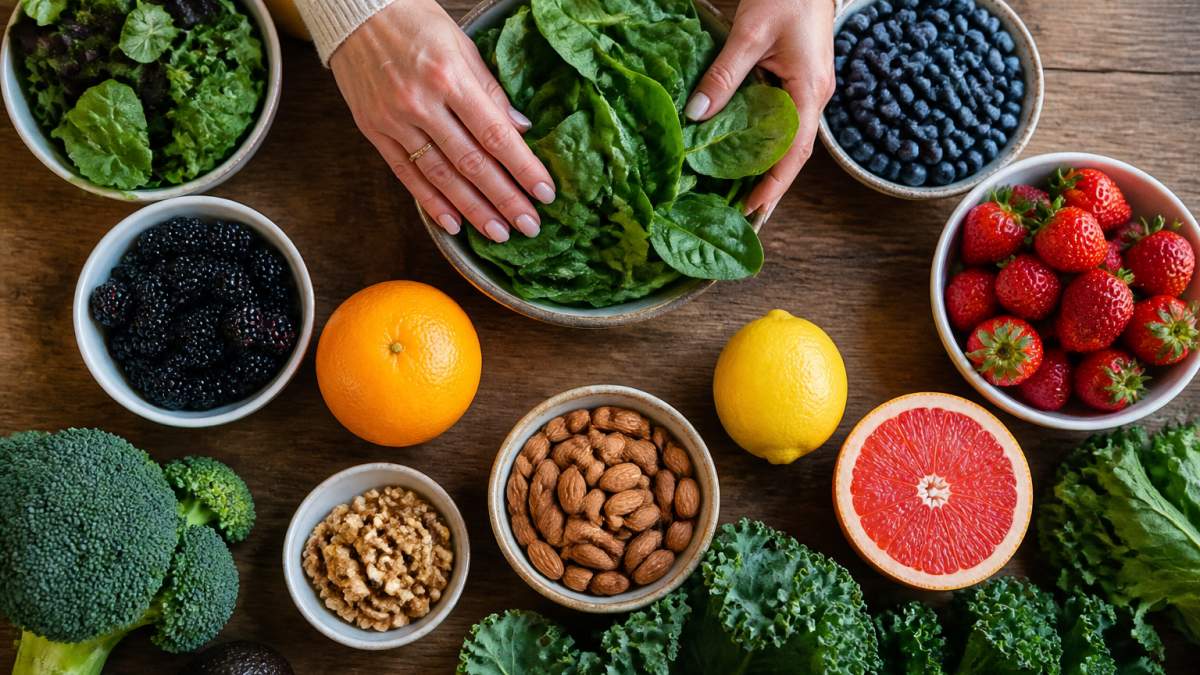
Berries, leafy greens, citrus fruits, and nuts contain vitamins C and E and polyphenols that protect collagen from oxidative stress.
Eat a variety of colorful vegetables and fruits daily. Different colors indicate different antioxidants: red and orange contain lycopene and beta-carotene, dark greens contain lutein, and berries contain anthocyanins.
Skin Hydration for Mature Skin
Mature skin holds less water because the barrier weakens and hyaluronic acid production declines. Hydrated skin appears firmer and supports the skin's natural repair processes.
Topical hydration is more direct than water intake. Hyaluronic acid serums draw moisture into the skin. Layering a hydrating serum under a cream locks moisture in effectively.
Our Hyaluronic Acid & Niacinamide Hydrating Serum combines deep hydration with niacinamide, which balances oil production and refines pores.

Apply hydrating serums to damp skin, then follow with a lightweight cream or oil.
Facial Massage for Skin Elasticity
Facial massage improves circulation, delivering oxygen and nutrients to skin cells and supporting lymphatic drainage. It doesn't rebuild collagen, but it creates conditions where your skin functions better.
Massage for 2-3 minutes daily using gentle upward strokes. Use your fingertips or a jade roller. The key is consistency and gentleness.
Focus on areas where elasticity loss is most visible: the jawline, cheeks, and forehead. Upward strokes against gravity help maintain firmness. This is a low-cost, low-effort addition to any routine that many people notice within 2-3 weeks.
Sun Protection and Prevention
Sun damage is the single largest factor in premature skin aging. UV radiation breaks down collagen and elastin directly and triggers free radical formation. Protecting your skin now prevents further decline.
Daily sunscreen is non-negotiable for skin elasticity after 50. Use SPF 30 minimum, reapply every two hours if outdoors. Physical sunscreens with zinc oxide or titanium dioxide are gentler on mature skin.
Beyond sunscreen, wear hats and seek shade during peak hours (10 a.m. to 4 p.m.). These habits compound over time. Skin protected consistently shows better elasticity and tone than skin left exposed.
Realistic Expectations and Timeline
Natural approaches to skin elasticity work gradually and within limits. Understanding what to expect prevents frustration and helps you choose the right strategy.
What Natural Methods Can and Cannot Do
What natural approaches can achieve:
- Improve skin hydration and plumpness, making fine lines appear softer (visible within 2-4 weeks)
- Smooth skin texture and refine pores through consistent hydration and gentle exfoliation (visible within 4-8 weeks)
- Slow further collagen and elastin breakdown through sun protection and antioxidant support (preventive; results compound over months and years)
- Strengthen the skin barrier, reducing irritation, redness, and sensitivity (visible within 2-3 weeks)
- Enhance skin tone and radiance through improved circulation and nutrient delivery (visible within 4-6 weeks)
What natural methods cannot do:
- Fully reverse deep wrinkles or folds caused by decades of sun exposure and gravity
- Significantly increase skin thickness or rebuild substantial collagen loss (natural topicals support production but cannot match the volume loss from aging)
- Tighten loose or sagging skin on the jawline, neck, or décolletage without professional treatments
- Eliminate age spots or significant hyperpigmentation (they may fade slightly with sun protection and vitamin C, but results are modest)
- Provide results comparable to retinoids, chemical peels, or professional procedures in terms of speed or magnitude
If your primary concern is loose skin or deep folds, natural skincare is supportive, not primary. If your goal is to slow aging, improve texture, and maintain firmness, natural methods deliver meaningful results.
Timeline and Expected Results
Expect visible improvement in firmness, fine line softness, and skin texture within 6-12 weeks of consistent daily care. Results vary based on starting point, genetics, sun exposure history, and adherence.
| Timeline | Expected Results | What to Track |
|---|---|---|
| Weeks 1-2 | Improved hydration, skin feels softer and less tight | Dryness reduction, comfort level, morning puffiness |
| Weeks 3-6 | Fine lines appear softer, skin tone evens, texture roughness decreases | Photo comparison, makeup application smoothness, tactile firmness |
| Weeks 6-12 | Noticeable firmness improvement, fine lines less visible, skin appears more radiant | Jawline definition, cheek fullness, overall luminosity in photos |
| Weeks 12+ | Results plateau; maintenance prevents decline, further gains slow significantly | Consistency becomes key; stopping routine reverses gains within 2-4 weeks |
Deep wrinkles won't disappear, but they'll appear less pronounced due to improved hydration and surface collagen support. Skin texture improves faster than deep lines because texture responds immediately to hydration and surface-level collagen support, while deep structural changes take longer.
How to Measure Progress Realistically
Use concrete tracking methods to measure progress:
Standardized photos: Take photos in consistent natural lighting every 2 weeks. Compare week 0 to week 8, then week 8 to week 16 to remove daily bias.
Skin texture and dryness: Rate your skin's dryness and roughness on a scale of 1-10 weekly. Reduced flakiness and tightness are early signs your routine is working.
Firmness and bounce: Gently pinch the skin on your cheek or jawline and release every 4 weeks. Improved elasticity means faster rebound.
Makeup application: Improved skin texture means smoother application and better wear. This is a practical daily indicator of progress.
Puffiness and definition: Assess morning puffiness and jawline definition. Better circulation reduces puffiness and sharpens the jawline.
Building a Routine: Frequency and Introduction Strategy
Introduce products gradually.
Week 1-2: Start with a gentle cleanser and basic moisturizer if you don't have these. Establish a baseline.
Week 3-4: Add a hydrating serum (hyaluronic acid or glycerin-based). Use morning and evening.
Week 5-6: Add a sunscreen (SPF 30+) for morning use. This is non-negotiable and prevents further damage.
Week 7-8: Add vitamin C serum for morning use (after hydrating serum, before sunscreen).
Week 9-10: Add a natural oil or richer night cream for evening use.
This staggered approach lets your skin adapt and lets you identify what works for you.
Consistency and Maintenance
Results plateau after about 3-4 months with natural methods. You'll see real improvement without downtime or risk, but consistency matters: stopping your routine reverses gains within 2-4 weeks.
Treat your skincare routine as a long-term habit, not a short-term fix. The goal is to maintain and slow decline, not to achieve perfection. Skin that is consistently protected and nourished ages more slowly and gracefully than skin that is neglected, regardless of your age.
Frequently Asked Questions
What is the fastest way to improve skin elasticity after 50?
Results take time, but combining multiple approaches works fastest. Hydration with hyaluronic acid serums plumps skin within weeks. Vitamin C serums support collagen production over 4-8 weeks. Sun protection prevents further damage immediately. Consistent facial massage and antioxidant-rich foods amplify results over 2-3 months. The Firming Facial Serum at Ageless Glow contains vitamin C, E, and hyaluronic acid to target elasticity and fine lines simultaneously.
Can diet really help improve skin elasticity?
Yes. Collagen production depends on vitamin C, amino acids, and antioxidants your body obtains from food. Leafy greens, berries, citrus, bone broth, and fatty fish supply these nutrients. Adequate protein intake provides amino acids needed for elastic fiber synthesis. Hydration from water and hydrating foods like cucumbers supports skin moisture and plumpness. Results appear gradually over 6-12 weeks as new skin cells form with better structural support.
How does facial massage improve skin elasticity?
Facial massage increases blood flow to skin, delivering oxygen and nutrients that support collagen production. Upward stroking motions stimulate lymphatic drainage, reducing puffiness and promoting firmness. Regular massage can improve skin texture and tone. For mature skin, use gentle, consistent pressure 2-3 times weekly. Combine with a hydrating serum like the Hyaluronic Acid & Niacinamide Hydrating Serum to enhance results and protect the skin barrier.
What natural ingredients actually work for mature skin elasticity?
Vitamin C boosts collagen synthesis and brightens dull skin. Hyaluronic acid draws moisture into skin, plumping fine lines. Niacinamide strengthens the skin barrier and refines pores. Rosehip and argan oils provide essential fatty acids and antioxidants. Green tea extract protects against free radical damage. Look for serums combining multiple ingredients, like the Firming Facial Serum, which includes vitamin C, E, and hyaluronic acid for comprehensive support.