

Table of Contents
- What a Jade Roller Actually Does for Your Skin
- What You'll Need Before You Start
- Step-by-Step: How to Jade Roll Your Face
- How Long to Jade Roll Face for Best Results
- Best Facial Oils for Jade Rolling
- Non Invasive Skin Tightening at Home: Pairing Tools with Your Routine
- Cleaning, Cooling, and Storing Your Jade Roller
- When to Skip Jade Rolling: Contraindications and Common Mistakes
- Frequently Asked Questions
Last Updated: September 23, 2026
What a Jade Roller Actually Does for Your Skin
A jade roller is a handheld facial tool with a smooth stone head that glides over your skin. This guide from Ageless Glow explains how to use a jade roller for face care in a way that actually helps. The tool works in two ways: the cool stone calms puffiness, and the rolling motion supports lymphatic drainage and blood flow. Many estheticians treat it as a simple add-on to a facial massage routine. It won't erase deep wrinkles on its own. What it does well is de-puffing, easing tension, and helping serums sink in better.
Here's the part most guides skip: results come from consistency and technique, not from the stone itself.
What You'll Need Before You Start
Before your first roll, gather a few basics. You don't need much, and skipping prep is the fastest way to irritate your skin.
- A clean jade roller, chilled or at room temperature
- A gentle cleanser
- A facial oil or serum for slip
- A soft towel
- Clean hands
The most common mistake is rolling on dry skin. Without slip, the stone drags and pulls instead of gliding.
Step-by-Step: How to Jade Roll Your Face
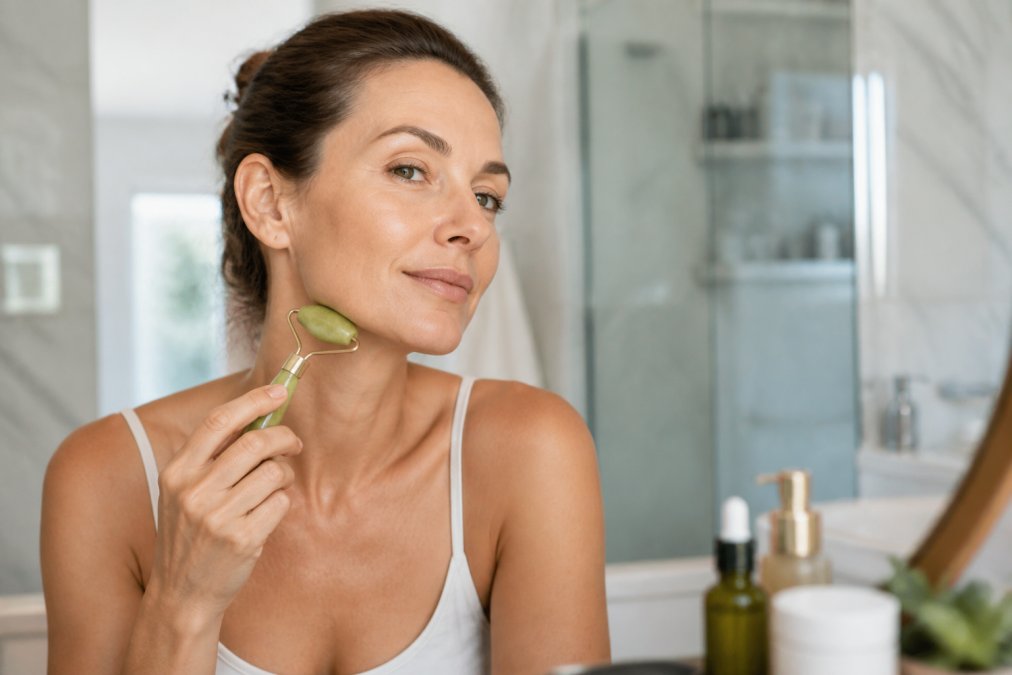
Learning how to use a jade roller for face massage comes down to three things: prep, direction, and pressure. Get these right and the rest is easy. Most guides stop at "roll upward", the details below are what separate a five-minute session that de-puffs from one that leaves you flushed.
Step 1: Prep Your Skin
Start with a clean face. Apply a few drops of facial oil or your favorite serum so the stone glides smoothly. This step also boosts serum absorption, since the rolling motion helps product spread evenly.
Step 2: Roll in the Right Direction
Always roll outward and upward. Start at the neck, then move to the jawline, cheeks, and forehead. Use upward strokes to support facial contours and circulation. Rolling downward works against the flow you're trying to encourage.
A workable sequence, in order:
- Neck, from the base of the neck up toward the jaw, 5-10 strokes per side. This is the drainage pathway before the face.
- Jawline, from the chin outward toward the earlobe, 5-10 strokes per side.
- Cheeks, from the nose outward and up toward the temple, 5-10 strokes per side.
- Under-eye, from the inner corner outward toward the temple, 3-5 very light strokes per side.
- Forehead, from the brow bone upward toward the hairline, then outward toward the temples, 5-10 strokes.
Step 3: Adjust Pressure for Sensitive Areas
Use gentle pressure everywhere, and go lighter around the eye socket and jawline. The under-eye area is thin and delicate. Pressing hard there can cause redness and irritation. Light, steady strokes beat firm ones.
- Level 1 (feather-light): under-eyes, temples, and anywhere you can feel the bone close to the surface. The stone should feel like it's barely touching skin.
- Level 2 (light): cheeks, forehead, and jawline. Enough to feel the stone's weight, not enough to indent the skin.
- Level 3 (never): any pressure that visibly drags, blanches, or reddens the skin. If you can see the stone pushing tissue, you're past the point of benefit.
How Long to Jade Roll Face for Best Results
The ideal session lasts about five minutes per side. That's enough time to cover your neck, jawline, cheeks, and forehead without overworking the skin. You can jade roll daily, ideally after cleansing and before moisturizer.
A simple routine:
- Neck: 5-10 upward strokes
- Jawline: 5-10 strokes toward the ears
- Cheeks: 5-10 strokes upward
- Forehead: 5-10 strokes outward
Best Facial Oils for Jade Rolling
The right facial oil makes rolling smoother and more comfortable. Look for lightweight oils that absorb well and won't clog pores.
- Jojoba oil: close to skin's natural oils, good for most skin types
- Rosehip oil: often used for fine lines and uneven tone
- Squalane: light and unlikely to clog pores
- Marula oil: rich but absorbs quickly
- Argan oil: nourishing for dry or mature skin
Non Invasive Skin Tightening at Home: Pairing Tools with Your Routine
Non invasive skin tightening at home means using tools and formulas that support firmness without needles or downtime. A jade roller is one piece of that routine, not the whole thing. Pair it with other tools for better results.
| Tool | Main Benefit | Best For | Time Per Session |
|---|---|---|---|
| Jade roller | De-puffing, serum absorption | Morning routine, all skin types | 5 minutes |
| Gua sha board | Contouring, tension relief | Jawline and cheek definition | 5-10 minutes |
| Face massager | Toning, firmness | Fine lines, elasticity | 5-10 minutes |
Cleaning, Cooling, and Storing Your Jade Roller
Clean your roller after every use. Warm water, a drop of gentle soap, and a soft cloth are enough. Then dry it fully before storing. Skipping this step lets bacteria and old product build up on the stone.
When to Skip Jade Rolling: Contraindications and Common Mistakes
Jade rolling isn't right for everyone, every day. This is the section most guides leave out, and it's the one that matters most if your skin is reactive. Skip it if you have active acne, open cuts, sunburn, or a skin infection. If you've had recent cosmetic procedures, ask your provider before rolling.
Conditions That Call for a Pause
- Active acne, especially cystic or inflamed: Rolling over active breakouts can spread bacteria across the face and push inflammation deeper. Wait until lesions have healed.
- Rosacea or a flushed, reactive baseline: The rolling motion increases blood flow, which can trigger a flare. If you have rosacea, test on a small area of the jaw for two days before committing to a full routine.
- Eczema or psoriasis patches: Broken or thickened skin doesn't glide well and can crack under the stone. Roll around the patches, not over them.
- Cold sores or any active infection: The roller can pick up and redistribute the virus or bacteria. Clean the stone thoroughly afterward, or better, set it aside until the area heals.
- Sunburn or windburn: The barrier is compromised. Wait until the skin is no longer tender to the touch.
- Recent chemical peels, microneedling, laser, or injectables: A common pattern is to wait at least 7 days after a light peel or microneedling session, and follow whatever your provider tells you for injectables, typically 24 to 48 hours for fillers and longer for Botox, since rolling can affect where the product settles.
- After facial surgery or dental work: Ask your provider. Lymphatic drainage can help with swelling, but the timing and pressure need to be cleared first.
Skin Conditions That Need a Gentler Approach
If you have a skin condition like rosacea or eczema, test gently on a small area first. Stop if you notice irritation. For sensitive skin in general, a few adjustments help:
- Chill the roller before use, cold reduces the chance of a flush.
- Use Level 1 pressure only.
- Keep sessions to 2-3 minutes instead of 5.
- Roll every other day rather than daily until you know how your skin responds.
Common Mistakes to Avoid
- Rolling on dry skin and tugging at your face
- Pressing too hard around the eyes
- Rolling downward instead of upward
- Using a dirty roller
- Rolling over active breakouts or broken skin
- Expecting deep wrinkles to vanish
- Rolling for 20 minutes because "more is better", it isn't, and it's a fast route to irritation
What to Do If Your Skin Reacts
If you notice redness that lasts more than 15 minutes, stinging, or new bumps, stop rolling for at least three days. Apply a gentle moisturizer and skip actives like retinol or exfoliating acids during that window. If the reaction doesn't clear, see a dermatologist, a roller is not worth a compromised barrier.
Frequently Asked Questions
How often should you jade roll your face?
You can jade roll once or twice daily, ideally in the morning to reduce puffiness and at night to help skincare products absorb. Start with one session per day for a week to see how your skin responds. If you notice redness or irritation, reduce to every other day. Consistent, gentle sessions matter more than long or forceful ones, so keep each session to about five minutes per side.
What should I put on my face before using a jade roller?
Always apply a facial oil, serum, or moisturizer before rolling. A lightweight facial oil gives the best glide and helps the roller move smoothly without tugging. The Heart Shaped Gua Sha Board from Ageless Glow ($36.99) works well with the same facial oil or serum you use for jade rolling. Avoid rolling on dry skin, as friction can irritate the skin barrier.
Can jade rollers help with lymphatic drainage?
Yes. The gentle, outward and upward strokes used in jade rolling support lymphatic drainage, which can reduce puffiness around the jawline and eye area. For best results, roll from the center of your face outward toward your ears and down your neck. Using a cooled roller, such as one stored in the refrigerator, can enhance the de-puffing effect.
Should you refrigerate a jade roller?
Refrigerating your jade roller is optional but helpful for de-puffing, especially in the morning. The cool stone constricts blood vessels and can calm inflammation. If you prefer a warmer feel, run the roller under lukewarm water before use. Always dry it completely after cleaning to prevent bacterial growth, and store it in a clean, dry place.