

Table of Contents
- Why Organic Face Oils Work on Wrinkles
- Benefits of Rosehip Oil for Wrinkles
- How to Apply Face Oil for Anti-Aging
- Choosing the Best Organic Face Oils for Your Skin Type
- Organic Skincare Routine for Mature Skin
- Storage and Shelf Life of Organic Oils
- Frequently Asked Questions
Last Updated: September 11, 2026
Why Organic Face Oils Work on Wrinkles
The best organic face oils for wrinkles deliver fatty acids that reinforce the skin barrier, the first defense against fine lines that deepen as skin loses moisture.
Here is the uncomfortable truth about organic face oils: they will not erase deep-set lines on their own. What they do well is support the skin's lipid barrier, and a healthy barrier holds water, plumped skin makes fine lines look softer.
That distinction matters because so many shoppers buy an oil expecting a facelift in a bottle, then give up after two weeks. The American Academy of Dermatology guidance on moisturizing is clear that moisturizing supports the skin barrier and improves the look of dryness-related lines, not structural wrinkles. Set that expectation correctly and organic face oils become one of the most reliable, low-effort steps in a mature-skin routine.
How Fatty Acids Support Skin Barrier Repair
Skin barrier repair is how the outer layer of skin rebuilds its lipid matrix, fatty acids, ceramides, and cholesterol, keeping water in and irritants out. Botanical oils supply two key fatty acids: linoleic and oleic acid.
Linoleic acid suits dry or reactive skin; oils high in it, like rosehip and prickly pear, absorb faster (PubMed). Oleic acid is richer, suiting very dry or mature skin but feeling greasy on combination skin. The right oil is the one your skin absorbs without a film.
Long-Term Firmness vs. Immediate Hydration
Immediate hydration is what you feel within minutes: softer, plumper skin. Long-term firmness shows over months and depends on consistency plus sun protection, not oil alone.
An oil can make skin look better in an hour and do nothing for elasticity over a year. For firmness, pair it with a retinoid or vitamin C and daily sunscreen; for comfort and glow, oil alone delivers.
Benefits of Rosehip Oil for Wrinkles
Rosehip oil is the best-documented botanical for mature skin: rich in linoleic acid, vitamin A precursors (including trans-retinoic acid), and antioxidants that defend against oxidative stress (peer-reviewed research). It is also one of the lightest options, making it easy to layer.
The benefits of rosehip oil for wrinkles come down to three things:
- Antioxidant support: helps counter oxidative stress that breaks down collagen over time
- Barrier reinforcement: linoleic acid supports the lipid barrier and reduces trans-epidermal water loss
- Texture improvement: regular use tends to soften rough patches and even out tone
The Distinction Most Guides Skip: Occlusive Plumping vs. Cellular Repair
Organic face oils fall into two functional camps:
- Occlusive oils (jojoba, squalane, marula, most oleic-rich oils) sit on the surface and slow water loss. They plump fine lines within minutes and make skin look better by morning. They do not change skin cell behavior.
- Repair-oriented oils (rosehip, sea buckthorn, pomegranate, carrot seed) carry vitamin A precursors, vitamin C-adjacent antioxidants, and fatty acids that support the skin's own turnover and collagen environment over months.
For smoother-looking skin tonight, an occlusive oil is enough. For measurable firmness over a year, you need a repair-oriented oil used consistently, plus sun protection and ideally a retinoid or vitamin C. Expecting structural change from a heavy occlusive is the most common mismatch.
Ingredient Interaction Safety: What Not to Layer With Rosehip
Rosehip is gentle but not inert. A few pairings deserve caution:
- Rosehip + prescription retinoids (tretinoin, adapalene): both push turnover. Layering them on the same night increases peeling and redness risk. Alternate nights, or use rosehip on retinoid-off nights.
- Rosehip + high-percentage AHAs/BHAs (glycolic, lactic, salicylic): sealing an acid under an oil increases penetration and irritation. Apply oil on non-acid nights.
- Rosehip + vitamin C serums: generally fine, but apply the vitamin C first on damp skin, let it absorb, then press oil over the top. Do not mix them in your palm, the oil can dilute the vitamin C's penetration.
- Rosehip + benzoyl peroxide: the combination can oxidize the oil's antioxidants and reduce both products' benefit.
A safer rule: introduce one new active at a time, wait two weeks, then add the next. Oils are the gentlest layer, so they are a reasonable last step once actives have settled.
Shelf Life and Storage for Rosehip Specifically
Rosehip is one of the fastest-oxidizing oils on the shelf, making it the worst candidate for a large, clear-plastic bottle. Buy cold-pressed oil in dark glass, store it in a cool cabinet away from the shower, and replace it within about six months. Rancid rosehip smells sharp or paint-like and does nothing for your skin.
For a serum-based approach that pairs well with oil, the Ageless Glow Vitamin C Brightening Facial Serum ($79.99) combines vitamin C with hyaluronic acid and vitamin E to support brightening and hydration before you seal everything in with oil.

How to Apply Face Oil for Anti-Aging
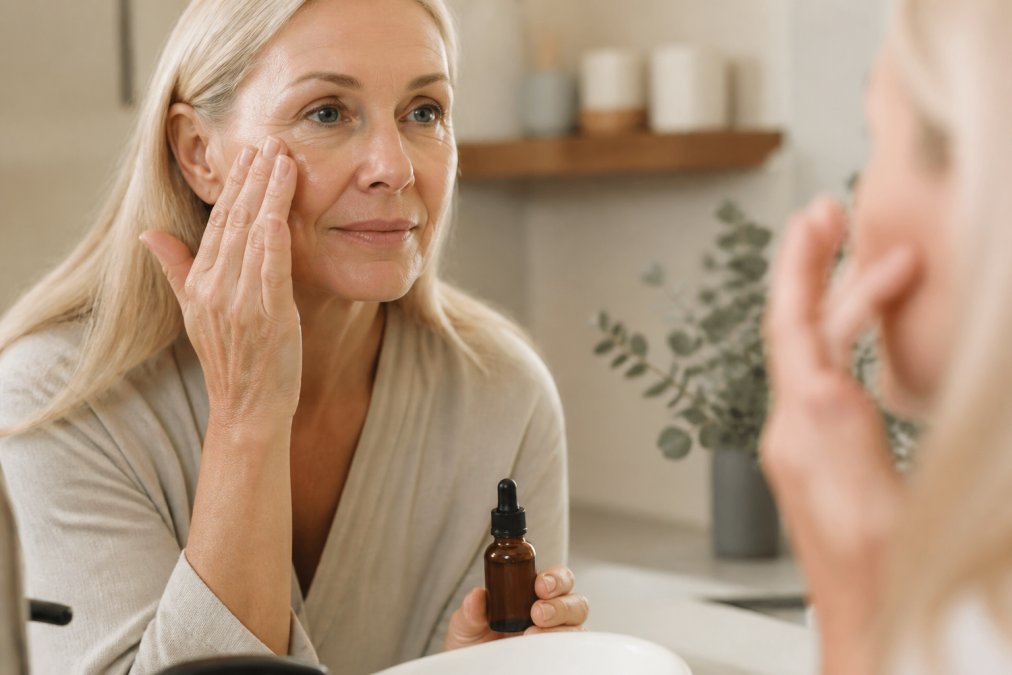
Learning how to apply face oil for anti-aging is mostly about order and quantity: apply oil after water-based serums, use three to five drops, and press rather than rub.
Total time: 2 minutes Difficulty: Beginner
What you'll need:
- A cold-pressed organic face oil
- Clean hands
- A water-based serum or moisturizer to layer underneath
Step 1: Start on damp skin [Time: 30 seconds] Apply your serum or moisturizer first, while skin is still slightly damp. Oil is an occlusive, so it seals in whatever is underneath; on dry skin it traps nothing.
Step 2: Warm three to five drops [Time: 15 seconds] Drop the oil into your palm and rub your hands together for a few seconds. Warm oil spreads further and absorbs more evenly.
Step 3: Press, don't rub [Time: 45 seconds] Press your palms gently over cheeks, forehead, jaw, and neck, avoiding dragging the skin. A light upward massage supports circulation and absorption.
Step 4: Finish with SPF in the morning [Time: 30 seconds] If you apply oil in the morning, follow with sunscreen. Oil alone offers no UV protection, and UV exposure is the primary driver of visible aging.
Expected result: Skin feels soft and comfortable within minutes, with a healthy sheen rather than a greasy film.
Patch Testing for Sensitive Skin
Patch testing is the step almost everyone skips, and it is the one that prevents the most regret. Apply two drops of the oil to the inside of your forearm, cover it with a bandage, and leave it for 24 hours. If you see redness, itching, or bumps, do not put it on your face.
For facial testing, apply a small amount behind your ear or along the jawline for two to three nights before using it on your full face. Sensitive skin often reacts to added fragrance and essential oils rather than to the carrier oil itself, so check the ingredient list first. If you are using prescription skincare or are pregnant or breastfeeding, ask your healthcare provider before adding a new active.
Choosing the Best Organic Face Oils for Your Skin Type
The best organic face oils for your skin type are matched to your oil production, not the trendiest ingredient. Choosing well comes down to three questions: how dry is your skin, how reactive is it, and how heavy a texture will you actually wear nightly?
| Skin Type | Look For | Avoid | Why It Works |
|---|---|---|---|
| Dry or mature | Oleic-rich oils, squalane, prickly pear | Light, fast-evaporating oils | Richer lipids replace what skin no longer produces |
| Combination | Linoleic-rich oils, jojoba, rosehip | Heavy butters and thick oils | Balances without clogging the T-zone |
| Sensitive or reactive | Fragrance-free, single-ingredient oils | Essential oils, added fragrance | Fewer ingredients means fewer triggers |
| Oily or acne-prone | Jojoba, non-comedogenic oils | Coconut oil, heavy oleic oils | Mimics skin's own sebum without congestion |
The Mechanism Behind the Match: Fatty-Acid Ratios
The underlying rule is fatty-acid composition:
- High-linoleic oils (rosehip, grapeseed, evening primrose, prickly pear): lighter, absorb quickly, and suit skin that is dry, reactive, or prone to congestion. Linoleic acid is a component of the skin's barrier lipids, so these oils reinforce rather than coat.
- High-oleic oils (olive, avocado, marula, sweet almond): richer and slower to absorb. They suit very dry or mature skin but can feel greasy on combination skin and may be comedogenic for acne-prone users.
- Balanced oils (jojoba, squalane, argan): sit in the middle and are the safest first pick if you are unsure.
Comedogenic Ratings: What the Numbers Actually Mean
Comedogenic ratings run from 0 to 5, where 0 is least likely to clog pores and 5 is most likely. The scale is a guide, not a guarantee, but a useful filter:
- Low (0-1): jojoba, squalane, rosehip, grapeseed, hemp seed
- Moderate (2-3): argan, sweet almond, apricot kernel, sea buckthorn
- High (4-5): coconut oil, wheat germ, cocoa butter
If you are acne-prone or combination, stay in the 0-2 range. If you are very dry and mature, a 2-3 oil used at night is often fine.
Patch Testing for Sensitive Skin
Patch testing is the step almost everyone skips, and it is the one that prevents the most regret. Apply two drops of the oil to the inside of your forearm, cover it with a bandage, and leave it for 24 hours. If you see redness, itching, or bumps, do not put it on your face.
For facial testing, apply a small amount behind your ear or along the jawline for two to three nights before using it on your full face. Sensitive skin often reacts to added fragrance and essential oils rather than to the carrier oil itself, so check the ingredient list first. If you are using prescription skincare or are pregnant or breastfeeding, ask your healthcare provider before adding a new active.
Storage and Shelf Life: The Variable Most Buyers Ignore
Organic oils oxidize faster than conventional ones because they lack synthetic stabilizers, so storage determines whether the oil still works after a few months:
- Light: store in dark glass, never clear plastic. UV accelerates oxidation.
- Heat: keep away from windowsills, radiators, and bathrooms that steam daily.
- Air: close the cap tightly. Oxygen is the other main cause of rancidity.
- Time: most cold-pressed oils are best within six months of opening. Vitamin C and retinol products often have shorter windows.
How do you know an oil has gone off? The smell turns sharp, waxy, or paint-like, the color darkens, and the texture thickens. If any of those happen, replace it. Using rancid oil can trigger irritation and does nothing for fine lines.
Jojoba is technically a liquid wax whose structure closely resembles human sebum, which is why it suits oily and acne-prone skin. Squalane is lightweight, stable, and unlikely to irritate, making it a safe first oil if you are unsure where to start.
If your priority is firmness rather than hydration, the Ageless Glow Firming Facial Serum ($48.99) layers well under an oil, with vitamin C, vitamin E, and hyaluronic acid supporting elasticity and a smoother look.

Organic Skincare Routine for Mature Skin
An organic skincare routine for mature skin works best when it is short, consistent, and built around hydration plus sun protection. Long routines get abandoned; four steps get done.
Morning:
- Rinse with lukewarm water, or use a gentle cleanser if skin feels oily
- Apply an antioxidant serum such as vitamin C
- Apply a hydrating moisturizer
- Finish with broad-spectrum sunscreen
Evening:
- Cleanse to remove sunscreen and makeup
- Apply a hydrating serum to damp skin
- Apply your treatment step, such as retinol, two to three nights per week
- Press three to five drops of organic face oil over the top to seal in moisture
Order matters more than product count: thinnest to thickest, water-based before oil-based, sunscreen always last in the morning. If skin feels tight after cleansing, your cleanser is too harsh, and no oil will fix that.
For a complete system rather than individual bottles, the Ageless Glow Full-Size Korean Skincare Set ($170.94) separates morning and evening steps, with a daytime brightening serum and SPF50 moisturizer, plus an evening retinol serum and night cream.
Storage and Shelf Life of Organic Oils
Storage and shelf life determine whether your organic oil still works after a few months. Botanical oils are perishable, and oxidation destroys the fatty acids and antioxidants you paid for:
- Light: store in dark glass, never clear plastic. UV accelerates oxidation.
- Heat: keep away from windowsills, radiators, and bathrooms that steam daily.
- Air: close the cap tightly. Oxygen is the other main cause of rancidity.
- Time: most cold-pressed oils are best within six months of opening. Vitamin C and retinol products often have shorter windows.
How do you know an oil has gone off? The smell turns sharp, waxy, or paint-like, the color darkens, and the texture thickens. If any of those happen, replace it. Using rancid oil can trigger irritation and does nothing for fine lines.
For an oil-free option that still targets lines, the Ageless Glow Retinol Face Cream ($41.99) pairs retinol with hydrating botanicals in a lightweight cream that absorbs without a greasy finish.

The hardest part of an anti-aging routine is not finding products, it is staying consistent long enough to see results. Ageless Glow builds targeted skincare and beauty tools for exactly that problem. Start with the Ageless Glow Hyaluronic Acid & Niacinamide Hydrating Serum ($95.99) to plump and smooth, then seal it in with an organic oil at night. Build a routine you will actually keep.
Frequently Asked Questions
What is the best natural face oil for wrinkles?
There is no single best oil, but cold-pressed rosehip, jojoba, and prickly pear rank among the most effective organic face oils for wrinkles. Rosehip is rich in linoleic acid and antioxidants, which support collagen production and help soften fine lines over time. Jojoba closely mimics skin's natural sebum, so it hydrates without clogging pores. Prickly pear contains fatty acids that help with skin barrier repair. Match the oil to your skin type rather than chasing one universal winner.
Can organic face oils actually reduce the appearance of wrinkles?
They can soften the look of fine lines and support long-term skin health, but they are not a retinol replacement. Oils high in linoleic acid and antioxidants help reduce oxidative stress and support the lipid barrier, which improves elasticity and plumping over weeks of consistent use. For deeper lines, pair a face oil with an active like retinol or bakuchiol. A product such as Ageless Glow's Retinol Face Cream ($41.99) can work alongside a face oil in a layered routine.
How often should I apply face oil for anti-aging results?
Most people see the best results applying face oil once or twice daily, typically after serum and before or instead of moisturizer at night. If your skin is oily or acne-prone, start with once daily at night and adjust. Consistency matters more than frequency: four to six weeks of regular use is a realistic window to notice improved hydration, smoother texture, and a softer look to fine lines. Pair with daily SPF for the best long-term outcome.
Which organic oils are most effective for smoothing fine lines?
Rosehip, sea buckthorn, argan, and prickly pear are the most commonly recommended for fine lines. Rosehip delivers vitamin A precursors and linoleic acid. Sea buckthorn is high in omega-7 and antioxidants. Argan is lightweight and rich in vitamin E. Prickly pear supports barrier repair and hydration. Look for cold-pressed, organic certification where possible, and avoid oils with added fragrance or synthetic preservatives. Patch test before applying to your full face.