

Last Updated: November 4, 2026
Quick Summary
A face wash for aging skin should be a gentle, hydrating cleanser that cleans without stripping the skin barrier, which becomes thinner and less oily with age. Choose a cream or lotion cleanser for dry or sensitive skin and a gentle gel for combination skin, and look for fragrance-free, alcohol-free formulas with a pH near 4.5 to 5.5.
- Skin loses water faster and produces less oil, especially after menopause, so harsh cleansers sting more easily.
- Cream cleansers suit dry, mature skin, while gentle gel cleansers suit oily or combination skin.
- Look for humectants like glycerin and hyaluronic acid, and skip harsh surfactants such as sodium lauryl sulfate.
- Use a gentle, non-abrasive cleanser on retinol nights and wash with lukewarm water, never hot.
- Tightness lasting more than a few minutes after washing signals your cleanser is too harsh.
Table of Contents
- Why Aging Skin Needs a Different Face Wash
- Match the Cleanser Type to Your Skin Type
- What to Look For and What to Skip on the Ingredient List
- How to Evaluate a Cleanser Without Relying on Marketing Claims
- Cleansing Alongside Retinol, Acids and Other Anti-Aging Treatments
- Signs Your Face Wash Is Too Harsh and How to Troubleshoot
- What Dermatologists Recommend for a Face Wash for Aging Skin Over 50
- How to Build a Skincare Routine for Men Over 40
- Frequently Asked Questions
Why Aging Skin Needs a Different Face Wash
The face wash for aging skin that worked at 30 often stops working after 40. Many people find that the cleanser that once left skin feeling fresh now leaves it tight, dry, and irritated. That shift is not imagination. It reflects real changes in how skin behaves.
A face wash for aging skin is a gentle, hydrating cleanser formulated to clean without stripping the skin barrier, which becomes thinner and less oily with age. The goal shifts from oil control to moisture retention and barrier support.
What Changes After 40: Thinner Barrier, Less Oil, More Dryness
Skin changes in predictable ways as we age:
- The skin barrier thins, so it loses water faster
- Oil production drops, especially after menopause
- Cell turnover slows, leaving skin duller and rougher
- Fragrance and harsh surfactants sting more easily
So a cleanser built for oily teenage skin can leave mature skin feeling tight and flaky. The fix is not to skip cleansing. It is to choose a gentler formula that supports the barrier instead of fighting it.
Match the Cleanser Type to Your Skin Type
The right texture depends on your skin type, not your age alone. Start by asking what your skin feels like two hours after washing. That answer points you to the right formula.
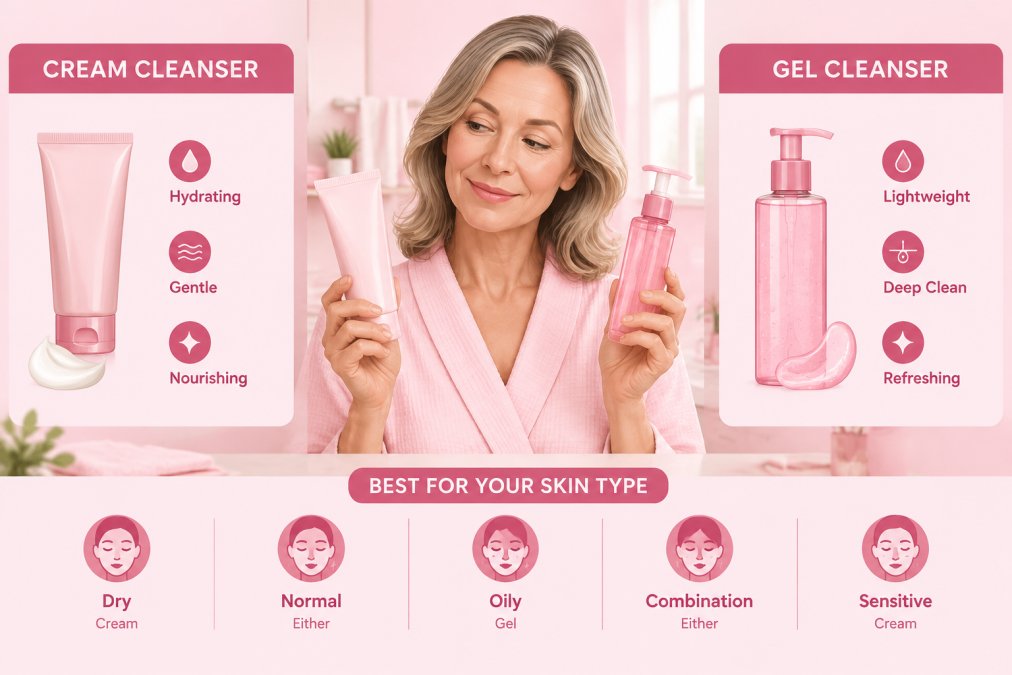
Cream, Lotion, Gel, Foam or Oil: What Each Texture Does
| Cleanser Type | Best For | What It Does |
|---|---|---|
| Cream cleanser | Dry, mature skin | Cleans gently, leaves moisture behind |
| Lotion cleanser | Sensitive, reactive skin | Light, non-foaming, low irritation |
| Gel cleanser | Oily, combination skin | Cuts oil without heavy residue |
| Foaming cleanser | Normal to oily skin | Lifts makeup and sunscreen fast |
| Oil-based cleanser | Dry skin, makeup wearers | Dissolves sunscreen and makeup |
A common mistake is buying a foaming cleanser because it feels "clean." For mature skin, that squeaky-clean feeling usually means the barrier has been stripped. We recommend a cream or lotion cleanser for dry and sensitive skin, and a gentle gel for combination skin.
Best for: dry or sensitive skin, a cream or lotion cleanser. Skip if: your skin gets oily by midday, where a gel suits better.
What to Look For and What to Skip on the Ingredient List
Read the label like a shopper, not a chemist. A few ingredient categories tell you most of what you need to know.
Look for:
- Humectants such as glycerin, hyaluronic acid, and panthenol that pull water into the skin
- Emollients such as plant oils, squalane, and shea butter that soften and seal
- Fragrance-free formulas, since fragrance is a common irritant and "unscented" can still contain masking fragrance
- Non-comedogenic labels if you are acne-prone
- Alcohol-free formulas, meaning no denatured alcohol high in the list
- A pH near skin's natural range (roughly 4.5 to 5.5) so the cleanser does not disrupt the acid mantle
Skip or limit:
- Harsh surfactants such as sodium lauryl sulfate (SLS), which strips lipids and leaves skin tight
- Added fragrance and essential oils such as lavender or citrus peel oil if your skin is sensitive
- Exfoliating cleansers with rough particles for daily use, since scrubbing thins an already fragile barrier
- High alcohol content near the top of the list, which accelerates dryness
Watch out: a "gentle" claim on the front of the bottle says nothing about the surfactant system inside, so flip the package and read the back panel before you trust the marketing.
For a deeper look at label rules, the FDA guidance on cosmetic labeling explains what terms on a package actually mean and which claims are regulated versus puffery.
How to Evaluate a Cleanser Without Relying on Marketing Claims
Marketing words like "natural" and "youth-boosting" sell bottles, not results. A practical test beats a clever slogan.
Try this simple three-part check before you buy:
- Does the label list fragrance-free and non-comedogenic?
- Are the first few ingredients hydrating rather than stripping?
- Does the brand explain what each key ingredient does?
- Is there a return policy if your skin reacts?
Our guide on how to verify natural skincare ingredient claims walks through a do-it-yourself method for checking labels and spotting greenwashing. It is worth reading before you spend on any "anti-aging" cleanser.
Cleansing Alongside Retinol, Acids and Other Anti-Aging Treatments
If you use retinol or exfoliating acids, your cleanser matters more, not less. These active ingredients already ask a lot of your skin. A harsh cleanser on top can push it into redness and flaking.
Keep these rules in mind:
Orange Facial Exfoliating Gel – Deep Moisturizing & Gentle Pore Cleansing Scrub →
- Use a gentle, non-abrasive cleanser on treatment nights
- Wash with lukewarm water, never hot
- Pat dry instead of rubbing
- Skip exfoliating cleansers on the same night as retinol
If you want to add gentle exfoliation, our roundup of the best gentle chemical exfoliants for sensitive aging skin shows options that pair safely with retinol and acids.
Signs Your Face Wash Is Too Harsh and How to Troubleshoot
Your skin gives clear signals when a cleanser is too strong. Watch for these signs after washing:
- Tightness that lasts more than a few minutes
- Redness or stinging
- Flaking or rough patches
- Increased sensitivity to products you used before
If you notice these, switch to a cream or lotion cleanser and cut back to once-daily washing at night. Give skin a week or two to settle. A damaged barrier takes time to recover, and our guide on how to repair a damaged skin barrier covers a full seven-step routine.
Watch out: scrubbing harder to "get clean" makes tightness and redness worse. Gentle pressure and lukewarm water do more for your skin than vigorous washing.
What Dermatologists Recommend for a Face Wash for Aging Skin Over 50
A dermatologist recommended face wash for aging skin over 50 tends to share the same traits: gentle, fragrance-free, and hydrating. But the reasoning behind that advice is what matters, because age alone does not determine skin type. A 55-year-old with oily, acne-prone skin still needs a gel cleanser, while a 55-year-old with dry skin needs a cream. What changes with age is the margin for error: the barrier is thinner, oil production drops (especially after menopause as estrogen falls), and cell turnover slows, so a harsh cleanser causes more damage faster than it did at 30.
Skin-care guidance commonly suggests:
- Cream or lotion cleansers over foaming ones when skin is dry or reactive
- Fragrance-free and alcohol-free formulas
- Once-daily cleansing if skin is very dry, with a water rinse in the morning
- Lukewarm water and a soft cloth instead of hot water and scrubbing
- A non-irritating cleanser when using retinoids, exfoliating acids, or other drying anti-aging treatments
The American Academy of Dermatology's advice on face washing echoes this: gentle cleansing and lukewarm water protect the barrier. For readers over 50 managing post-menopausal dryness, our guide to the best skincare for post-menopausal dryness builds a fuller routine around these needs.
A practical decision sequence helps you apply this advice without guessing. Start with how your skin feels two hours after washing: tight and flaky points to a cream or lotion; oily by midday points to a gentle gel. Then layer in sensitivity (stinging or redness pushes you toward fragrance-free and non-foaming), makeup use (a cleansing oil or balm first if you wear sunscreen or long-wear makeup), and cleansing frequency (if you wash twice daily and feel dry, cut to once at night).
Watch out: persistent tightness, stinging, flaking, or worsening irritation is a signal to seek guidance from a qualified clinician.
How to Build a Skincare Routine for Men Over 40
Men over 40 face the same aging shifts: thinner barrier, less oil, more dryness. The routine does not need to be complicated.
A simple order that works:
- Cleanse with a gentle cream or gel cleanser
- Apply a hydrating serum or moisturizer
- Use sunscreen every morning
- Add retinol at night, starting slowly
Shaving adds friction, so a non-abrasive, fragrance-free cleanser helps reduce irritation. For a complete walkthrough, our skincare routine for men over 40 pairs well with your new cleanser choice.
At Ageless Glow, two products fit neatly into this routine. The Green Tea Cleansing Stick Mask ($12.99) cleanses while helping to keep moisture in and suits all skin types. The Orange Facial Exfoliating Gel ($19.99) offers gentle exfoliation for smoother, brighter-looking skin.


Choosing a face wash for aging skin comes down to one shift: clean gently, then protect moisture. If your current cleanser leaves skin tight or red, it is time for a change. Ageless Glow offers nutrient-rich formulas and tools built for mature skin, from the moisturizing Green Tea Cleansing Stick Mask to the gentle Orange Facial Exfoliating Gel. Explore the collection and find the cleanser your skin has been asking for. Get started with Ageless Glow and build a routine that supports your skin barrier every day.
Frequently Asked Questions
What ingredients should I look for in a face wash for aging skin?
Look for emollients and humectants that stay behind after rinsing: glycerin, hyaluronic acid, ceramides, squalane and plant oils. These support the skin barrier and reduce the tightness that follows a stripping cleanse. Formulas labeled fragrance-free and alcohol-free are safer for skin that has thinned with age. If your skin is oily or acne-prone, a low concentration of salicylic acid can help, but keep it in a rinse-off product rather than layering it with other actives.
Is a cream or gel cleanser better for mature skin?
Cream and lotion cleansers suit dry, dehydrated and sensitive skin because they leave more moisture behind. Gel and foaming cleansers remove oil more thoroughly, which helps combination and oily skin, but many of them leave a tight, squeaky-clean feeling that signals the barrier has been stripped. For most aging skin, a cream or lotion cleanser in the morning and a gentle gel at night after sunscreen is a workable split. Test one change at a time.
How often should you wash your face if you have aging skin?
Twice a day is enough for most people: once in the morning and once at night to remove sunscreen, makeup and oil. If your skin feels tight or flaky after cleansing, cut back to a rinse with lukewarm water in the morning and a full cleanse at night. Use lukewarm water rather than hot, since hot water strips oil quickly. Cleansing more than twice a day rarely helps and often increases irritation and redness.
Does a face wash actually help with anti-aging, or is it just the serums that matter?
A cleanser will not erase fine lines, but it decides whether your other products can work. A harsh wash damages the skin barrier, which increases water loss, redness and sensitivity, and makes retinol or acids harder to tolerate. A gentle, hydrating cleanser keeps the barrier intact so treatment products can be used consistently. Consistency is what produces visible results, so the right face wash for aging skin is the one you can use twice a day without irritation.
