

Table of Contents
- Why Your Dry Skin Moisturizer Isn't Working
- The Difference Between Dry Skin and Dehydrated Skin
- The Difference Between Dehydrated and Dry Skin: A Quick Breakdown
- How to Repair a Damaged Skin Barrier
- Environmental Stressors That Pull Moisture From Your Skin
- Ingredient Conflicts and Application Mistakes That Block Absorption
- How Long to See Skincare Results (And What Slows Them Down)
- Internal Health, Water Quality, and Other Causes Most People Miss
- Conclusion
- Frequently Asked Questions
Last Updated: September 28, 2026
Why Your Dry Skin Moisturizer Isn't Working
If you're asking why is my skin so dry even with moisturizer, the answer usually isn't your moisturizer. It's what's happening underneath it.
The Difference Between Dry Skin and Dehydrated Skin
Dry skin is a skin type; dehydrated skin is a temporary condition. That distinction explains most failed routines.
The Difference Between Dehydrated and Dry Skin: A Quick Breakdown
| Feature | Dry Skin | Dehydrated Skin |
|---|---|---|
| Root cause | Low oil production | Low water content |
| Cause type | Skin type, often genetic | Condition, often temporary |
| Main signs | Flaking, rough texture, tight feel | Dullness, tightness, fine creasing |
| Who gets it | Often dry skin types | Any skin type, even oily |
| Best approach | Emollients and occlusives | Humectants plus a seal |
If you're unsure which one you have, treat dehydration first. It's faster to fix and often the real culprit.
How to Repair a Damaged Skin Barrier
Repairing a damaged skin barrier comes down to three moves: stop stripping it, feed it the lipids it's missing, and seal in water while it heals. Most people try to seal before they stop the damage.
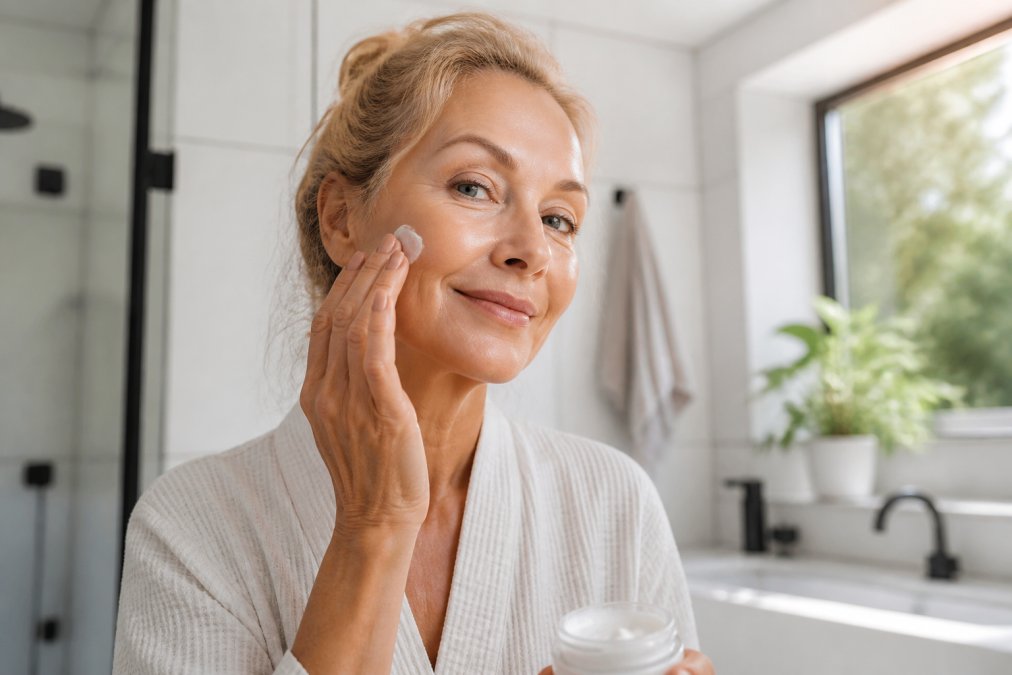
Here's a simple repair protocol:
- Pause actives for two weeks. Stop retinol, strong acids, and scrubs. These slow barrier repair.
- Switch to a gentle, low-foaming cleanser. Harsh cleansers strip natural oils and raise skin pH.
- Apply a humectant to damp skin. Hyaluronic acid or glycerin pulls water in. Do this within a minute of washing.
- Seal with an emollient or occlusive. This locks the water in place.
- Repeat morning and night. Consistency matters more than product count.
Emollients, Humectants, and Occlusives: What Your Barrier Needs
These three ingredient types do different jobs, and your barrier needs all three.

- Humectants attract and hold water. Look for hyaluronic acid, glycerin, and panthenol.
- Emollients soften and smooth by filling gaps between skin cells. Look for fatty acids and plant oils.
- Occlusives seal the surface to block moisture evaporation. Look for squalane, shea butter, and dimethicone.
Environmental Stressors That Pull Moisture From Your Skin
Your environment drains moisture all day. Indoor heating and air conditioning lower humidity, speeding up water loss, as do long flights and cold, windy weather.
What helps:
- Run a humidifier in bedrooms and offices during dry months
- Keep showers lukewarm, not hot
- Apply moisturizer right after washing your face or hands
- Wear a scarf over your face in cold, windy weather
Ingredient Conflicts and Application Mistakes That Block Absorption
Some ingredient combinations cancel each other out; others physically block absorption. This is where routines quietly fail, and the fix isn't a new product, it's sequencing.
Why conflicts happen: the mechanism
Three things drive almost every conflict:
- pH incompatibility. Alpha-hydroxy acids (glycolic, lactic) and beta-hydroxy acid (salicylic) need roughly pH 3 to 4 to exfoliate. Vitamin C (L-ascorbic acid) works best below pH 3.5; retinol and niacinamide prefer closer to neutral. Layer an acid over retinol and you can push the retinol out of its effective range while irritating the barrier.
- Acid-base neutralization. Benzoyl peroxide is oxidizing; vitamin C is a reducing agent. Applied together, they can chemically cancel each other, so neither does its job.
- Occlusion blocking penetration. A thick occlusive applied first forms a film humectants and actives can't cross. Order matters more than product quality.
The conflicts worth knowing
| Combination | What happens | What to do instead |
|---|---|---|
| Retinol + AHA/BHA same night | Compounded irritation, slower barrier repair | Alternate nights; use acid in the morning, retinol at night |
| Vitamin C + benzoyl peroxide | Mutual neutralization | Use vitamin C in the morning, benzoyl peroxide at night |
| Retinol + strong vitamin C | Increased stinging and redness | Separate by 20-30 minutes or split AM/PM |
| Niacinamide + high-dose vitamin C | Flushing in sensitive skin (rare, dose-dependent) | Use niacinamide at night, vitamin C in the morning |
| Multiple humectants stacked | Surface tackiness, no added benefit | One humectant layer is enough |
Application mistakes that block absorption
- Applying moisturizer to bone-dry skin. Humectants like hyaluronic acid and glycerin need surface water to pull in; on dry skin they can draw moisture from deeper layers and leave you tighter. Apply within 60 seconds of cleansing, while skin is still damp.
- Using too much product. A pea-sized amount of retinol, a nickel-sized amount of moisturizer. Excess sits on the surface, pills under makeup, and doesn't absorb faster.
- Rushing the order. Give each layer 30 to 60 seconds to settle. Thin-to-thick is the rule: toner, serum, lotion, cream, occlusive.
- Skipping the neck and jawline. These areas show dehydration first because they have fewer oil glands.
- Applying occlusives over damp skin without a humectant. You'll seal in water but won't add any. Humectant first, then seal.
A simple conflict-free order
- Cleanse (gentle, low-foaming).
- Apply actives to dry skin if using them, one active per session.
- Wait 30-60 seconds.
- Apply humectant to damp skin.
- Apply emollient.
- Seal with occlusive.
If you're unsure whether a product is a humectant, emollient, or occlusive, check the first five ingredients. Glycerin, hyaluronic acid, and panthenol signal humectant. Squalane, jojoba, and fatty alcohols signal emollient. Petrolatum, dimethicone, and shea butter signal occlusive.
How Long to See Skincare Results (And What Slows Them Down)
Most people see real improvement in skin hydration within two to four weeks. Visible changes to fine lines and firmness take longer, usually eight to twelve weeks, the honest answer depends on what you're measuring.
Here's a realistic timeline:
All-Day & Night 2-Pack Cream for Face →
| Timeframe | What You'll Notice |
|---|---|
| 1-2 weeks | Less tightness, softer feel |
| 3-4 weeks | Better hydration, less flaking |
| 6-8 weeks | Improved barrier, calmer skin |
| 8-12 weeks | Smoother texture, softer fine lines |
What slows results down:
- Switching products too often before giving them time
- Using too many actives at once
- Skipping days, which resets progress
- Not sealing in hydration with an occlusive
Internal Health, Water Quality, and Other Causes Most People Miss
Two causes sit outside your bathroom cabinet: your body and your water. Most articles stop at "drink more water," which is incomplete. Here's what's actually happening and how to tell whether it applies to you.
Internal drivers of persistent dryness
Hormonal shifts. Estrogen supports sebum production and barrier lipids. When estrogen declines, during perimenopause, menopause, and the years after, oil output drops and the barrier thins. This is why dryness often appears suddenly in the 40s and 50s even in people who never had dry skin.
Water quality: the overlooked variable
Hard water contains dissolved calcium and magnesium (Hardness of Water). When it hits your skin, it can:
- Leave a mineral film that soap and surfactants bind to, making cleansing less effective and leaving residue behind.
- Raise skin surface pH, which disrupts the acid mantle the barrier relies on.
- Interfere with how well humectants and emollients absorb, because the film sits between product and skin.
How to tell if you have hard water:
- Soap doesn't lather well and leaves a scummy ring in the tub or sink.
- Dishes and glassware show spots after air-drying.
- Skin feels filmy or squeaky-tight right after washing, even with a gentle cleanser.
- You can check your utility's annual water quality report, it lists hardness in grains per gallon or milligrams per liter as calcium carbonate.
What helps:
- A shower filter rated for hardness (look for ion-exchange or KDF media, not just carbon).
- A final rinse with filtered or distilled water after cleansing.
- A chelating or low-pH cleanser that helps lift mineral residue.
- A leave-on product with humectants applied immediately after the final rinse.
Other overlooked causes
- Over-cleansing. More than twice daily, or with hot water, strips the lipid barrier faster than it can rebuild.
- Over-exfoliation. Daily acids or scrubs thin the stratum corneum and remove the lipids that hold water in.
- Alcohol-based toners. They evaporate quickly and take surface water with them.
- Hot water and long showers. Heat dissolves barrier lipids; 10+ minutes at high temperature is enough to notice.
- Sleep and stress. Cortisol rises with poor sleep and chronic stress, and elevated cortisol is associated with impaired barrier recovery.
If dryness came on suddenly, is accompanied by fatigue, weight change, hair thinning, or slow healing, or doesn't respond to any of the above, that's a signal to see a clinician rather than add another product.
Conclusion
Dry skin that won't respond to moisturizer almost always points to a barrier problem, not a product problem. Fix the barrier, seal in water, and give it time.
Frequently Asked Questions
Why is my skin not absorbing moisturizer?
Your skin may not absorb moisturizer if dead cells are blocking the surface or if your barrier is damaged. Over-exfoliation strips natural oils and thins the lipid barrier, so water evaporates faster than you can replace it. Try pausing exfoliants for two weeks, then apply a hyaluronic acid serum to damp skin followed by a ceramide-rich cream. The serum pulls water in; the cream seals it. If absorption still feels poor, a gentle enzyme exfoliant once weekly can clear buildup without stripping.
What does over-moisturized skin look like?
Over-moisturized skin looks shiny, congested, and can develop small bumps or milia. Heavy occlusive creams applied to already-hydrated skin trap sebum and dead cells, clogging pores. If your face feels greasy hours after applying product, or you notice new breakouts along your jaw and forehead, scale back to a lighter lotion during the day. Over-moisturizing is different from dry skin, so adding more cream won't help. Switch to a humectant-based serum and a thin layer of cream at night.
Does drinking water actually help dry skin?
Drinking water supports overall hydration, but it won't fix a compromised skin barrier on its own. If your barrier is damaged, water evaporates through your skin faster than you can drink it. Research shows that increasing water intake has a modest effect on skin hydration, mostly in people who were dehydrated to begin with. The bigger wins come from sealing moisture in with occlusives and repairing the lipid barrier with ceramides and fatty acids. Water helps, but it's not the whole solution.
How long to see skincare results for dry skin?
Most people notice improved hydration within 1 to 2 weeks of starting a consistent routine. Barrier repair takes longer, typically 4 to 6 weeks, because your skin needs time to rebuild its lipid layer. Fine lines and texture changes take 8 to 12 weeks. If you see no improvement after 6 weeks of a gentle, barrier-focused routine, check for ingredient conflicts or underlying health issues. Consistency matters more than product count.