

Last Updated: November 5, 2026
Quick Summary
An anti-aging diet for men is built on protein at every meal, colorful produce, healthy fats and enough water, repeated most days. Aim for a palm-sized portion of protein at breakfast, lunch and dinner, and keep alcohol to weekends only.
- Spread protein across breakfast, lunch and dinner instead of loading it into dinner only.
- Use your hand for portions: one palm of protein and two fists of produce per meal.
- Most men need roughly 3 to 3.7 liters of fluid a day, including water from food.
- Cap caffeine before 2 p.m. and stay under about 400 mg daily.
- Pick one change, such as adding protein to breakfast, and hold it for two weeks.
Table of Contents
- Why an Anti-Aging Diet Beats Another Expensive Serum
- The Anti-Aging Foods for Men Worth Putting on Your Plate
- Foods That Support Collagen Production (and What Blocks It)
- A Simple Anti-Aging Meal Plan for Men Who Don't Cook Much
- Hydration and Skin Health: How Much Water You Actually Need
- The Two Habits That Undo Good Nutrition: Alcohol and Caffeine
- What to Eat for Firmer Skin: Pairing Nutrition With a Simple Routine
- Start With One Change This Week
- Frequently Asked Questions
Why an Anti-Aging Diet Beats Another Expensive Serum
Most men over 40 have a bathroom shelf full of half-used serums. They bought each one hoping it would be the fix. Few delivered.
Here is the uncomfortable truth: a cream can only work with what your body gives it.
An anti-aging diet is a way of eating built around nutrient-dense whole foods that are commonly associated with healthy skin as you age.
The Anti-Aging Foods for Men Worth Putting on Your Plate
You do not need a long list of exotic ingredients. You need a short list you will actually eat.
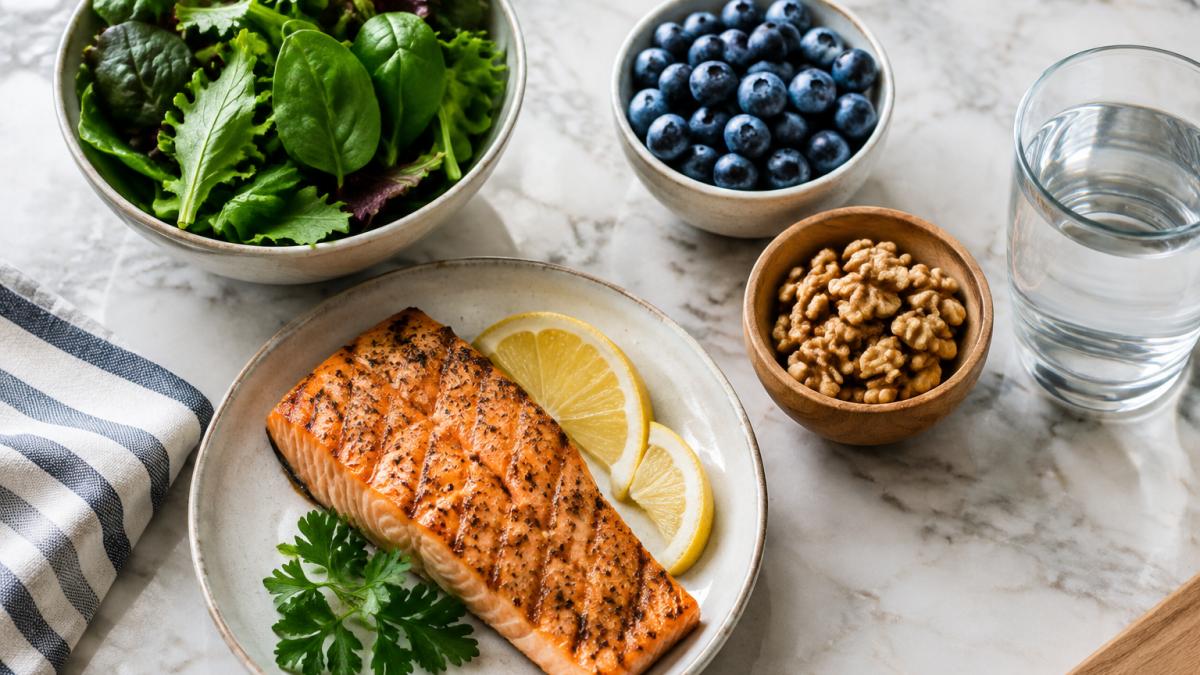
Protein at Every Meal
Aim for a palm-sized portion of protein at breakfast, lunch and dinner. Eggs, Greek yogurt, chicken, fish, lean beef, beans and tofu all work.
Why it matters: skin, hair and muscle are built from amino acids.
A common mistake is loading protein into dinner only. Spread it out. Your body uses it better in smaller, regular doses.
Colorful Produce and Healthy Fats
The rule is simple: the more colors on your plate, the wider the range of micronutrients you get.
- Red and orange: tomatoes, peppers, carrots
- Dark green: spinach, broccoli, kale
- Purple and blue: berries, red cabbage
- Healthy fats: olive oil, avocado, nuts, seeds, fatty fish
Foods such as salmon, sardines, walnuts, olive oil and avocado are part of a varied diet.
Foods That Support Collagen Production (and What Blocks It)
A varied diet includes these nutrients:
- Vitamin C: citrus, bell peppers, strawberries, broccoli
- Protein: eggs, fish, poultry, beans
- Zinc: beef, pumpkin seeds, lentils
- Copper: nuts, seeds, dark chocolate
If you want a deeper list of plant-based options, see our guide to the best plant-based collagen boosters for skin.
A Simple Anti-Aging Meal Plan for Men Who Don't Cook Much
You do not need knife skills. You need a rotation of meals that take under 15 minutes and a grocery list you can repeat without thinking. Most guides skip the part that matters: how to sustain it affordably week after week.
The 15-Minute Rule
Every meal in this plan has three components: a protein, a produce item, and a fat. If you can open a bag, turn on a stove, or use a microwave, you can execute this rotation.
A Sample Week of Eating
- Monday: Breakfast, Greek yogurt with berries and walnuts. Lunch, rotisserie chicken over bagged salad with olive oil and lemon. Dinner, baked salmon with microwave-steamed broccoli and a sweet potato.
- Tuesday: Breakfast, three scrambled eggs with spinach. Lunch, canned tuna mixed with avocado on whole-grain toast. Dinner, lean ground beef tacos with shredded cabbage and salsa.
- Wednesday: Breakfast, cottage cheese with sliced banana and almonds. Lunch, leftover taco filling over greens. Dinner, frozen fish fillets with frozen mixed vegetables and quinoa.
- Thursday: Breakfast, Greek yogurt with berries. Lunch, rotisserie chicken wrap with hummus and spinach. Dinner, lentil soup (canned) with a side of roasted carrots.
- Friday: Breakfast, three eggs with salsa. Lunch, sardines on crackers with an apple. Dinner, stir-fry with frozen shrimp, frozen stir-fry vegetables, and olive oil.
- Saturday: Breakfast, oatmeal with peanut butter and berries. Lunch, leftovers. Dinner, grilled chicken thighs with roasted Brussels sprouts.
- Sunday: Breakfast, eggs and avocado. Lunch, big salad with chickpeas, feta, and olive oil. Dinner, baked salmon with sweet potato and broccoli.
That is seven days, roughly 15 minutes per meal, and no recipe book. Buy the same six or seven items each week and rotate.
The Budget Breakdown
A budget-friendly approach works as well as a premium one. Frozen fish, frozen vegetables, and canned beans cost less than most takeout and deliver more nutrient density. A realistic weekly grocery list for one man:
- Protein: eggs (18-count), Greek yogurt (32 oz), rotisserie chicken, frozen salmon fillets, canned tuna, canned sardines, canned lentils, ground beef (1 lb)
- Produce: bagged salad, spinach, broccoli (frozen), mixed vegetables (frozen), berries (frozen), bananas, apples, sweet potatoes, carrots, cabbage
- Fats and pantry: olive oil, walnuts, almonds, peanut butter, hummus, whole-grain bread, quinoa, oatmeal
That list covers all seven days and typically lands well under the cost of the same number of takeout meals. Buy produce in season, skip the specialty health aisle, and use frozen produce for anything you would otherwise throw away.
Portion Sizes Without a Scale
You do not need to weigh food. Use your hand:
- Protein: one palm-sized portion per meal
- Produce: two fist-sized portions per meal
- Fats: one thumb-sized portion per meal
- Carbohydrates: one cupped-hand portion per meal
This is not precise, but it is consistent, and consistency is what moves the needle.
Quick-Prep Anti-Aging Snacks
Busy men often fail at the snack stage, not the meal stage. Keep these on hand so you are not reaching for processed food:
- Apple with peanut butter
- Handful of almonds and a string cheese
- Greek yogurt with berries
- Hard-boiled eggs (buy pre-peeled if you will not boil them)
- Carrots and hummus
- Canned sardines on whole-grain crackers
- Cottage cheese with sliced banana
None take more than two minutes, and all deliver protein, fiber, or healthy fat instead of empty calories.
What to Skip
You do not need meal prep Sunday, a blender, or a supplement stack.
Watch out: a plan that requires you to shop at three stores will fail by week two. Build your list around one grocery store and one rotation.
Retinol Face Cream – Moisturize, Brighten & Smooth →
If you want a deeper list of plant-based options to slot into this rotation, see our guide to the best plant-based collagen boosters for skin.
Use your hand to keep portions consistent without a scale.
| Component | Portion guide |
|---|---|
| Protein | One palm-sized portion per meal |
| Produce | Two fist-sized portions per meal |
| Fats | One thumb-sized portion per meal |
| Carbohydrates | One cupped-hand portion per meal |
Hydration and Skin Health: How Much Water You Actually Need
Most men need roughly 3 to 3.7 liters of fluid a day, according to U.S. National Academies fluid intake guidance, with more if you sweat heavily or exercise. That includes water from food and other drinks, not just glasses of water.
Practical markers: pale yellow urine, no afternoon headache, no dry mouth. If you are hitting those, you are likely fine. Coffee and tea count toward fluid intake, but watch total caffeine.
The Two Habits That Undo Good Nutrition: Alcohol and Caffeine
You can eat perfectly and still look tired. These two are usually why. Most anti-aging diet guides mention them in passing, but few explain the mechanisms or give men specific guidance on the habits they actually have: beer and coffee.
Alcohol: The Bigger Problem
Alcohol is often a bigger concern for many men, and it can work against healthy-looking skin in several ways:
If you drink most nights, cutting to weekends is one of the highest-impact changes you can make. A common pattern is two drinks on Friday and Saturday and none Sunday through Thursday. That is not abstinence, and it is sustainable for most men.
Caffeine: Milder but Not Innocent
Caffeine is fine in the morning. The problem is timing and total dose.
- Timing: late-afternoon coffee wrecks sleep quality. Caffeine has a half-life of roughly five hours, so a 3 p.m. cup still has a quarter of its dose in your system at 1 a.m. Cap it before 2 p.m. and see what happens to your skin in two weeks.
- Total dose: most adults can handle up to about 400 mg of caffeine a day, roughly four 8-oz cups of brewed coffee, according to U.S. Food and Drug Administration caffeine guidance. Exceeding that raises anxiety, disrupts sleep, and can raise blood pressure.
- What you add: the coffee is rarely the problem. The problem is the sugar and cream. A large flavored coffee drink can carry more sugar than a candy bar. Drink it black or with a splash of milk.
Coffee and tea count toward fluid intake, but keep an eye on total caffeine.
The Male-Specific Angle
Caffeine is less of a body-composition issue and more of a sleep issue. Sleep is when your body repairs skin and muscle, and caffeine is the most common self-inflicted sleep disruptor among busy men.
A Simple Rule
- Alcohol: weekends only, two drinks maximum per occasion
- Caffeine: before 2 p.m., black or with milk, under 400 mg total
That is it. No tracking app, no elimination diet. Just two rules that protect the nutrition work you are already doing.
What to Eat for Firmer Skin: Pairing Nutrition With a Simple Routine
Diet and a short skincare routine both play a role.
Keep it to three steps: cleanse, treat, moisturize. Add sun protection every morning, because UV exposure is the single biggest driver of visible skin aging.
For the treat step, a firming facial serum layered under moisturizer is one option. If you want to build the full sequence properly, our beginner anti-aging routine guide walks through it step by step, and the Anti-Wrinkle Vita C Capsule Cream is an easy firming option to pair with better eating.


Readers over 40 who want age-specific product guidance can also check our skincare guide for men over 40.
Start With One Change This Week
Pick one. Just one.
- Add protein to breakfast
- Swap one takeout meal for fish and frozen vegetables
- Cut weekday alcohol
- Move your last coffee to before 2 p.m.
Do it for two weeks before adding another. Men who overhaul everything at once usually quit by day five.
If your first change is skincare rather than diet, our natural skincare buying guide for men covers how to choose products without wasting money on the wrong formula.
Consistency is often the harder part, alongside supporting skin on the surface. Ageless Glow carries targeted skincare built to work alongside better nutrition: a Retinol Face Cream for moisturizing and smoothing the look of fine lines, a Hyaluronic Acid & Niacinamide Hydrating Serum for hydration, and the Heart Shaped Gua Sha Board as a manual massage tool.

Frequently Asked Questions
What foods help men maintain healthy-looking skin as they age?
Lean protein, fatty fish, leafy greens, berries, citrus, nuts, and olive oil form the core of an anti-aging diet for men. These foods are part of a varied diet. Protein matters more than most men realize, since muscle loss and skin firmness both depend on adequate intake. Aim for a palm-sized portion of protein at each meal, plus two to three servings of vegetables and a piece of fruit daily.
How long does it take for dietary changes to affect skin?
Most men notice hydration and energy improvements within one to two weeks. Visible skin changes, such as better tone and less dullness, typically take six to twelve weeks of consistent eating. Skin cells turn over roughly every four weeks, so you need at least two cycles to see meaningful change. Pairing an anti-aging diet with a simple topical routine, like a retinol face cream used a few nights per week, tends to speed up visible results.
How much water should men drink for healthy skin?
A practical target is roughly 3 liters (about 100 ounces) of total fluids per day for adult men, including water from food and other drinks. You do not need to obsess over the number: pale yellow urine and consistent energy are good signs. Coffee and tea count toward fluid intake, though plain water should make up most of it.
Are supplements necessary for an anti-aging diet?
For most men, food covers the basics. A varied anti-aging meal plan built on whole foods, lean protein, and produce delivers the vitamins and minerals your skin needs. Supplements are worth discussing with a doctor if you have a diagnosed deficiency, eat a restricted diet, or are over 50 and struggling with bone density or muscle loss. Focus on food first, then add targeted supplementation with medical guidance.
