

Table of Contents
- Natural vs Synthetic Skincare Ingredients: What the Label Really Means
- Plant-Derived vs Lab-Synthesized: The Core Difference
- Why the Natural Label Isn't Regulated
- Natural Ingredients: Pros, Cons, and Allergen Profiles
- Synthetic Ingredients: Bio-Identical Actives and Batch Consistency
- Common Toxic Skincare Ingredients to Avoid
- How to Read Skincare Labels Like a Formulator
- Clean Beauty Standards: What Certifications Actually Verify
- Stability, Shelf-Life, and Cost: The Trade-Offs Nobody Mentions
- Choosing Products That Match Your Skin
- Choosing Products That Match Your Skin
- Synthetic Ingredients: Bio-Identical Actives and Batch Consistency
- Common Toxic Skincare Ingredients to Avoid
- How to Read Skincare Labels Like a Formulator
- Clean Beauty Standards: What Certifications Actually Verify
- Stability, Shelf-Life, and Cost: The Trade-Offs Nobody Mentions
- Choosing Products That Match Your Skin
- Frequently Asked Questions
Last Updated: September 12, 2026
Natural vs Synthetic Skincare Ingredients: What the Label Really Means
The natural vs synthetic skincare ingredients debate is confusing because "natural" has no legal definition in the United States. This guide explains what each type does and how to read a label with a formulator's eye.
Natural skincare ingredients are substances derived directly from plants, minerals, or animal sources with minimal chemical processing. Synthetic skincare ingredients are created through controlled chemical synthesis in a laboratory, often replicating molecules found in nature.
The distinction matters less than most brands admit. According to the FDA's cosmetics labeling guidance, the agency has no regulatory definition for "natural" on personal care products, meaning any brand can use the term freely. What actually determines whether an ingredient works comes down to molecular structure, concentration, and formulation stability, not its origin story.
Plant-Derived vs Lab-Synthesized: The Core Difference
The core difference between plant-derived and lab-synthesized ingredients is control, not safety. A botanical extract contains hundreds of compounds that shift with soil, season, and harvest; a synthesized molecule arrives at fixed, measurable purity.
Consider vitamin C. Citrus-extracted ascorbic acid comes bundled with flavonoids that vary batch to batch, while lab-synthesized L-ascorbic acid delivers the identical molecule at consistent concentration. This matters for bioavailability and dermal absorption: a stable, standardized molecule penetrates predictably, while an unstable botanical may oxidize before reaching your skin barrier.
Why the Natural Label Isn't Regulated
No federal agency currently defines or enforces what "natural" means on a skincare label. The FTC's guidance on environmental marketing claims does require brands to avoid deceptive claims, but it offers no bright-line rule for the word itself.
This creates a loophole. A product can contain 95% synthetic ingredients and still call itself "natural" if one component is plant-derived.
Clean beauty standards emerged to fill that gap, but they're voluntary. Certifications like USDA Organic or COSMOS verify sourcing and processing claims, not overall product safety.
Natural Ingredients: Pros, Cons, and Allergen Profiles
Natural ingredients offer real benefits: botanical extracts often contain antioxidants, plant-derived squalane supports barrier function, and many consumers find plant-based formulas gentler on sensitive skin. But the assumption that natural equals hypoallergenic is a myth.
Plants produce secondary metabolites, terpenes, phenols, alkaloids, coumarins, as chemical defenses against insects, fungi, and UV damage. Those same small molecules make botanical extracts allergenic: they penetrate the stratum corneum, bind to skin proteins, and form haptens the immune system recognizes as foreign. Once sensitized, a person can react to trace amounts.
Essential oils are the classic example. Lavender, citrus, eucalyptus, tea tree, and ylang-ylang oils appear in countless "clean" products, yet each is a documented contact allergen. Linalool and limonene, two common fragrance terpenes, aren't allergens in pure form, but oxidize on air exposure into hydroperoxides that are. That's why the EU requires linalool, limonene, and 24 other fragrance allergens to be declared above certain thresholds, and why a year-old "natural" serum may irritate skin it never bothered before.
Other botanical categories carry their own risk profiles:
-
Compositae family extracts (chamomile, arnica, calendula, feverfew), associated with allergic contact dermatitis, particularly in people with ragweed or daisy allergies
-
Balsam of Peru and propolis, among the most frequently positive patch-test allergens in dermatology clinics
-
Citrus peel oils, phototoxic; bergamot and lime oils can cause burns and hyperpigmentation when applied before sun exposure
-
Witch hazel and other astringent botanicals, high tannin content can be drying and irritating on compromised barriers
-
"Fragrance-free" botanical blends, often still contain masking botanicals that trigger the same reactions
-
Pro: Rich in antioxidant and anti-inflammatory compounds
-
Pro: Often biodegradable and lower environmental footprint
-
Pro: Can deliver co-factors and synergistic compounds that isolated synthetics do not
-
Con: Batch-to-batch variability affects potency and allergen load
-
Con: Higher allergen and irritation risk from complex plant chemistry
-
Con: Shorter shelf-life due to oxidative instability
-
Con: "Natural" labeling says nothing about allergen testing
If you have reactive skin, patch-test botanical-heavy products first: apply a small amount to the inner forearm twice daily for three to five days and watch for redness, itching, or bumps. A reaction on day four is still a reaction, sensitization is cumulative.
Synthetic Ingredients: Bio-Identical Actives and Batch Consistency
Synthetic ingredients deliver what botanicals struggle to: batch consistency, purity standards, and precise dosing. A lab can produce retinol, niacinamide, or hyaluronic acid at pharmaceutical-grade purity and verify every batch against a specification, which is why clinical trials on these actives produce reproducible results while botanical trials often do not.
Bio-identical synthetics are molecules chemically identical to ones found in nature, produced in a lab rather than harvested. The skin cannot tell whether a squalane molecule was synthesized from sugarcane or extracted from shark liver, what changes is purity, supply chain, cost, and environmental footprint.
Squalane is the clearest example. Shark-derived squalane once required harvesting millions of deep-sea sharks annually; today most is synthesized from sugarcane or olive oil, delivering the same emollient benefit without the ecological cost. The same pattern applies to hyaluronic acid (once from rooster combs, now bacterial fermentation), vitamin C, and many peptides and ceramides.
The advantages compound:
- Predictable concentration means predictable results
- Fewer impurities reduce irritation potential
- Longer shelf-life from stable molecular structure
- Lower cost per effective dose, because production scales without agricultural risk
- No dependence on harvest seasons, soil conditions, or geopolitical supply chains
A botanical extract's price swings with weather, crop yield, and labor costs; a synthesized active's price falls as production scales. That's why niacinamide, a form of vitamin B3, appears in drugstore serums at meaningful concentrations while a comparably effective botanical brightener costs several times more per ounce. Accessibility is a real benefit of synthetic production, not a compromise.
The trade-off is perception. Many consumers equate "synthetic" with "toxic," a belief not supported by clinical trials on well-studied actives like niacinamide or retinoids. "Chemical" is not a synonym for "harmful", water is a chemical. What matters is the molecule, its concentration, and how it's formulated.
Common Toxic Skincare Ingredients to Avoid
Some ingredients warrant genuine caution regardless of their natural or synthetic origin. Toxin-free marketing often muddies this by flagging safe synthetics while ignoring real concerns.
Worth scrutinizing:
- Formaldehyde releasers (DMDM hydantoin, quaternium-15) in some preservative systems
- Undisclosed fragrance blends that can hide dozens of allergens
- Phthalates sometimes used to stabilize synthetic fragrances
- Coal tar dyes in certain color cosmetics
Conversely, many ingredients get unfairly demonized. Parabens, for example, remain among the most studied preservatives available, and their alternatives aren't automatically safer.
The Environmental Working Group's Skin Deep database offers a starting reference, though it leans cautious and should be cross-checked with peer-reviewed toxicology.
How to Read Skincare Labels Like a Formulator
Ingredient lists follow a strict rule: components appear in descending order of concentration, with anything under 1% listed in any order after the first several entries.
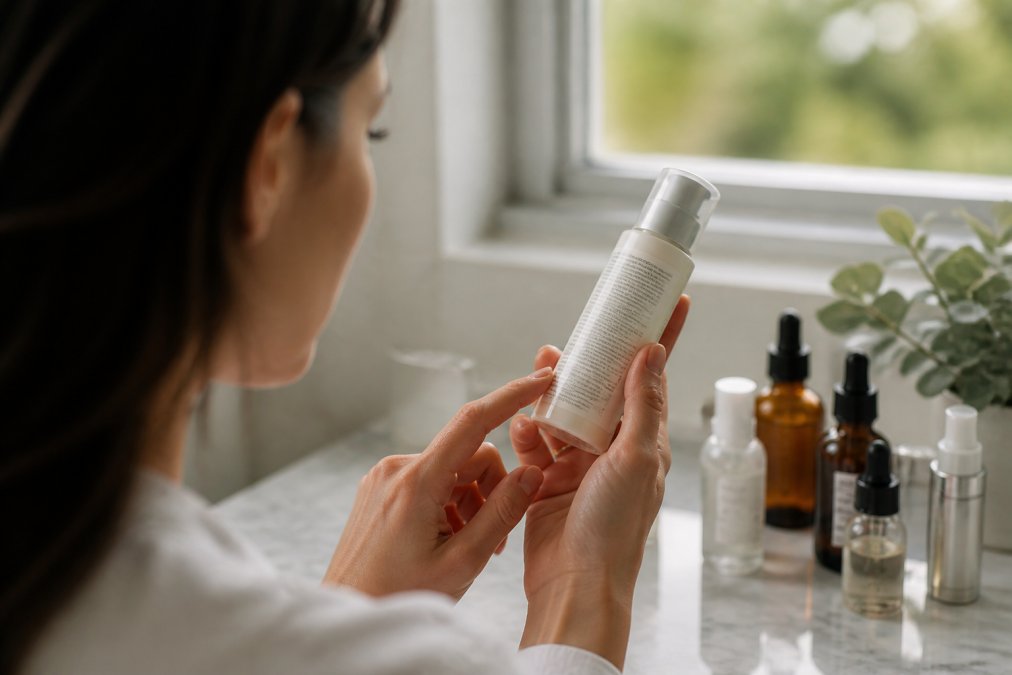
Here's the practical sequence:
- Find the first five ingredients. These make up the bulk of the formula. If water and glycerin lead, you're looking at a hydrating base.
- Locate the hero active. Retinol, niacinamide, or vitamin C should appear before the 1% cutoff if the brand claims meaningful concentration.
- Scan for preservatives and fragrance. These sit near the end but carry outsized irritation risk.
- Check the label claims against the list. "Fragrance-free" should mean no fragrance appears anywhere.
- Look for third-party testing. Independent verification of purity and potency separates serious brands from marketing exercises.
Clean Beauty Standards: What Certifications Actually Verify
Certifications verify specific claims, not overall product virtue. Understanding what each one covers prevents you from over-trusting a logo.
| Certification | What It Verifies | What It Doesn't Cover |
|---|---|---|
| USDA Organic | Agricultural sourcing of ingredients | Synthetic preservatives or efficacy |
| COSMOS | Sourcing, processing, environmental footprint | Individual allergen risk |
| Leaping Bunny | No animal testing at any stage | Ingredient safety or purity |
| EWG Verified | Ingredient screening against EWG's database | Clinical efficacy or potency |
| Vegan Society | No animal-derived ingredients | Sustainability of production |
The pattern is consistent: each certification answers one question well and leaves others untouched. A cruelty-free product can still contain a known allergen. An organic product can still irritate sensitive skin.
Stability, Shelf-Life, and Cost: The Trade-Offs Nobody Mentions
Formulation stability determines whether an ingredient survives long enough to help your skin. This is where synthetic ingredients quietly win.
Antioxidant-rich botanicals like plant-derived vitamin C oxidize quickly, turning brown and losing potency within months. Ascorbic acid degrades in the presence of oxygen, light, or trace metals into dehydroascorbic acid and then oxalic acid, both useless for skin. A lab-synthesized ascorbic acid in an airless, opaque, low-pH formula can hold potency for a year or more; a botanical vitamin C serum in a clear dropper bottle may lose most of its activity in weeks.
Shelf-life follows the same pattern. Natural preservative systems like essential oils or rosemary extract struggle against microbial growth compared to well-studied synthetics. Phenoxyethanol, sodium benzoate, and potassium sorbate have well-characterized efficacy curves against bacteria, yeast, and mold; essential oils do not, and their efficacy varies with the batch. A "preservative-free" botanical product often relies on high glycol concentrations, low water activity, or airless packaging, all of which work, but none are the absence of preservation.
Cost cuts both ways. Synthesized actives often cost less per effective dose, but the marketing premium on "natural" products means you may pay more for a formula that performs less predictably. A kilogram of lab-synthesized niacinamide costs a formulator a fraction of a comparably effective botanical brightener, and arrives with a certificate of analysis confirming purity. That's why effective skincare tends to lean synthetic for actives and natural for emollients and occlusives.
The honest trade-off: choose natural for sustainability and plant-derived co-factors, choose synthetic for consistency, potency, and shelf-life. Neither is universally superior.
Choosing Products That Match Your Skin
The natural vs synthetic skincare ingredients question has no single right answer, only the right answer for your skin, your sensitivities, and your goals.
Ageless Glow builds formulas that draw from both worlds. Our Lemon Turmeric Soap Bar uses plant-derived turmeric and kojic acid for brightening, while our Retinol Face Cream pairs lab-stabilized retinol with hydrating botanicals. The Centella Cica Soothing Sheet Mask leans on botanical Centella Asiatica for calming sensitive skin.


Choosing Products That Match Your Skin
The natural vs synthetic skincare ingredients question has no single right answer, only the right answer for your skin, your sensitivities, and your goals.
Ageless Glow builds formulas that draw from both worlds. Our Lemon Turmeric Soap Bar uses plant-derived turmeric and kojic acid for brightening, while our Retinol Face Cream pairs lab-stabilized retinol with hydrating botanicals. The Centella Cica Soothing Sheet Mask leans on botanical Centella Asiatica for calming sensitive skin.
Synthetic Ingredients: Bio-Identical Actives and Batch Consistency
Common Toxic Skincare Ingredients to Avoid
Some ingredients warrant genuine caution regardless of their natural or synthetic origin. Toxin-free marketing often muddies this by flagging safe synthetics while ignoring real concerns.
Worth scrutinizing:
- Formaldehyde releasers (DMDM hydantoin, quaternium-15) in some preservative systems
- Undisclosed fragrance blends that can hide dozens of allergens
- Phthalates sometimes used to stabilize synthetic fragrances
- Coal tar dyes in certain color cosmetics
Conversely, many ingredients get unfairly demonized. Parabens, for example, remain among the most studied preservatives available, and their alternatives aren't automatically safer.
The Environmental Working Group's Skin Deep database offers a starting reference, though it leans cautious and should be cross-checked with peer-reviewed toxicology.
How to Read Skincare Labels Like a Formulator
Ingredient lists follow a strict rule: components appear in descending order of concentration, with anything under 1% listed in any order after the first several entries.
Here's the practical sequence:
- Find the first five ingredients. These make up the bulk of the formula. If water and glycerin lead, you're looking at a hydrating base.
- Locate the hero active. Retinol, niacinamide, or vitamin C should appear before the 1% cutoff if the brand claims meaningful concentration.
- Scan for preservatives and fragrance. These sit near the end but carry outsized irritation risk.
- Check the label claims against the list. "Fragrance-free" should mean no fragrance appears anywhere.
- Look for third-party testing. Independent verification of purity and potency separates serious brands from marketing exercises.
Clean Beauty Standards: What Certifications Actually Verify
Certifications verify specific claims, not overall product virtue. Understanding what each one covers prevents you from over-trusting a logo.
| Certification | What It Verifies | What It Doesn't Cover |
|---|---|---|
| USDA Organic | Agricultural sourcing of ingredients | Synthetic preservatives or efficacy |
| COSMOS | Sourcing, processing, environmental footprint | Individual allergen risk |
| Leaping Bunny | No animal testing at any stage | Ingredient safety or purity |
| EWG Verified | Ingredient screening against EWG's database | Clinical efficacy or potency |
| Vegan Society | No animal-derived ingredients | Sustainability of production |
The pattern is consistent: each certification answers one question well and leaves others untouched. A cruelty-free product can still contain a known allergen. An organic product can still irritate sensitive skin.
Stability, Shelf-Life, and Cost: The Trade-Offs Nobody Mentions
Choosing Products That Match Your Skin
The natural vs synthetic skincare ingredients question has no single right answer, only the right answer for your skin, your sensitivities, and your goals.
Ageless Glow builds formulas that draw from both worlds. Our Lemon Turmeric Soap Bar uses plant-derived turmeric and kojic acid for brightening, while our Retinol Face Cream pairs lab-stabilized retinol with hydrating botanicals. The Centella Cica Soothing Sheet Mask leans on botanical Centella Asiatica for calming sensitive skin.
Frequently Asked Questions
Are synthetic skincare ingredients always harmful to the skin?
No. Many lab-synthesized ingredients are among the most studied and best tolerated in skincare. Retinol, niacinamide, and hyaluronic acid are either synthesized or bio-identical, and they have clinical trial data behind them. Whether an ingredient causes irritation depends on concentration, delivery format, and your individual skin barrier, not on whether it came from a plant or a lab. A well-formulated synthetic active can be gentler than an unrefined botanical extract with high allergen potential.
What is the difference between natural and nature-identical synthetic ingredients?
Natural ingredients are extracted from plants, minerals, or animal sources. Nature-identical synthetics have the same molecular structure as a compound found in nature but are made in a lab, which allows higher purity standards and batch consistency. Vanillin and some vitamin E forms are common examples. For your skin, the molecule is what interacts with your barrier, so a nature-identical version can behave the same way while avoiding pesticide residue or seasonal variability in the plant supply.
How does the FDA regulate skincare ingredients in the United States?
The FDA does not approve cosmetics or their ingredients before they go on sale, with the exception of color additives. It prohibits a short list of substances and requires labeling, but terms like natural, clean, and toxin-free have no legal definition. That means a brand can call a product natural without meeting any standard. When you read skincare labels, treat marketing claims as unverified and check the actual ingredient list and any third-party certifications instead.
Are natural skincare products more effective than synthetic ones?
Not automatically. Effectiveness comes down to the active compound, its concentration, and whether it can penetrate the skin barrier. Botanical extracts often contain active compounds at low, variable levels, while lab-synthesized actives are dosed precisely and tested for dermal absorption. Some naturals, like Centella Asiatica in a soothing sheet mask, perform well in clinical settings. Others deliver little beyond hydration. Judge each product on its formulation, not its origin story.
The real challenge isn't picking a side, it's finding formulas that disclose their ingredients honestly and deliver measurable results. Ageless Glow offers targeted skincare, nutrient-rich formulas, and facial tools designed for visible results on fine lines, dark spots, and hydration. Get started with Ageless Glow and build a routine grounded in evidence rather than marketing.