

Table of Contents
- The Short Answer: When Vitamin C Serum Earns Its Price
- Benefits of Vitamin C for Face: Brightening, Firming, and Protection
- Why Some Vitamin C Serums Fail: Oxidation, pH, and Packaging
- How Long to See Skincare Results From Vitamin C
- How to Layer Vitamin C Serum Without Wrecking Your Skin Barrier
- Purging vs. Irritation: Which Reaction Are You Having?
- Budget vs. Luxury Vitamin C: What the Price Difference Buys
- Matching Vitamin C to Your Skin Type and Age
- Frequently Asked Questions
Last Updated: September 16, 2026
The Short Answer: When Vitamin C Serum Earns Its Price
Yes, a well-formulated vitamin C serum is worth it for glow, provided it contains stabilized ascorbic acid or a stable derivative, sits at the right pH, and stays protected from light and air. The catch is that many bottles fail before they reach your shelf. This guide from Ageless Glow breaks down when the investment pays off.

Benefits of Vitamin C for Face: Brightening, Firming, and Protection
The benefits of vitamin C for face come down to three jobs: brightening uneven tone, supporting collagen, and defending against oxidative stress from daily UV and pollution, all without a prescription.

How Vitamin C Fades Dark Spots and Post-Inflammatory Hyperpigmentation
Melasma, sun spots, age spots, and post-inflammatory hyperpigmentation all trace back to excess melanin. Vitamin C interrupts that process by inhibiting tyrosinase, the enzyme that drives pigment synthesis, which is why dermatologists recommend it for brightening.
Collagen Support and the Anti-Aging Payoff
Collagen synthesis requires vitamin C as a cofactor. Without it, the body cannot properly assemble the collagen fibers that keep skin firm. Topical application delivers a concentrated dose directly to the skin, supporting firmer, smoother texture over time.
Why Some Vitamin C Serums Fail: Oxidation, pH, and Packaging
Most vitamin C serums that disappoint do so because of formulation and storage, not because the ingredient does not work. Ascorbic acid is unstable by nature, and three factors decide whether it stays active: pH, packaging, and how long the bottle has been open.

How Long to See Skincare Results From Vitamin C
Most people notice a difference in how long to see skincare results from vitamin C between weeks 4 and 12, with the biggest change in brightness and tone around week 8. Skin turnover and pigment clearance are gradual, so patience matters more than product hopping.
What Week 4, Week 8, and Week 12 Actually Look Like
Week 4 is usually subtle: skin may feel smoother and look slightly less dull, but dark spots have barely moved. This is normal, not a sign the serum is failing.
| Timeline | What You May Notice | What to Do |
|---|---|---|
| Week 1-2 | Little visible change, possible mild tingling | Patch test, start 3x per week |
| Week 4 | Slightly smoother, less dull | Continue daily, add SPF if missing |
| Week 8 | More even tone, softer fine lines | Hold the routine steady |
| Week 12 | Faded dark spots, firmer feel | Reassess formula if nothing changed |
How to Layer Vitamin C Serum Without Wrecking Your Skin Barrier
Layer vitamin C serum first thing in the morning, after cleansing and before moisturizer and sunscreen. Applied to clean, dry skin, it absorbs best without competing with heavier products. The part that trips people up is what goes next to it.
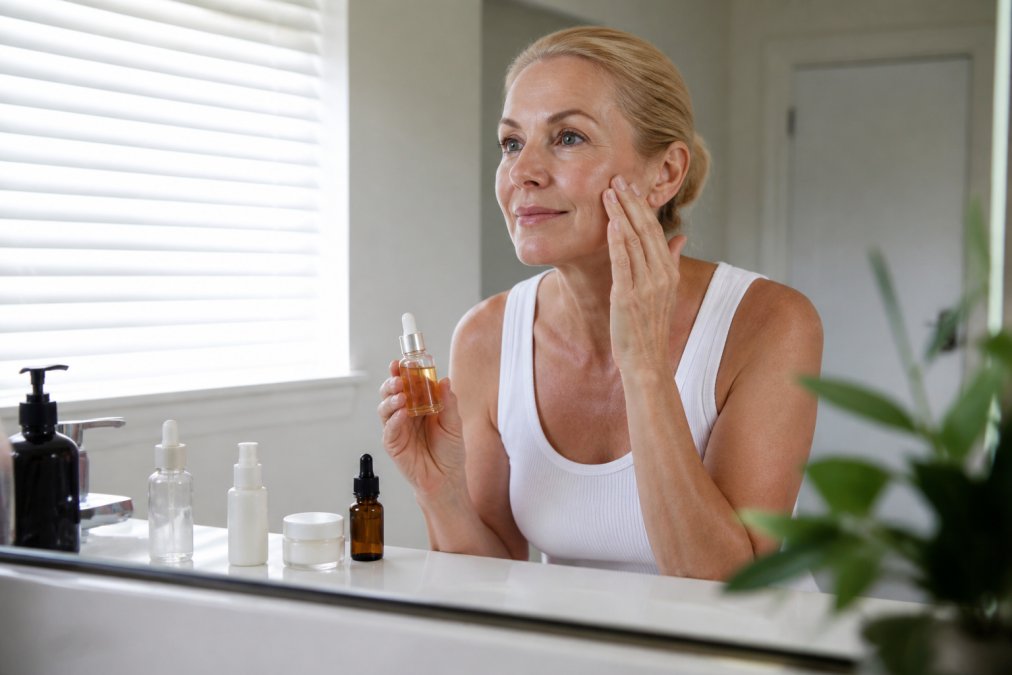
The order that works for most routines:
- Gentle cleanser
- Vitamin C serum on dry skin, wait 60 seconds
- Hydrating toner or essence if you use one
- Moisturizer
- Sunscreen as the final morning step
What Not to Layer With Vitamin C
This question causes the most irritation. Vitamin C is an acid, and stacking it with other acids or retinol in the same step pushes skin's tolerance past its limit.
- Retinol and retinoids: keep retinol for nights and vitamin C for mornings. Both accelerate cell turnover, and layering them commonly causes redness, flaking, and a compromised barrier.
- AHA and BHA exfoliants (glycolic, lactic, salicylic): these lower skin pH further and amplify stinging. Exfoliate at night, not in the same morning step as your vitamin C.
- Benzoyl peroxide: can oxidize vitamin C and reduce its effectiveness, so avoid applying them in the same layer.
- Niacinamide: the old "they cancel each other out" claim is largely outdated. Most modern formulas pair them without issue; if your skin is reactive, introduce them separately first.
Ingredients that pair well with vitamin C:
Vitamin C Brightening Facial Serum →
- Vitamin E (tocopherol) and ferulic acid: commonly formulated with vitamin C because they improve stability and antioxidant performance.
- Hyaluronic acid: adds hydration and buffers some of the sting from acidic formulas.
- Sunscreen: the single most important partner. Vitamin C neutralizes free radicals, but it does not replace UV protection.
Morning vs. Night: When Vitamin C Actually Belongs
Vitamin C belongs in the morning for most people. Its main job is defending against free radicals from daytime UV and pollution, so applying it before heading outside makes the most of what it does. Night use is not harmful, but it wastes the antioxidant timing advantage.
Purging vs. Irritation: Which Reaction Are You Having?
Purging and irritation look similar but have different causes and fixes. Purging is a temporary breakout that clears as skin adjusts; irritation is a barrier reaction that worsens with continued use.
Budget vs. Luxury Vitamin C: What the Price Difference Buys
Price in vitamin C serums buys three things: the form of vitamin C used, the stability system, and the supporting ingredients. It does not automatically buy better results, a cheap serum with good packaging can outperform an expensive one in a clear bottle. Efficacy is decided by pH and delivery system, not the price tag.
The Two Numbers That Actually Matter
pH. Pure ascorbic acid needs an acidic environment to penetrate skin effectively. Most formulators target a pH below 3.5 for L-ascorbic acid, because above that range absorption drops sharply. That same acidity makes some formulas sting. A derivative-based serum can sit at a higher, gentler pH and still deliver brightening over time, just more slowly.
What the Price Difference Actually Buys
- Form of vitamin C: pure L-ascorbic acid is inexpensive to source but hard to stabilize. Derivatives like ascorbyl glucoside, sodium ascorbyl phosphate, and tetrahexyldecyl ascorbate cost more to formulate but tolerate a wider pH range and last longer on the shelf.
- Packaging: airless pumps and opaque containers cost more than droppers but protect the formula from light and oxygen. A clear dropper bottle is the single biggest red flag regardless of price.
- Supporting ingredients: ferulic acid, vitamin E, and hyaluronic acid add both cost and benefit. Ferulic acid and vitamin E are commonly paired with vitamin C because they improve stability and antioxidant performance.
- Delivery systems: encapsulated and liposomal forms cost more to produce but release vitamin C more gradually, reducing irritation and improving penetration.
The Honest Verdict
A budget serum in an airless pump at a sensible pH and concentration can outperform a luxury serum in a clear dropper bottle that has already started to oxidize. Price is a weak signal; packaging, pH, and ingredient form are strong ones.
| Serum | Key Actives | Best For | Price |
|---|---|---|---|
| Vitamin C Brightening Facial Serum | Vitamin C, hyaluronic acid, vitamin E | Dark spots, fine lines, hydration | $79.99 |
| Vitamin C Brightening & Tone Repair Serum | Vitamin C derivatives, niacinamide, glutathione | Uneven tone, dullness | $95.99 |
| Anti-Wrinkle Vita C Capsule Cream | Vitamin C capsules, collagen | Fine lines, firmness | $56.99 |
Matching Vitamin C to Your Skin Type and Age
Skin type and age change how you should use vitamin C, not whether you should. The ingredient suits nearly everyone; concentration and delivery format are what need adjusting.
Frequently Asked Questions
Does vitamin C serum actually make your skin glow?
Yes, when the formula is stable and used consistently. Vitamin C interrupts excess melanin production, which is what causes dark spots and uneven tone, and it supports collagen synthesis so skin looks firmer and reflects light more evenly. The glow you see is brighter, more uniform tone rather than shininess. Results depend on concentration, packaging, and daily use, so a serum stored in an opaque pump bottle will outperform a clear dropper left on a sunny shelf.
How long does it take to see results from vitamin C serum?
Most people notice a fresher, less dull complexion around week 4. Visible fading of dark spots and post-inflammatory hyperpigmentation typically takes 8 to 12 weeks of daily use. Fine line softening follows a similar timeline because collagen remodeling is slow. Photograph your face in the same lighting every two weeks to track changes objectively.
Can I layer vitamin C serum with retinol or niacinamide?
Yes, with the right sequencing. Apply vitamin C serum in the morning after cleansing and before moisturizer and sunscreen. Save retinol for your evening routine. Niacinamide layers fine with vitamin C, and many formulas, including the Vitamin C Brightening & Tone Repair Serum, already combine them. If your skin is sensitive, introduce one active at a time and wait two weeks before adding the next. Patch testing on your inner forearm first is worth the extra day.
What does it mean if my skin stings or turns orange after applying vitamin C?
Stinging usually points to a low pH formula or a concentration your skin is not used to yet. Orange or brown discoloration on your skin often means the serum itself has oxidized, not that your skin is reacting. Check the liquid color in the bottle: pale yellow is normal, deep amber or brown means it has lost potency and should be replaced. A vitamin C serum that has oxidized can still irritate without delivering the brightening benefits you paid for.
Is an expensive vitamin C serum worth it compared to a cheaper one?
Price alone does not predict results. What matters is the form of vitamin C, the concentration, the pH, and whether the packaging protects it from light and air. The Vitamin C Brightening Facial Serum at $79.99 uses a dermatologist-tested formula with hyaluronic acid and vitamin E, which helps stabilize the vitamin C. A cheaper serum in a clear dropper bottle may oxidize within weeks and deliver nothing. Spend on formulation and packaging, not on brand name.