

Table of Contents
- What Facial Cupping Actually Does to Wrinkled Skin
- Does Facial Cupping Reduce Wrinkles? The Honest Verdict
- Facial Cupping Frequency for Anti-Aging: How Often Is Enough
- How to Use Facial Cupping Tools Without Damaging Skin
- Non Invasive Skin Tightening at Home: Where Cupping Fits
- Risks, Contraindications, and Who Should Skip Cupping
- Conclusion
- Frequently Asked Questions
Last Updated: September 16, 2026
What Facial Cupping Actually Does to Wrinkled Skin
Is facial cupping good for wrinkles? It can soften fine lines and improve plumpness, but it is not a wrinkle eraser.
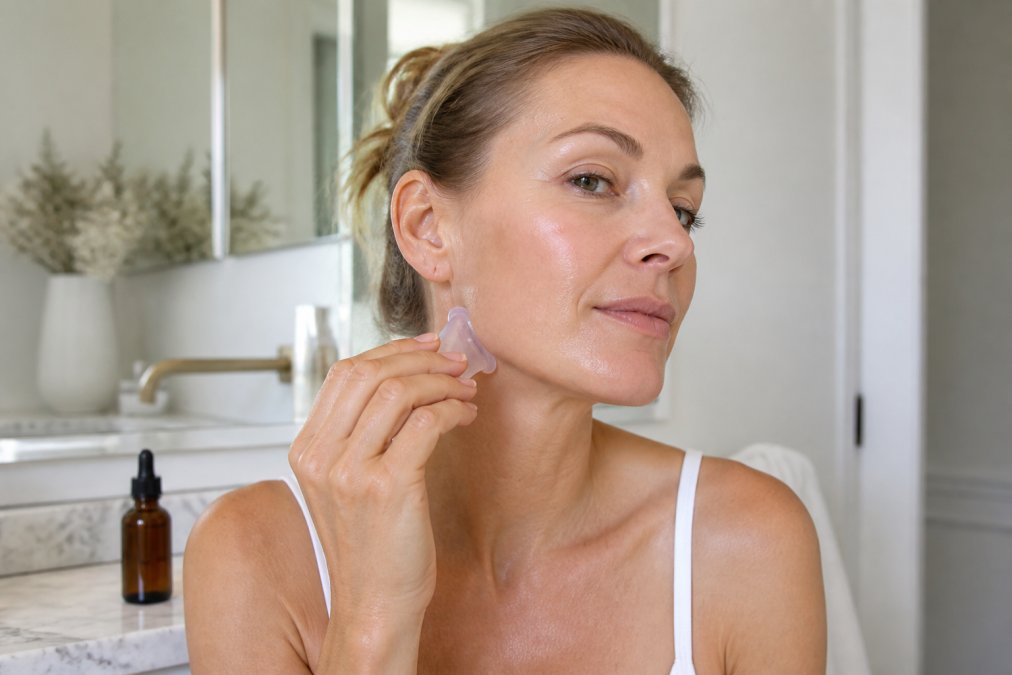
The Suction Therapy Mechanism, Minus the Hype
Suction therapy works on two layers of the skin. Negative pressure pulls blood toward the surface, temporarily plumping tissue and bringing color to dull skin, while nudging the lymphatic system that carries fluid away from tissues, which is why depuffing is the most immediate and reliable result.
What cupping reliably does:
- Reduces morning puffiness within minutes
- Improves temporary skin tone and glow
- Eases jaw and forehead muscle tension
- Supports lymphatic drainage and micro-circulation
Does Facial Cupping Reduce Wrinkles? The Honest Verdict
Facial cupping can soften fine lines caused by dehydration and poor circulation, but it will not erase deep, structural wrinkles.
What the Evidence Supports
The strongest case for cupping is cosmetic and temporary. Increased blood flow delivers oxygen and nutrients to the dermal layer, and better hydration makes fine lines look less pronounced for hours after a session.
What It Cannot Do
Deep wrinkles, lost facial volume, and sagging from reduced collagen are structural problems. Suction cannot rebuild volume or reverse years of sun damage.
Facial Cupping Frequency for Anti-Aging: How Often Is Enough
Two to three sessions per week is the sweet spot for most people. Daily use raises irritation risk, while once-a-month sessions rarely produce visible change.
| Frequency | Best For | Expected Result |
|---|---|---|
| Daily | Not recommended | Irritation, capillary damage |
| 2-3x per week | Most skin types | Steady glow, less puffiness |
| Once a week | Sensitive skin | Gentle maintenance |
| Once a month | Special occasions only | Temporary lift, no cumulative gain |
Temporary Results vs. Cumulative Benefits: What Actually Changes
Facial cupping produces two types of results on two timelines, and confusing them is why people quit after a month.
What this means in practice:
- One session buys a day or two of visible improvement, a cosmetic event, not a treatment.
- Four to six weeks of consistent sessions is the earliest most people notice a baseline shift on a no-cupping day.
- Stop cupping entirely and cumulative gains fade over several weeks, because nothing maintains the circulation and drainage pattern.
How to Adjust Frequency for Your Skin
Frequency is not one-size-fits-all. These variables push you toward the lower end:
- Sensitive or reactive skin: start at once a week and build up only if redness does not last more than an hour.
- Thin or mature skin: the dermis is more fragile after menopause, so lighter pressure and once- or twice-weekly sessions beat a three-times-a-week routine.
- Active breakouts or a flare: pause until the skin calms, then restart at once a week.
- New to cupping: spend two weeks at once a week to learn your pressure tolerance before increasing.
Session Length Matters as Much as Frequency
A common mistake is assuming more minutes equals more results. Most practitioners recommend a full-face session of roughly five to ten minutes, with each pass limited to three to five strokes before you release and reposition. Longer sessions at higher suction do not accelerate collagen support; they increase the odds of bruising and broken capillaries.
How to Use Facial Cupping Tools Without Damaging Skin
Always apply a slip layer of serum or facial oil before the cup touches your skin, and never drag a cup across dry skin. Friction, not suction, causes most at-home injuries.
Step-by-Step Technique
- Cleanse and pat skin dry, then apply a generous layer of serum or oil.
- Start at the neck, moving the cup upward with light suction.
- Glide along the jawline toward the ears to support lymphatic drainage.
- Move up the cheeks in short, sweeping strokes.
- Work the forehead horizontally, then pause before the delicate eye area.
- Keep each pass to 3-5 strokes, then release and reposition.
- Finish with a gentle gua sha pass to calm the skin.
The thing nobody tells you about cupping: the release matters as much as the pull. Lift the cup's edge slightly to break suction before repositioning. Dragging a sealed cup across the skin is what causes redness and bruising, not the suction itself.
Non Invasive Skin Tightening at Home: Where Cupping Fits
Non invasive skin tightening at home works best as a layered routine, and cupping is one piece of it. The tool improves circulation and drainage, but firmness comes from hydration and collagen-supporting actives used alongside it.
Risks, Contraindications, and Who Should Skip Cupping
Facial cupping is generally safe for healthy skin, but certain conditions make it a bad idea. Knowing the contraindications upfront prevents a cosmetic experiment from becoming a dermatological problem.
Who Should Skip Facial Cupping Entirely
Most articles give a generic list. The useful version explains why each condition is a problem.
- Active acne, cysts, or open wounds. Suction pulls bacteria and inflammation deeper into the follicle and can spread infection. Wait until lesions heal.
- Rosacea. Rosacea involves an already-dilated vascular network and a compromised barrier. Suction increases surface blood flow, the exact trigger that drives flushing and papules.
- A history of broken capillaries (telangiectasia). Visible capillaries are permanently dilated vessels. Suction can rupture additional vessels and enlarge existing ones, and unlike a bruise, a broken capillary does not heal on its own, it typically requires laser or intense pulsed light treatment. If you see red or purple vessels on your cheeks, cupping is the wrong tool.
- Eczema, psoriasis, or an active rash. A disrupted barrier plus friction equals irritation, flares, and potential infection. Skip until the skin is calm.
- Recent cosmetic procedures. Fillers, neurotoxins, lasers, microneedling, and chemical peels leave skin healing. Suction can displace product, disrupt healing, or spread inflammation. Follow your provider's timeline, often two to four weeks.
- Blood-clotting disorders or blood-thinning medication. Anticoagulants and antiplatelet drugs make bruising more likely and harder to resolve. If you take warfarin, apixaban, rivaroxaban, clopidogrel, or daily aspirin, treat cupping as high-risk.
- Very thin or fragile skin. Skin thins with age and after menopause as collagen and elastin decline, so fragile skin bruises and tears more easily under suction. Use very light pressure or skip it.
- Active cold sore or skin infection. Suction can spread the virus or bacteria to adjacent areas.
If you bruise easily or have visible capillaries on your cheeks, cupping can make them worse, not better. Broken capillaries do not heal on their own and often require laser treatment to remove. When in doubt, test a single light pass on your jawline and wait 24 hours before committing to a full routine.
Cup Materials Compared: Silicone vs. Glass vs. Plastic
Cup material determines how much control you have and how much damage you can do.
| Material | Suction Control | Best For | Main Drawback |
|---|---|---|---|
| Silicone | High (squeeze-adjustable) | Beginners, sensitive skin, eye area | Weaker suction |
| Glass | Low (pump or heat) | Experienced users, professional settings | Risk of breakage, harder to control |
| Plastic | Low | Not recommended for face | Rigid edges, harder to clean |
How to Test Your Tolerance Safely
Before committing to a full routine, run a patch test. Cleanse your jawline, apply a slip layer of serum or oil, and make a single light pass with the cup. Wait 24 hours. A bruise, new visible capillary, or persistent redness means the pressure was too high or the tool is wrong for you. If skin looks normal, build up one pass at a time.
When to Stop and See a Professional
Stop cupping and consult a dermatologist if you notice new broken capillaries, bruising lasting more than a week, persistent redness, or signs of infection such as warmth, swelling, or pus. These are not normal side effects, and continuing makes them harder to reverse.
Conclusion
Facial cupping is a legitimate tool for improving circulation, reducing puffiness, and softening fine lines, but it will not reverse deep wrinkles or replace proven anti-aging actives. Used two to three times a week with a proper slip layer and realistic expectations, it earns its place in a firming routine.
Frequently Asked Questions
Is facial cupping good for older skin?
Facial cupping can help older skin by boosting blood flow and micro-circulation, which supports tissue oxygenation and may encourage collagen production. It softens the look of fine lines and improves skin hydration. However, it works best as a complement to a solid anti-aging routine that includes ingredients like retinol, vitamin C, and hyaluronic acid. For deep wrinkles and significant laxity, cupping alone will not deliver dramatic tightening.
Does cupping help saggy skin?
Cupping can temporarily improve the appearance of saggy skin by stimulating circulation and lymphatic drainage, which reduces puffiness and gives a firmer look. It also helps ease muscle tension that can contribute to a tired appearance. For lasting skin firmness, pair cupping with products that support collagen production, such as the Firming Facial Serum, and consider tools like the Face Massager Mini Device for daily toning.
Can facial cupping cause broken capillaries?
Yes, if you use too much suction or drag the cup across the skin too aggressively, you can damage fragile capillaries and cause bruising. To avoid this, always use light suction, keep the cup moving, and never leave it parked in one spot. People with rosacea, thin skin, or a history of easy bruising should be especially cautious or skip facial cupping altogether.
How often should you do facial cupping for wrinkles?
For anti-aging benefits, most people see the best results with two to three sessions per week, each lasting about five to ten minutes. Daily use is not necessary and can irritate the skin. Start with once a week to see how your skin responds, then increase frequency gradually. Consistency over weeks matters more than intensity in a single session.
What are the downsides of face cupping?
The main downsides include temporary redness, bruising, and the risk of broken capillaries if suction is too strong. Results are temporary and require regular sessions to maintain. It is not a replacement for in-office procedures or proven topical treatments. People with active acne, skin infections, or certain skin conditions should avoid it. Always patch-test and start with gentle pressure.
If your skin looks tired despite a full shelf of products, the missing piece may be circulation, not another cream. Ageless Glow pairs targeted formulas with tools designed to work together, from the hydrating serum that preps skin for cupping to firming treatments that support elasticity over time. Explore the collection and build a routine that delivers visible results. Add to cart and start your first session this week.