

Table of Contents
- Why Skin Changes at 50
- Non-Surgical Skin Tightening Procedures That Deliver Results
- Best Anti-Aging Serum and Topical Treatments
- How to Improve Skin Elasticity After 50
- Lifestyle Changes That Tighten Skin Naturally
- At-Home Tools for Skin Tightening
- What to Expect: Timeline and Realistic Results
- Conclusion
Last Updated: August 23, 2026
Why Skin Changes at 50
The skin you had at 30 isn't coming back, but understanding why it's changing is the first step toward stopping the decline. At 50, your skin faces a perfect storm of biological shifts: collagen production drops roughly 1% per year after age 25 (peer-reviewed research), elastin fibers degrade faster than your body can replace them, and hormonal changes accelerate moisture loss and reduce barrier function. Sun exposure accumulated over decades creates photodamage that shows up as texture changes, discoloration, and deeper lines.
The real problem isn't just collagen loss. Your skin's ability to hold water has declined, cell turnover has slowed, and your dermal layer has thinned. This combination makes skin look dull, feel rough, and appear to sag. The good news is that each of these changes is addressable.
At Ageless Glow, we focus on products and tools designed specifically for this stage of life, ones that work with your skin's current biology rather than against it. The strategies below target the actual mechanisms driving skin aging at 50, not just the symptoms.

Non-Surgical Skin Tightening Procedures That Deliver Results
If you're serious about tightening sagging skin, non-surgical procedures offer measurable improvements without the downtime and cost of surgery. These procedures work on a simple principle: controlled injury triggers your skin's repair response, which includes ramping up collagen and elastin production.
Radiofrequency and Ultrasound Treatments
Radiofrequency energy heats the dermal layer without damaging the surface, triggering collagen remodeling over weeks and months. Ultrasound therapy works similarly but uses sound waves instead, penetrating to deeper tissue and creating collagen induction.
Both approaches require multiple sessions, typically 4-6 treatments spaced 4-6 weeks apart, before you see significant results (the FDA). You're looking at 8-12 weeks minimum before meaningful skin tightening appears. The appeal is that they're genuinely low-effort with no recovery time, no peeling, no visible marks. The limitation is cost, typically ranging from several hundred to over a thousand dollars depending on the area treated and the clinic.
Laser Resurfacing and Collagen Induction
Laser resurfacing uses focused light energy to remove damaged skin layers and stimulate collagen production simultaneously. Unlike radiofrequency, lasers create visible peeling and require downtime, typically 5-7 days before you can return to normal activities.
The trade-off is worth it for many people: laser resurfacing addresses multiple problems at once. It removes sun-damaged skin, tightens existing tissue, and smooths texture. Fractional lasers are less aggressive than full-surface resurfacing but still effective, with recovery of 3-5 days and results building over 3-6 months as collagen remodels.
Best Anti-Aging Serum and Topical Treatments
Procedures are powerful, but the right topical treatments work on skin elasticity daily, supporting collagen production and barrier health while you wait for professional treatments to take effect, or as a standalone approach if procedures aren't in your budget.
Key Ingredients for Skin Elasticity
Retinoids are non-negotiable at 50 if you want to improve skin elasticity (peer-reviewed research). They increase cell turnover, boost collagen production, and improve skin texture. Start with a low concentration (0.25-0.5%) and build tolerance over weeks. Expect 8-12 weeks before you see meaningful results on sagging skin.
Hyaluronic acid holds water in the dermis and epidermis, plumping skin and improving elasticity. It works best in serums applied to damp skin, then sealed with a moisturizer.
Peptide complexes signal your skin to produce more collagen and elastin. They're gentler than retinoids and work well in combination with them.
Vitamin C (L-ascorbic acid) supports collagen synthesis and provides antioxidant protection against photodamage. Use in the morning under sunscreen for best results.
The Ageless Glow Firming Facial Serum ($14.99-$48.99) combines salicylic acid, hyaluronic acid, and vitamin C in a formula designed for all skin types. The salicylic acid gently exfoliates to improve texture and cell turnover, while hyaluronic acid and vitamin C support elasticity and barrier health. It's a practical entry point if you're new to active ingredients or testing before committing to expensive professional treatments.

How to Apply for Maximum Benefit
Apply serums to clean, slightly damp skin. Use 2-3 drops for your face and neck, pressing gently rather than rubbing. Let it absorb for 1-2 minutes before applying moisturizer.
Use retinoids at night only, they increase sun sensitivity. Start with 2-3 times per week and build to nightly use as your skin adapts. Pair with a good moisturizer to prevent irritation.
Vitamin C serums work best in the morning under sunscreen. Apply to dry skin and wait 10-15 minutes before sunscreen to let it set.
With peptides and hyaluronic acid, consistency matters more than timing. Use them morning and night for cumulative results.
How to Improve Skin Elasticity After 50
Topical treatments and procedures work on the outside. But skin elasticity also depends on what's happening inside: your nutrition, hydration, and how your body supports collagen maintenance.
Nutrition and Collagen Support
Collagen is made of amino acids, primarily glycine, proline, and hydroxyproline. Your body can synthesize collagen from the protein you eat, but only if you're consuming enough and your micronutrient status supports the process.
Eat adequate protein at each meal, aim for 25-30 grams per meal for women over 50. Chicken, fish, eggs, legumes, and dairy all work. Vitamin C is essential for collagen cross-linking; citrus, berries, bell peppers, and leafy greens are reliable sources. Copper and zinc support collagen synthesis; shellfish, nuts, seeds, and whole grains contain both.
Hydrolyzed collagen (collagen peptides) is absorbed more efficiently than whole collagen from food. Some evidence suggests it may support skin elasticity. If you try it, use consistently for 8-12 weeks before assessing results. A typical dose is 10-15 grams daily.
Hydration and Barrier Health
Dehydration at the cellular level makes skin look dull and feel tight. Drink enough water that your urine is light yellow most of the day. For most people, that's 8-10 glasses daily.
Barrier health determines how well your skin holds moisture. A damaged barrier loses water rapidly, no matter how much you drink. Use a moisturizer containing ceramides or cholesterol after serums to seal in hydration. Avoid over-washing or using harsh cleansers that strip the barrier. A gentle cleanser and warm (not hot) water are sufficient.
Lifestyle Changes That Tighten Skin Naturally
Procedures and serums address skin directly. But your lifestyle sets the foundation for whether those treatments work well and how quickly results appear.
Sun Protection and Photodamage Prevention
Sun damage is cumulative and irreversible. By 50, most visible aging comes from decades of UV exposure. You can't undo photodamage, but you can stop it from getting worse.
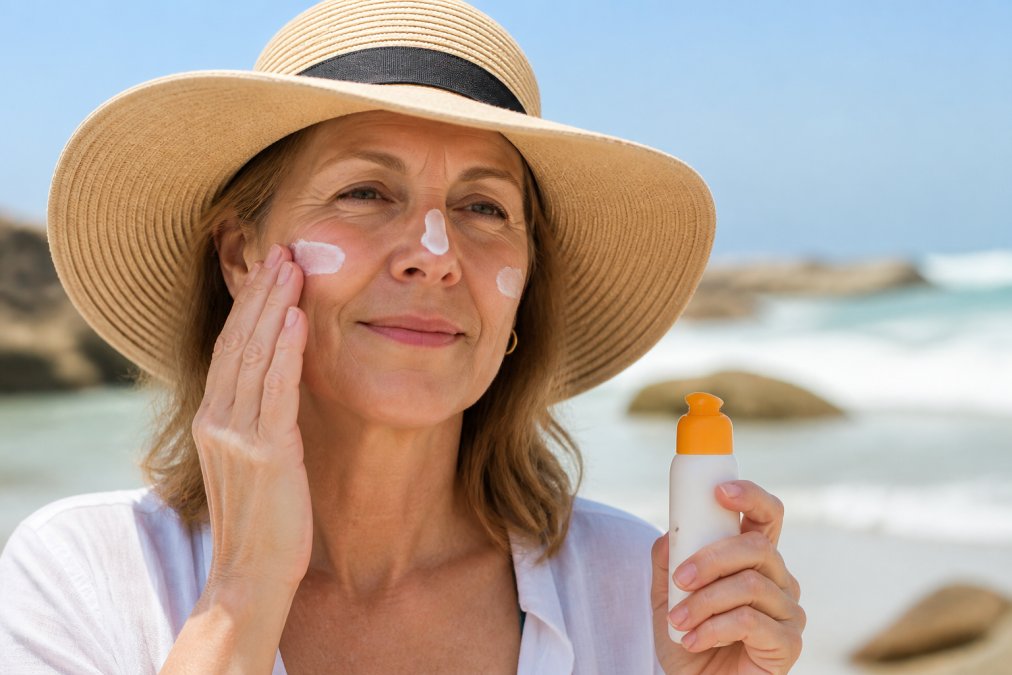
Use broad-spectrum SPF 30 or higher daily, even on cloudy days. Reapply every 2 hours if you're outdoors. Wear protective clothing, long sleeves, hats, and sunglasses when you're in the sun for extended periods. A wide-brimmed hat protects your face, neck, and ears, where skin is thin and photodamage shows first. Avoid peak sun hours (10 a.m. to 4 p.m.) when possible.
Exercise and Facial Muscle Toning
Exercise improves circulation, which delivers oxygen and nutrients to skin. It also supports collagen production through growth factors released during physical activity.
Cardiovascular exercise 150 minutes per week improves skin blood flow and cellular health. Brisk walking counts. Strength training preserves muscle mass, which supports skin elasticity and overall appearance. Resistance exercise 2-3 times per week prevents normal age-related muscle loss.
Sleep quality affects collagen production and barrier repair. Aim for 7-9 hours nightly. During sleep, your body increases blood flow to skin and rebuilds the barrier.
At-Home Tools for Skin Tightening
If you want the benefits of professional treatments but prefer at-home options, several devices deliver measurable results with consistent use. Home devices are less powerful than professional versions, so results take longer and are often more subtle.
Microcurrent devices stimulate facial muscles and improve lymphatic drainage. Some evidence suggests they may improve skin firmness. Use 3-5 minutes daily for best results.
LED light therapy devices (red and near-infrared wavelengths) may stimulate collagen production and reduce inflammation. Results require consistent use, typically 10-20 minutes, 3-5 times per week for 8-12 weeks.
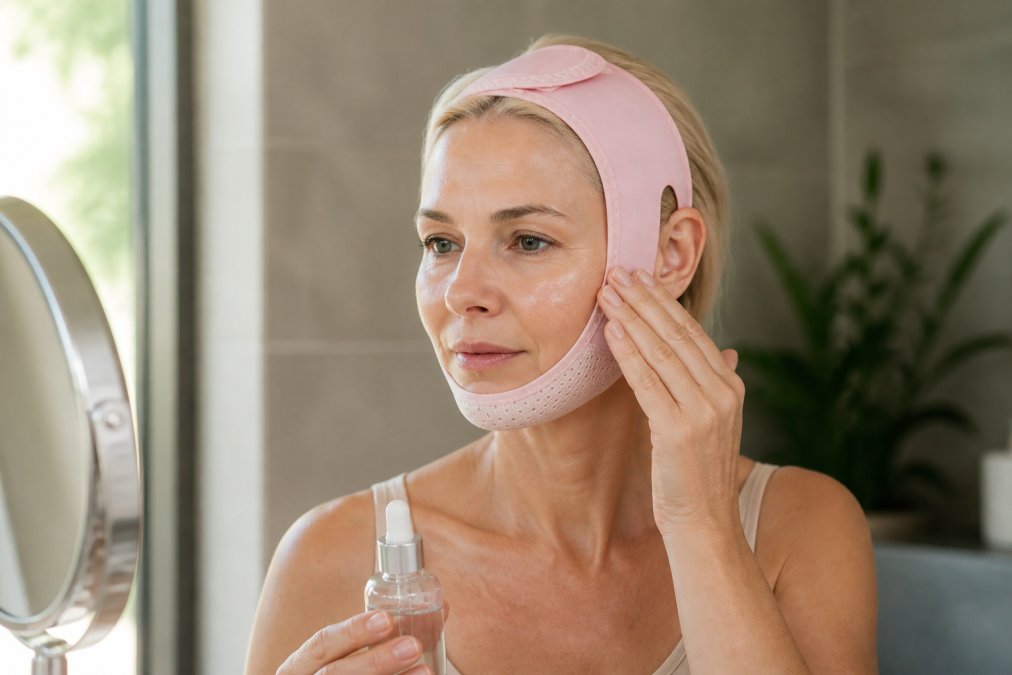
The Ageless Glow Face Lifting Bandages ($50.99) gently contour and support the jawline, cheeks, and chin while you sleep. They won't permanently tighten skin, but they provide immediate lifting and can be used nightly.

Derma rollers with microneedles trigger collagen induction through controlled micro-injury. Use 0.5-1.0mm needles, 1-2 times per week. Results build over 8-12 weeks of consistent use.
At-home tools work, but they work slowly. If you're looking for faster, more dramatic results, professional procedures are necessary. If you're willing to wait and prefer a gradual approach, home devices combined with good skincare are effective.
What to Expect: Timeline and Realistic Results
The biggest mistake people make is expecting overnight results. Skin tightening at 50 is a multi-month process, and understanding the realistic timeline prevents frustration and abandonment of strategies that actually work.
Topical serums show subtle improvements in 4-6 weeks: slightly smoother texture, improved hydration, a bit more glow. Meaningful changes in fine lines and elasticity take 8-12 weeks. Deep wrinkles and significant sagging require 3-6 months of consistent use.
Non-surgical procedures require multiple sessions before results appear. Radiofrequency and ultrasound show initial improvements after 2-3 sessions but peak results at 8-12 weeks post-final treatment. Laser resurfacing shows results faster, with visible improvement after 1-2 sessions and continued improvement over 3-6 months.
Lifestyle changes work on a longer timeline. Over 6-12 months, skin texture, firmness, and overall appearance improve noticeably.
The most effective approach combines multiple strategies: a good serum routine, sun protection, adequate nutrition, and either professional procedures or consistent at-home tools. Results compound. After 3-6 months of this combined approach, the improvement is significant.
Tightening sagging skin at 50 is achievable, but it requires commitment and realistic expectations. The strategies that work, consistent skincare with active ingredients, sun protection, adequate nutrition, and either professional procedures or at-home tools, address the actual biology of aging skin rather than promising mirages.
Start with the Ageless Glow Firming Facial Serum ($14.99-$48.99) combined with the Instant Firm Eye Tightener Cream ($15.99) if fine lines and under-eye sagging are your primary concerns. Both products are formulated with ingredients proven to support skin elasticity and barrier health. Pair them with daily sunscreen and consistent use for 8-12 weeks before assessing results. For those ready to invest in faster results, the Face Lifting Bandages ($50.99) provide immediate support while you build a longer-term routine. Add to cart and commit to the process, the results are worth it.
| Strategy | Timeline | Effort Level | Cost Range |
|---|---|---|---|
| Topical serums (retinoids, hyaluronic acid, vitamin C) | 8-12 weeks for meaningful results | Low (daily application) | $15-$50 per product |
| Radiofrequency/ultrasound procedures | 8-12 weeks post-treatment (4-6 sessions required) | Very low (no downtime) | $400-$1,200 total |
| Laser resurfacing | 3-6 months for full results (1-3 sessions) | Low (5-7 days downtime per session) | $500-$2,000+ per session |
| Lifestyle changes (sun protection, exercise, nutrition) | 6-12 months for visible improvement | Moderate (daily consistency) | Minimal cost |
| At-home devices (derma rollers, LED, microcurrent) | 8-12 weeks with consistent use | Low (10-20 minutes, 3-5x weekly) | $50-$300 |
Frequently Asked Questions
What tightens sagging skin naturally without surgery?
Consistent use of retinoids, vitamin C serums, and hyaluronic acid can improve skin elasticity and firmness over time. Sun protection prevents further collagen breakdown. Dietary changes that support collagen production, adequate hydration, and facial exercises also contribute to natural skin tightening. Results typically appear within 8-12 weeks of consistent use.
How does collagen production change after 50, and what can reverse it?
Collagen production declines significantly after 50, leading to thinner, less elastic skin. Non-surgical procedures like radiofrequency and ultrasound therapy stimulate collagen induction in the dermal layer. Topical treatments with peptide complexes and retinoids support cellular turnover and collagen synthesis. Combining professional treatments with daily skincare delivers faster, more visible results.
Can sagging skin be firm again at 50?
Yes, but results depend on the severity and your approach. Non-surgical procedures can noticeably improve skin laxity and firmness. Topical treatments work best for mild sagging and fine lines. Combining methods, professional treatments, targeted serums, lifestyle changes, and at-home tools, produces the most dramatic improvements in skin integrity and lifted appearance.
How long does it take to see results from skin tightening treatments?
Topical serums show subtle improvements within 4-6 weeks; significant results typically appear by 8-12 weeks. At-home devices may show results within 2-4 weeks with consistent use. Professional non-surgical procedures like radiofrequency often show visible tightening within 1-3 sessions, with continued improvement over 2-3 months as collagen remodeling occurs.
This article was written using GrandRanker