

Table of Contents
- What Actually Causes Premature Skin Aging (and What You Can Control)
- Ways to Reduce Premature Skin Aging: 6 Daily Habits That Work
- The Best Sunscreen for Preventing Skin Aging: How to Choose and Use It
- A Skin Care Routine for Aging Skin That Fits Real Life
- Food, Movement, and Sleep: The Lifestyle Side of Prevention
- Can Premature Skin Aging Be Reversed? What's Realistic
- Frequently Asked Questions
Last Updated: October 8, 2026
What Actually Causes Premature Skin Aging (and What You Can Control)
Premature skin aging is the early appearance of wrinkles, age spots, and lost firmness caused mostly by daily habits rather than birthdays. UVB rays burn the surface and drive dark spots and uneven skin tone.
That split matters, because it tells you where to aim.
You cannot stop time. You can control sun exposure, smoking, alcohol, sleep, and how you treat your skin barrier.
Ways to Reduce Premature Skin Aging: 6 Daily Habits That Work
Small, repeatable habits beat expensive fixes. Here are the ways to reduce premature skin aging that hold up over years, not weeks.
- Wear sunscreen every single day
- Skip tanning beds and self-tan instead
- Cover up with clothing, hats, and sunglasses
- Quit smoking and avoid secondhand smoke
- Cut back on alcohol
- Eat well, move often, and sleep enough
1. Wear Sunscreen Every Single Day
Daily sunscreen is the most effective anti-aging step you can take. It blocks the UV radiation that causes most photoaging, including fine lines, age spots, and uneven skin tone. Apply it in the morning, every morning, even when it is cloudy.
2. Skip Tanning Beds and Self-Tan Instead
Tanning beds and sunlamps expose skin to concentrated UV radiation. There is no safe tan from a bed. If you want color, use a self-tanner. It gives the look without the collagen damage.
3. Cover Up with Clothing, Hats, and Sunglasses
Protective clothing, a wide-brimmed hat, and sunglasses block UV before it reaches skin. Look for tightly woven fabric and a hat with a brim that shades your face, ears, and neck. Sunglasses also protect the thin skin around your eyes.
4. Quit Smoking and Avoid Secondhand Smoke
Smoking narrows blood flow to the skin and speeds up collagen breakdown. That shows up as early wrinkles and a dull, uneven tone. Secondhand smoke carries many of the same risks, so avoid it where you can.
5. Cut Back on Alcohol
Alcohol dehydrates skin and can leave it looking puffy and tired. Over time, heavy drinking is linked to more visible aging. Cutting back helps your skin stay hydrated and calm.
The Best Sunscreen for Preventing Skin Aging: How to Choose and Use It
The best sunscreen for preventing skin aging is a broad-spectrum formula with SPF 30 or higher, reapplied every two hours outdoors. Broad-spectrum means it blocks both UVA rays (which reach deep and break down collagen and elastin) and UVB rays (which burn the surface and drive spots). SPF tells you about UVB only, so a high SPF without the words "broad-spectrum" leaves you half-covered.
How to Read a Sunscreen Label
- Broad-spectrum: required for UVA coverage. Without it, you are only blocking the burn.
- SPF 30 vs. SPF 50: SPF 30 blocks roughly 97% of UVB; SPF 50 blocks roughly 98%. The jump is small, so consistency matters more than chasing the highest number.
- Water-resistant: means the SPF holds through 40 or 80 minutes of swimming or sweating, not all day.
How Much to Apply, and When to Reapply
Most people apply about a quarter of the amount used in testing, which is the single biggest reason daily sunscreen underperforms.
- Use about a shot glass (roughly one ounce) for face, ears, and neck combined.
- Apply 15 minutes before going outside so it has time to set.
- Reapply every two hours outdoors, and immediately after swimming, heavy sweating, or toweling off.
Cloudy Days, Windows, and Winter
UVA passes through clouds and glass, so a gray day or a long drive does not cancel exposure. A common pattern is people who protect diligently at the beach but skip daily coverage on commutes, at a desk near a window, or on overcast walks, and that is where cumulative photoaging quietly adds up.
The Skin Cancer Foundation's sun protection guidance notes that daily, year-round use is what protects skin best. And the American Academy of Dermatology recommends broad-spectrum, water-resistant sunscreen with SPF 30 or higher for everyone.
A Note on Skin Tone and Risk
Darker skin tones produce more melanin, which offers some natural protection, but it does not make anyone immune to UV damage, hyperpigmentation, or skin cancer. Prevention advice applies across tones; the difference is often in how damage shows up (uneven tone and dark spots rather than a visible burn) and in how quickly it is noticed. If you have a personal or family history of skin cancer, or you take photosensitizing medications, treat daily sun protection as non-negotiable and ask a clinician about your specific risk.
A Skin Care Routine for Aging Skin That Fits Real Life
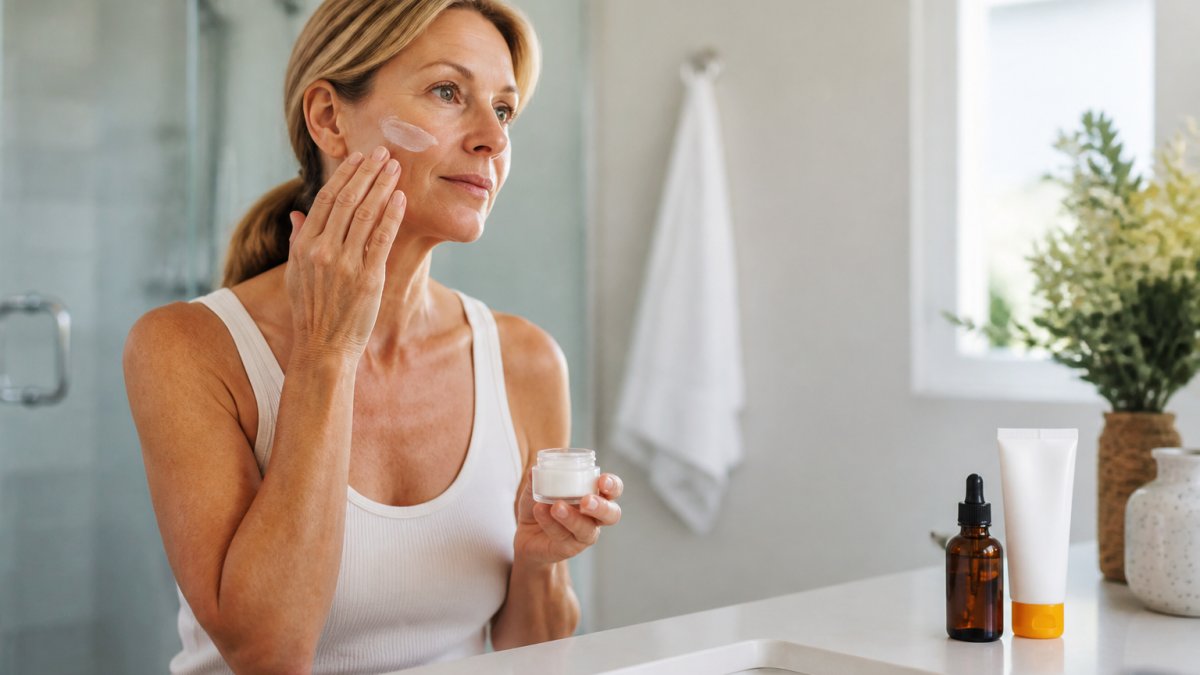
A skin care routine for aging skin does not need ten steps. It needs four in the morning and three at night, done consistently. Gentle cleansing and moisturizing protect the skin barrier, which keeps skin calm and hydrated.
Hyaluronic Acid & Niacinamide Hydrating Serum →
Morning: Cleanse, Treat, Moisturize, Protect
- Cleanse with a gentle, non-stripping cleanser. If your skin feels tight after washing, the cleanser is too harsh.
- Treat with an antioxidant serum. Vitamin C is the workhorse here, it brightens dark spots, evens tone, and supports the skin's defense against daily UV and pollution stress.
- Moisturize to seal in water and support the barrier. A light lotion is fine for oily skin; a cream suits drier skin.
- Protect with broad-spectrum SPF 30 or higher, applied last and generously.
For the treatment step, our Hyaluronic Acid & Niacinamide Hydrating Serum helps plump skin and soften the look of fine lines, and it suits dry, oily, and sensitive skin. A Vitamin C Brightening Facial Serum fits the morning treatment slot well, it targets dark spots, age spots, and fine lines, and its hyaluronic acid and vitamin E add hydration.


Evening: Cleanse, Repair, Hydrate
- Cleanse again to remove sunscreen, sweat, and the day's buildup.
- Repair with a retinoid or retinol. This is the step that does the most visible work over time, smoothing fine lines, supporting firmness, and fading uneven tone.
- Hydrate with a richer moisturizer to offset the dryness retinol can cause.
Our Retinol Face Cream supports smoother, firmer-looking skin and targets uneven tone and dark spots, and it is made for sensitive skin too.

| Step | Morning | Evening |
|---|---|---|
| Cleanse | Gentle cleanser | Gentle cleanser |
| Treat | Vitamin C serum | Retinol cream |
| Moisturize | Light moisturizer | Rich moisturizer |
| Protect | Sunscreen SPF 30+ | None needed |
What to Expect, and When
Prevention and reversal are not the same thing, and the timeline is the part most routines get wrong.
- Weeks 1-4: skin feels more hydrated; tone may look slightly more even. This is mostly moisturizer and sunscreen doing their job.
- Weeks 4-12: vitamin C and niacinamide start to show on dark spots and overall brightness.
- Months 3-6: retinol's effects on fine lines and firmness become visible. Deep wrinkles and loose skin improve less, and no topical erases them.
Give any new routine a full season before judging it. Consistency beats intensity.
Adapting the Routine for Sensitive Skin
- Start retinol two nights a week and build up slowly; buffering with moisturizer first reduces irritation.
- If your skin stings, burns, or flakes for more than a few days, cut back to cleanse-and-moisturize until it settles.
- Introduce one new active at a time so you can tell what is helping and what is not.
When to See a Professional
A routine handles prevention and mild improvement. A clinician should look at anything persistent or changing: a spot that shifts in shape, color, or size; a sore that will not heal; sudden breakouts or irritation that does not respond to gentle care; or deep lines and laxity you want treated. Early evaluation is the difference between a manageable issue and a harder one.
Food, Movement, and Sleep: The Lifestyle Side of Prevention
Diet and sleep shape skin from the inside. A balanced diet rich in fruits and vegetables supplies antioxidants that help defend skin against daily stress.
Exercise boosts circulation, which helps deliver oxygen and nutrients to skin. Sleep is when skin repairs itself, so short nights show up as dull, tired-looking skin.
- Fill half your plate with fruits and vegetables
- Choose healthy fats like olive oil, nuts, and fish
- Limit refined sugars and processed snacks
For a simple overnight option, our All-Day & Night 2-Pack Cream pairs a day cream with a night cream, using Centella Asiatica, niacinamide, and vitamin E to soften the look of creases.
Can Premature Skin Aging Be Reversed? What's Realistic
Some of it can be improved, but not erased. Can premature skin aging be reversed? Partly. Fine lines, dullness, and uneven tone often respond to a steady routine. Deep wrinkles and loose skin improve less, and results take time.
Ingredients That Help and What to Expect
A few ingredients carry most of the weight.
- Retinol: smooths fine lines and supports firmness over months
- Vitamin C: brightens dark spots and evens tone
- Hyaluronic acid: plumps skin with moisture
Expect weeks, not days. Give any new routine a full season before judging it. And talk to a dermatologist about deep lines, sudden changes, or a spot that changes shape or color.
Frequently Asked Questions
Can premature skin aging be reversed?
Some visible signs can improve, but full reversal is not realistic. Fine lines often soften with consistent hydration and ingredients like retinol and vitamin C, and uneven tone can fade over weeks to months. Deep wrinkles and long-term sun damage respond less. The bigger win is slowing further premature skin aging through daily sun protection, a steady skin care routine for aging skin, and habits like not smoking. Think of it as damage control plus visible improvement, not a reset button.
What daily habits help prevent premature skin aging?
The habits that matter most are applying broad-spectrum sunscreen every morning and reapplying when you are outside, wearing a wide-brimmed hat and sunglasses, skipping tanning beds, not smoking, and limiting alcohol. Add gentle cleansing, a moisturizer to support the skin barrier, and a diet with fruits, vegetables, and healthy fats. Sleep and regular exercise also help. None of these are dramatic on their own, but stacked together they are the core of how to prevent premature skin aging naturally.
Does sunscreen really help prevent wrinkles and age spots?
Yes. UV radiation from UVA rays and UVB rays is the main driver of photoaging, which shows up as wrinkles, fine lines, age spots, and uneven skin tone. Daily broad-spectrum sunscreen with SPF 30 or higher blocks much of that damage. The key is consistency: most people apply too little and skip reapplication, so the real-world protection is lower than the label suggests. Treat sunscreen as the non-negotiable step in any routine aimed at preventing premature skin aging.
Which skin care ingredients can help reduce visible signs of aging?
Hyaluronic acid draws in moisture and plumps the skin, which softens the look of fine lines. Niacinamide supports the skin barrier and helps refine pores and even tone. Vitamin C brightens dark spots and supports collagen, while vitamin E nourishes and protects the skin barrier. Retinol helps smooth wrinkles and improve texture over time, but it needs a slow introduction. A product like the Hyaluronic Acid & Niacinamide Hydrating Serum pairs two of these ingredients in one step.
Preventing premature skin aging comes down to daily choices, and the hardest part is staying consistent. Ageless Glow makes that easier with targeted skincare built for visible results, from our hydrating Hyaluronic Acid & Niacinamide Serum to our brightening Vitamin C Serum and our day-and-night moisturizer set. Each formula is made to support hydration, firmness, and a more even tone. Get started with Ageless Glow and build a routine your skin can keep up with.