

Table of Contents
- Do Home Facial Tools Actually Work? The Honest Answer
- How Microcurrent Devices Lift and Tone Your Face
- Benefits of LED Light Therapy at Home
- How Often to Use Facial Sculpting Tools for Best Results
- Realistic Timelines: What to Expect After 4 and 12 Weeks
- Safety First: Contraindications and Device Hygiene
- Choosing Your First Device: From Massagers to Gua Sha
- Final Verdict: Are Home Facial Tools a Smart Investment?
- Frequently Asked Questions
Last Updated: September 9, 2026
Do Home Facial Tools Actually Work? The Honest Answer
The short answer is yes, but with important caveats. Home facial tools work best as a complement to a consistent skincare routine, not as a replacement for professional treatments or healthy habits. Many users achieve visible improvements when they pair the right device with disciplined, regular use.
These tools deliver gradual, cumulative benefits rather than dramatic overnight transformations. Many users report subtle changes within the first few weeks, with more noticeable results after a month or two of consistent application. The technology behind them has been studied for its effects on skin elasticity and collagen production, but results depend heavily on your skin's starting condition, your age, and how faithfully you stick to the routine.
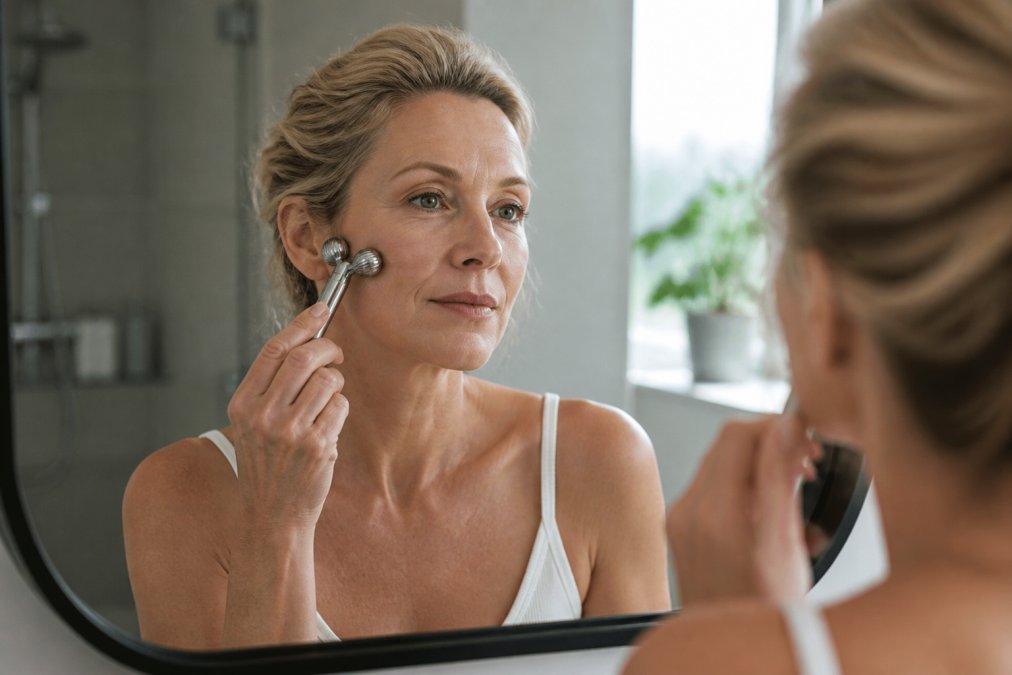
The key distinction is between instant gratification and structural change. Some tools, particularly massagers and gua sha, provide immediate de-puffing and a temporary lifted look by encouraging lymphatic drainage. Others, like LED devices, work at a deeper level to stimulate cellular turnover over time.

How Microcurrent Devices Lift and Tone Your Face
Microcurrent technology uses low-level electrical stimulation to mimic the natural electrical currents your body produces. These gentle impulses travel through the skin to the facial muscles beneath, causing them to contract and tone much like a workout for your face.
Microcurrent targets the muscle layer, which is why consistency matters so much. Using a device once will not rebuild muscle tone. Regular sessions, typically several times per week, train the underlying muscles to sit more firmly against the bone structure.
For best results, microcurrent requires a conductive gel or serum, as the electrical current needs a medium to pass through the skin efficiently. Using a device on dry skin is uncomfortable and reduces effectiveness. Many users integrate this step after cleansing and before heavier moisturizers in their evening routine.
Benefits of LED Light Therapy at Home
LED light therapy at home has become a staple in skincare routines, but not all devices are created equal. Red light, typically in the 630-660 nanometer range, penetrates the dermis to stimulate collagen-producing fibroblasts (peer-reviewed research). Near-infrared light, often around 810-850 nanometers, reaches deeper to reduce inflammation and support healing. Most home devices use a combination of these wavelengths, but intensity and total energy delivered per session vary widely. Clinical studies showing meaningful results often use higher irradiance than many consumer devices, which is why consistency and session duration matter so much.
Over time, red light therapy can improve skin texture, reduce the appearance of fine lines, and support a more even tone. It also calms redness and supports the skin barrier, making it a good option for sensitive skin or mild rosacea. Unlike microcurrent, which works on muscles, LED targets the cellular level, so you won't see an immediate lift, but the cumulative effects are well-documented.
To maximize results, use LED on clean, dry skin and avoid active ingredients like retinol or alpha-hydroxy acids immediately before your session, as they can increase photosensitivity. After your session, follow with a hydrating serum containing hyaluronic acid or peptides to capitalize on the increased cellular activity.
A typical session lasts 10 to 20 minutes, with most manufacturers recommending three to five sessions per week. The hands-free nature of LED masks makes them easy to use while reading or watching TV, but consistency is non-negotiable. Users typically see subtle improvements in skin smoothness after four weeks, with more noticeable changes in fine lines and firmness after eight to twelve weeks. If you stop using the device, the benefits gradually fade over several months as collagen remodeling slows.
Device hygiene is often overlooked. LED masks and handheld devices accumulate oils, dead skin cells, and bacteria, which can lead to breakouts or irritation if not cleaned regularly. After each use, wipe the device with a soft, dry cloth or a 70% isopropyl alcohol wipe, depending on the manufacturer's instructions. Avoid submerging the device in water unless it is explicitly waterproof.
How Often to Use Facial Sculpting Tools for Best Results
Consistency is the single biggest factor determining how often to use facial sculpting tools for visible outcomes. For most devices, a routine of five to six days per week during the first month is recommended to establish a baseline. After that, many users can drop to a maintenance schedule of three to four sessions weekly.
| Tool Type | Suggested Frequency | Session Length | Primary Benefit |
|---|---|---|---|
| Microcurrent device | 5-6 days/week initially | 10-15 minutes | Muscle toning and lift |
| LED light therapy mask | 3-5 days/week | 10-20 minutes | Collagen and texture |
| Gua sha or facial massager | Daily as desired | 3-5 minutes | De-puffing and circulation |
| Pore cleaner device | 1-2 times/week | 5 minutes | Deep cleansing |
Muscles respond to regular stimulation, and skin cells need consistent signals to produce collagen. Sporadic use, such as once a week, will likely yield minimal results. The most successful users treat their device like a daily supplement rather than a special occasion treatment.

Realistic Timelines: What to Expect After 4 and 12 Weeks
One of the most common questions we hear is, "When will I see results?" The honest answer is that it depends on the device, your skin's starting point, and your consistency. Here is a week-by-week breakdown based on typical user experiences and dermatologist guidance, general patterns, not guarantees.
Week 1: The Learning Curve During the first week, you're adjusting to the device and your routine. You may notice an immediate but temporary effect from tools like microcurrent or gua sha, a de-puffed, lifted look that lasts a few hours. This is due to lymphatic drainage and increased circulation, not structural change. LED devices won't produce any visible difference this early.
Week 2: Subtle Shifts By the end of week two, many users report that their skin looks slightly brighter and feels smoother, often more from massage and increased blood flow than from collagen production. If you're using a microcurrent device, you might notice your facial muscles feel more toned after a session, but the effect still fades within a day.
Week 3: Early Signs Around week three, some users begin to see a reduction in morning puffiness and a more even skin tone, particularly those using microcurrent or facial massagers daily. LED users might notice their skin looks more rested, but fine lines and texture remain unchanged.
Week 4: The First Milestone After four weeks of consistent use (five to six days per week for microcurrent, three to five for LED), you should see measurable improvements. Skin texture is often smoother, and fine lines may appear slightly softened. Microcurrent users often report a subtle lift in the jawline and cheekbones, but it's not dramatic, think "you look well-rested" rather than "you had a facelift." LED users might notice reduced redness and a more radiant complexion.
Weeks 5-8: Building Momentum During this phase, collagen production is ramping up. You may start to see a reduction in the depth of fine lines, especially around the eyes and mouth. Skin elasticity improves, and makeup applies more smoothly. For microcurrent, muscle toning becomes more apparent, and the lift lasts longer after each session.
Weeks 9-12: The Turning Point By the twelve-week mark, the cumulative effects are hard to miss. Collagen remodeling takes about 12 weeks to produce visible changes, so this is when LED users see the most significant improvement in fine lines and firmness (PubMed). Microcurrent users often report a more defined jawline and firmer cheeks. Results are still subtle compared to injectables, but they're natural-looking and build on themselves.
Beyond 12 Weeks: Maintenance Once you've achieved your desired results, you can often reduce frequency to a maintenance schedule, two to three sessions per week for microcurrent and LED. However, if you stop entirely, the benefits will gradually fade over several months as collagen breaks down and muscles return to their baseline. Think of these tools like exercise for your face: you have to keep at it to maintain the gains.
To make the most of your timeline, integrate your device with the right products. For microcurrent, always use a conductive gel or serum, never apply it to dry skin. For LED, apply a hydrating serum after your session to boost absorption, and avoid retinol or acids immediately before, as they can increase photosensitivity.
Safety First: Contraindications and Device Hygiene
Before starting any new device, review the safety protocols and contraindications. Microcurrent devices should not be used by individuals with pacemakers, metal implants in the treatment area, or a history of seizures (the FDA). Pregnant women are typically advised to avoid microcurrent stimulation, though LED therapy is generally considered safe during pregnancy.
Bacteria and product buildup on the device surface can transfer to your skin, leading to breakouts or irritation. Clean the contact heads after every use with a soft, dry cloth or a mild alcohol wipe, depending on the manufacturer's instructions. For tools like gua sha boards, wash with soapy water and dry thoroughly before storing.
Store devices in a cool, dry place away from direct sunlight to protect the internal components and battery life.
Choosing Your First Device: From Massagers to Gua Sha
The right first device depends entirely on your primary skin concern and your tolerance for commitment. If you struggle with puffiness, facial tension, and want an immediate glow boost, a manual tool like a gua sha board offers an accessible starting point. The Heart Shaped Gua Sha Board from Ageless Glow uses natural rose quartz to cool and soothe the skin while promoting lymphatic drainage, an affordable entry point requiring no charging or complicated settings.
For those seeking toning and lift, a microcurrent device is the more targeted investment. The Face Massager Mini Device available at Ageless Glow is designed to sculpt and tone the face, supporting collagen production and smoothing fine lines with regular use. It brings a spa-like experience into your daily routine and targets the muscle layer for firmer skin.
If fine lines around the eyes are your main concern, consider a specialized option like the Electric Massage Eye Cream, which combines gentle vibration with a nourishing formula to boost absorption and reduce puffiness. For deep cleansing issues like blackheads or clogged pores, the Electric Pore Cleaner offers gentle suction to refine skin texture. Those looking for overnight support might explore Face Lifting Bandages to maintain a contoured appearance while sleeping. Start with the tool that addresses your most pressing concern, then build your routine from there.

Final Verdict: Are Home Facial Tools a Smart Investment?
Home facial tools are a smart investment for those who value consistency and are willing to commit to a routine. They offer a non-invasive, cost-effective way to support skin elasticity, reduce puffiness, and improve overall radiance between professional appointments. The technology is sound, and the results, while gradual, are real for many users.
What they can do is maintain skin health, improve texture, and provide a subtle, natural-looking firmness that builds over time. For individuals in their 30s and 40s looking for preventative anti-aging, or those in their 50s and beyond wanting to support their skin's elasticity, a home device can be a valuable addition to a nutrient-rich skincare regimen.
Before purchasing, consider your lifestyle honestly. A $300 device that collects dust is a poor investment, while a $40 gua sha used daily can deliver meaningful results. The best tool is the one you will actually use. Ageless Glow offers a curated range of beauty tools and facial devices designed for visible results.
Frequently Asked Questions
Do facial tools actually work to improve facial appearance?
Yes, when used consistently and with realistic expectations. Devices like microcurrent stimulators can temporarily firm facial muscles, while LED light therapy supports collagen production over time. Research shows visible improvements in skin elasticity and fine lines after 8-12 weeks of regular use. However, results are subtler than injectables or surgical procedures. A face massager mini device can reduce puffiness and enhance skin elasticity immediately, making it a practical starting point.
Are at-home microcurrent devices worth the investment?
They are worth it if you commit to a routine. At-home microcurrent devices cost a fraction of professional sessions and offer similar low-level electrical stimulation for facial toning. Clinical studies show consistent use improves muscle tone and skin firmness. Look for the best at-home microcurrent device that fits your budget and has strong safety features. Expect to use it 3-5 times weekly for at least 8 weeks before seeing lasting changes.
How often should I use facial sculpting tools to see results?
Most facial sculpting tools require consistency to deliver results. For microcurrent devices, plan for 3-5 sessions per week. Manual tools like a gua sha board can be used daily for 5-10 minutes, especially in the morning to reduce puffiness. LED light therapy masks often work well with 3-4 sessions weekly. Remember that collagen production and cellular turnover take time, so a regular routine over 8-12 weeks is more effective than occasional intense sessions.
Can I use facial devices with my regular skincare routine?
Yes, and integration boosts results. Most devices work best on clean, dry skin. For microcurrent and massage tools, apply a conductive serum or gel first to help the current glide smoothly and improve topical absorption. LED therapy can be used after cleansing, before heavier creams. Finish with moisturizer to support the skin barrier. Avoid using active ingredients like retinol or acids immediately before or after electrical stimulation to prevent irritation.
Choosing the right home facial tool comes down to understanding your skin's needs and your willingness to stay consistent. Results require patience and regular effort, but the payoff is a healthier, more radiant complexion achieved on your own schedule. Explore the collection of facial devices and targeted skincare at Ageless Glow to find the perfect match for your routine, and start building the habit that supports timeless beauty.