

Table of Contents
- How We Selected These Natural Anti Aging Creams
- Best Natural Anti-Aging Ingredients to Look For
-
Top 8 Natural Anti Aging Creams and Serums for Women
- 1. Beauty by Earth Hyaluronic Acid Face Cream, Best Budget Pick
- 2. Weleda Skin Food Original Ultra-Rich Cream, Best for Very Dry Skin
- 3. Herbivore Botanicals Bakuchiol Smoothing Serum, Best Retinol Alternative
- 4. Pai Skincare Age Confidence Cream, Best for Sensitive Mature Skin
- 5. Drunk Elephant Protini Polypeptide Cream, Best for Firming and Texture
- 6. Tatcha The Dewy Skin Cream, Best for a Dewy, Plumped Complexion
- 7. OSEA Advanced Repair Eye Cream, Best for the Eye Area
- 8. Tata Harper Rejuvenating Serum, Best Premium Whole-Farm Formula
- Natural Retinol Alternatives for Sensitive Skin
- How to Build a Natural Anti-Aging Skincare Routine
- Age-Specific Skin Transitions: What Changes at 40, 50, and 60+
- How to Verify a Product Is Truly Natural and Non-Toxic
- Conclusion
Last Updated: August 15, 2026
Most women cycle through serums and moisturizers that promise visible results but deliver little more than temporary surface hydration. This guide covers the eight best natural anti-aging options available, what ingredients actually move the needle on fine lines and elasticity, and how to build a routine that compounds results over time.
Quick Picks:
- Best Overall (Budget): Beauty by Earth Hyaluronic Acid Face Cream
- Best for Sensitive Mature Skin: Pai Skincare Age Confidence Cream
- Best Retinol Alternative: Herbivore Botanicals Bakuchiol Serum
- Best Premium Formula: Tata Harper Rejuvenating Serum
- Best for Eyes: OSEA Advanced Repair Eye Cream
How We Selected These Natural Anti Aging Creams
Every product on this list was evaluated against four criteria: ingredient transparency, formulation integrity, suitability for mature skin types, and a meaningful absence of synthetic additives known to disrupt the skin barrier. Products were excluded if they contained undisclosed fragrance blends, synthetic preservatives with known sensitization risk, or unsupported claims. We prioritized products with third-party testing or clinical evaluation, since the clean beauty space is notoriously prone to greenwashing.
Best Natural Anti-Aging Ingredients to Look For
The best natural anti-aging ingredients address three core mechanisms of skin aging: moisture loss, collagen degradation, and oxidative stress from free radical damage.
Hydrators: Hyaluronic Acid, Squalane, and Vitamin B5
Hyaluronic acid is a naturally occurring polysaccharide that holds many times its weight in water, making it the most effective topical agent for plumping fine lines caused by dehydration. Squalane, derived from sugarcane or olives, mimics the skin's own sebum and seals in moisture without clogging pores. Vitamin B5 (panthenol) supports cellular repair and reinforces the skin barrier. According to American Academy of Dermatology guidance on moisturizer ingredients, maintaining a healthy skin barrier is foundational to any anti-aging approach.
Antioxidants: Rosehip Oil, Niacinamide, and Avenanthramides
Oxidative stress accelerates collagen breakdown and uneven skin tone. Rosehip oil is high in vitamins A and C, supporting skin regeneration. Niacinamide (vitamin B3) improves skin texture, reduces pore appearance, and strengthens the skin barrier. Avenanthramides, derived from oats, are potent anti-inflammatory antioxidants particularly valuable for reactive mature skin.
Firming Agents: Peptides, Cocoa Butter, and Jojoba Oil
Signal peptides are short amino acid chains that stimulate collagen synthesis and improve skin elasticity. Cocoa butter and jojoba oil provide a rich emollient base that softens the appearance of wrinkles and supports the lipid matrix of mature skin.
Top 8 Natural Anti Aging Creams and Serums for Women
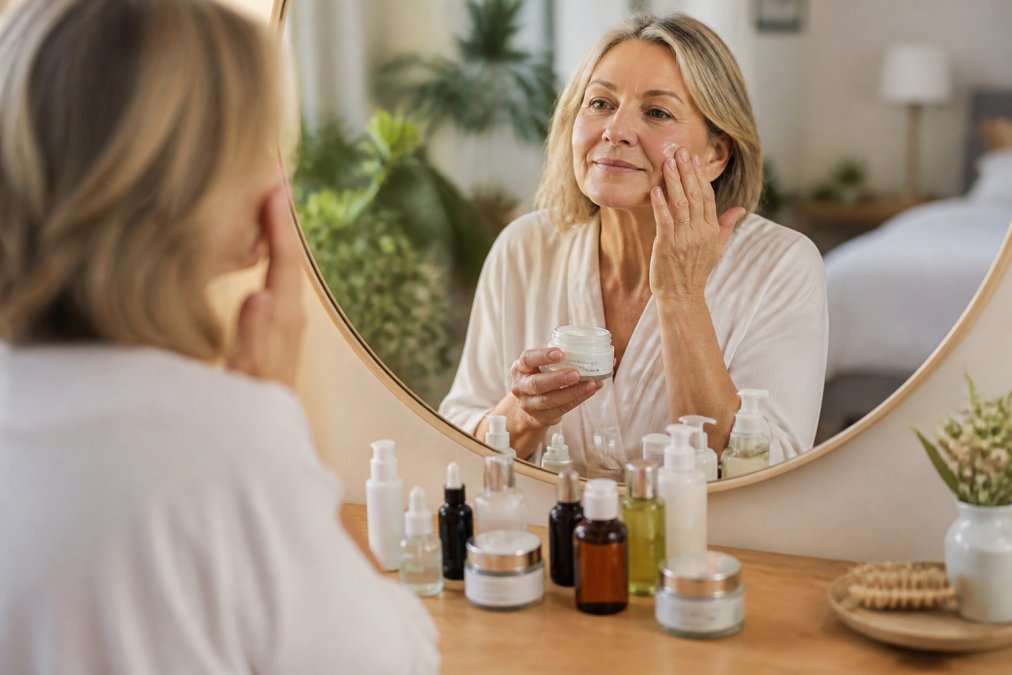
1. Beauty by Earth Hyaluronic Acid Face Cream, Best Budget Pick
This affordable option combines hyaluronic acid for deep hydration with squalane oil for barrier support, plus antioxidants including vitamins A and C. Aloe vera adds soothing, anti-inflammatory benefits suitable for reactive skin. At $25.49, it demonstrates that effective natural skincare doesn't require a premium price tag. The formula is vegan, cruelty-free, and plastic-neutral.
Best for: Budget-conscious shoppers seeking clean, functional hydration.
2. Weleda Skin Food Original Ultra-Rich Cream, Best for Very Dry Skin
Weleda's Skin Food combines a phyto-infusion of rosemary, calendula, chamomile, and pansy extracts with a base of sunflower and sweet almond oils for rich emollient coverage. At $19.99, it's the most affordable formula on this list. Note: it contains alcohol and fragrance, which may irritate sensitive skin.
Best for: Very dry, non-sensitive skin needing intensive multi-purpose hydration.
3. Herbivore Botanicals Bakuchiol Smoothing Serum, Best Retinol Alternative
Bakuchiol is the most credible plant-based retinol alternative available. This formula pairs bakuchiol with rosehip oil and vegan squalane for deep moisturization, plus Chios Mastic Tree Resin for firming support. At $56, it delivers cellular turnover benefits comparable to traditional retinol without dryness or photosensitivity.
Best for: Sensitive skin types wanting retinol-like results without irritation.
4. Pai Skincare Age Confidence Cream, Best for Sensitive Mature Skin
Pai's Age Confidence Cream is 96-hour patch tested on sensitive skin. Powered by peptides, hyaluronic acid, and echium, it targets fine lines while borage oil and shea butter provide soothing coverage. At $69, it's a considered investment for anyone whose skin has struggled with conventional anti-aging formulas.
Best for: Mature, sensitive, or reactive skin types needing a gentle but effective formula.
5. Drunk Elephant Protini Polypeptide Cream, Best for Firming and Texture
Protini is built around a signal peptide complex containing nine peptides that plump, firm, and restore skin bounce. Pygmy Waterlily Stem Cell Extract provides antioxidant support. Formulated at a skin-friendly pH of 4.0, it's free from essential oils, silicones, fragrances, and drying alcohols. At $68, it delivers a sophisticated peptide profile.
Best for: Those prioritizing firming, texture improvement, and collagen support.
6. Tatcha The Dewy Skin Cream, Best for a Dewy, Plumped Complexion
Tatcha's Dewy Skin Cream combines hyaluronic acid, red algae, and biomimetic squalane for layered moisture retention, plus Japanese Purple Rice for antioxidant protection. Non-comedogenic and dermatologist-tested, it's free from mineral oil, synthetic fragrances, sulfates, parabens, and phthalates. At $72, it delivers intense hydration and a visibly dewy finish, though it does contain fragrance.
Best for: Those seeking intense hydration and a visibly dewy, plumped complexion.
7. OSEA Advanced Repair Eye Cream, Best for the Eye Area
OSEA's Advanced Repair Eye Cream is clinically tested specifically for the eye area. Bladderwrack algae increases luminosity, green microalgae smooths fine lines, and a plant-derived amino acid (DPHP) firms the skin visibly. Clinically tested to reduce the appearance of bags and puffiness. At $64, it's a targeted investment for this delicate area.
Best for: Targeting fine lines, puffiness, dark circles, and loss of firmness around the eyes.
8. Tata Harper Rejuvenating Serum, Best Premium Whole-Farm Formula
Tata Harper's Rejuvenating Serum draws on 19 sources to minimize wrinkles and 11 sources of plumping hydration, made with natural, nontoxic ingredients at Julius Kingdom Farm in Vermont. Natural neuropeptides address early wrinkles, while dual-weight hyaluronic acid delivers hydration at multiple skin depths. At $124, it's a significant investment. Note: some naturally derived ingredients like linalool and limonene can become allergenic upon air exposure. Patch test before full-face use.
Best for: Those seeking a premium, whole-farm, nontoxic serum addressing multiple signs of aging simultaneously.
| Product | Price | Best For | Key Actives |
|---|---|---|---|
| Beauty by Earth HA Cream | $25.49 | Budget hydration | Hyaluronic acid, squalane, vitamins A & C |
| Weleda Skin Food | $19.99 | Very dry skin | Botanical phyto-infusion, sweet almond oil |
| Herbivore Bakuchiol Serum | $56.00 | Retinol alternative | Bakuchiol, rosehip oil, squalane |
| Pai Age Confidence Cream | $69.00 | Sensitive mature skin | Peptides, hyaluronic acid, borage oil |
| Drunk Elephant Protini | $68.00 | Firming and texture | 9-peptide complex, folic acid ferment |
| Tatcha Dewy Skin Cream | $72.00 | Dewy, plumped finish | Hyaluronic acid, red algae, squalane |
| OSEA Advanced Repair Eye | $64.00 | Eye area aging | Algae, DPHP amino acid, squalane |
| Tata Harper Rejuvenating | $124.00 | Premium whole-farm | Neuropeptides, dual-weight HA |
Natural Retinol Alternatives for Sensitive Skin
Traditional retinol is effective but comes with peeling, photosensitivity, and a weeks-long adjustment period that many mature skin types cannot tolerate. Natural retinol alternatives work by triggering cellular turnover through different biological pathways, delivering comparable benefits without inflammation.
Bakuchiol, derived from the seeds of the Psoralea corylifolia plant, has been shown in peer-reviewed research to reduce fine lines and wrinkles with significantly less irritation than retinol. According to research published in the British Journal of Dermatology, bakuchiol performed comparably to retinol on wrinkle and pigmentation measures while causing fewer side effects.
Rosehip oil provides a gentler source of vitamin A (as beta-carotene) alongside vitamin C, supporting skin regeneration without sensitization risk. Niacinamide improves skin texture and tone through a different mechanism, making it an excellent complement to either bakuchiol or rosehip oil.
How to Build a Natural Anti-Aging Skincare Routine
A natural anti-aging routine works best when products are applied in an order that respects molecular weight and skin absorption.
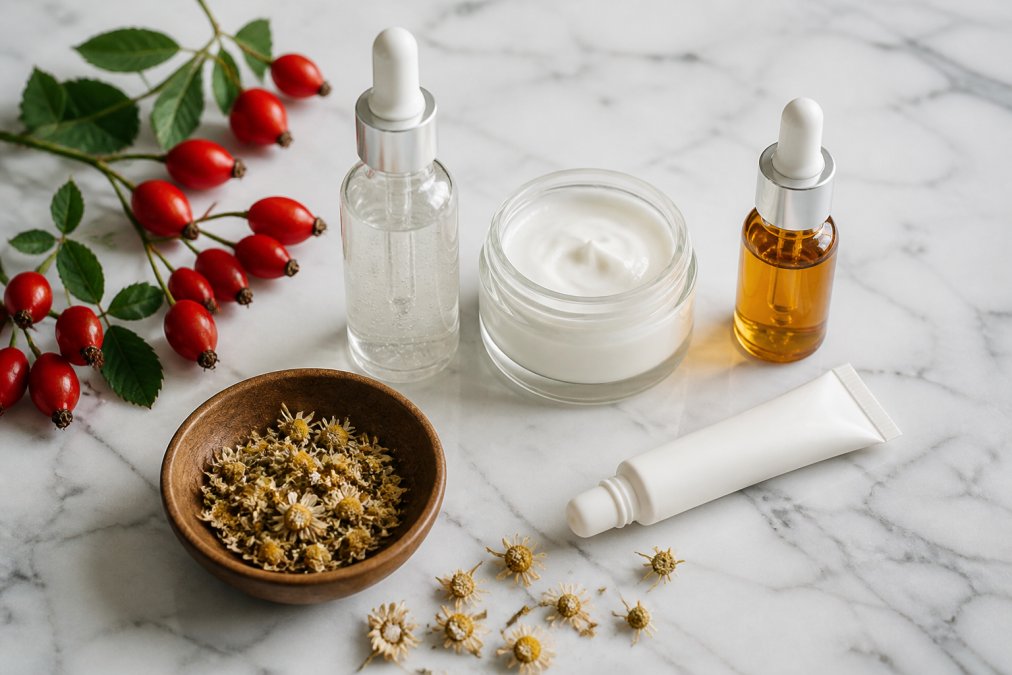
Morning routine for mature skin:
- Cleanser - Gentle, non-stripping formula
- Serum - Apply water-based serums like hyaluronic acid first
- Eye cream - Pat gently around the orbital bone
- Moisturizer - Seal in the serum layer
- SPF - Non-negotiable for any anti-aging routine
Evening routine: Replace SPF with a facial oil or richer moisturizer, and introduce bakuchiol or rosehip oil at the serum step.
Ingredient Synergy: Layering Products in the Right Order
The biggest mistake in natural anti-aging skincare is treating each product as independent. Hyaluronic acid draws moisture into the skin; squalane locks it in. Niacinamide strengthens the barrier that holds everything else in place. Peptides stimulate collagen production while antioxidants protect what's already there.
The layering rule is simple: thinnest to thickest. Water-based serums go first, followed by creams, then oils. One exception: a drop of rosehip oil mixed into a moisturizer adds lipid density without disrupting the routine order.
Patch Testing and Avoiding Allergic Reactions
Natural does not mean hypoallergenic. Essential oil components like linalool, limonene, and geraniol are among the most common contact allergens in skincare. A proper patch test takes 48 hours: apply a small amount to the inner forearm, cover with a bandage, and check at 24 and 48 hours for redness, itching, or swelling.
The American Contact Dermatitis Society's resources on skincare allergens provide a useful reference for identifying high-risk ingredients before they cause a reaction.
Age-Specific Skin Transitions: What Changes at 40, 50, and 60+
Skin aging is a series of transitions driven by hormonal shifts, cumulative UV exposure, and declining cellular turnover.
At 40: Collagen production has been declining for roughly a decade. Fine lines deepen, skin texture becomes less uniform, and hydration retention drops. Niacinamide, bakuchiol, and a hyaluronic acid moisturizer cover the core concerns.
At 50: Perimenopause and menopause accelerate estrogen-driven collagen loss. Skin becomes noticeably thinner, drier, and more prone to sagging. Peptide-heavy formulas and omega-rich creams like Pai's Age Confidence formula become genuinely necessary.
At 60+: Post-menopausal skin has significantly reduced sebum production, making the barrier more vulnerable and moisture loss faster. Emollient-rich formulas layered with squalane-based serums address this directly. The eye area deserves dedicated attention, as the skin there thins faster than anywhere else on the face.
Consistent hydration and antioxidant protection slow the aging process more reliably than chasing any single "miracle" ingredient.
How to Verify a Product Is Truly Natural and Non-Toxic
The term "natural" has no regulated definition in the cosmetics industry. The FDA does not require cosmetic products to be approved before they go to market.
Meaningful certifications to look for: MADE SAFE indicates screening against known harmful chemicals. EWG Verified means the product meets the Environmental Working Group's standards for ingredient transparency and safety. COSMOS Organic and USDA Organic apply to certified organic formulations.
According to Environmental Working Group's Skin Deep database, thousands of ingredients commonly used in personal care products have not been evaluated for safety by any federal agency.
Practical verification steps:
- Check for a MADE SAFE, EWG Verified, or USDA Organic seal
- Search the full ingredient list on EWG's Skin Deep database
- Look for published third-party safety assessment or clinical testing disclosure
- Confirm fragrance is either absent or fully disclosed (not listed as "fragrance" or "parfum")
- Research the brand's manufacturing transparency and sourcing claims
Choosing the right natural anti aging cream is genuinely complicated when the market is full of products that look the part without delivering results. Ageless Glow offers a curated selection of targeted skincare, beauty tools, and wellness products designed to help you achieve effortless radiance. Our cutting-edge, nutrient-rich formulas provide effective solutions for anti-aging, hydration, and skin rejuvenation. Whether you are looking for facial devices or specialized skincare sets, we are dedicated to helping you achieve flawless, visible results on your journey to timeless beauty. Explore the full range and find the formula that fits your skin's current needs.
Frequently Asked Questions
What ingredients should I look for in a natural anti-aging cream?
The most effective natural anti-aging creams combine hydrators like hyaluronic acid and squalane with antioxidants such as rosehip oil and niacinamide, plus firming agents like peptides and jojoba oil. These ingredients work together to support collagen production, protect against free radical damage, and improve skin elasticity. Look for certified-organic or non-toxic formulas that are dermatologist-tested and free from synthetic fragrances, parabens, and sulfates.
Are natural anti-aging creams as effective as synthetic ones?
For many women, natural anti-aging creams deliver comparable results to synthetic formulas, particularly for hydration, skin texture, and fine lines. Ingredients like bakuchiol have been clinically studied as retinol alternatives, and plant-derived antioxidants actively combat free radical damage. Results depend on the concentration of active ingredients and consistency of use. Natural formulas tend to be gentler on the skin barrier, making them especially effective for mature or sensitive skin prone to irritation from synthetic additives.
What are the best natural alternatives to retinol for sensitive skin?
Bakuchiol is the most studied natural retinol alternative, shown to promote cellular turnover and improve skin tone without the redness and peeling that traditional retinol causes. Rosehip oil, rich in vitamins A and C, also supports skin regeneration. For very reactive skin, peptide-based creams offer firming and smoothing benefits through a completely different mechanism, making them a strong option when even bakuchiol feels too active.
How can I verify that an anti-aging product is truly natural or non-toxic?
Check for third-party certifications such as MADE SAFE, USDA Organic, or EWG Verified on the product label or brand website. These programs independently assess ingredient safety and sourcing. Reading the full ingredient list (INCI format) is also essential: synthetic-free products avoid ingredients like parabens, phthalates, and artificial dyes. Brands that publish transparency reports or undergo dermatologist testing add another layer of confidence for health-conscious shoppers.
How long does it take to see results from a natural anti-aging cream?
Most women notice improved hydration and skin texture within two to four weeks of consistent use. Visible changes in fine lines, firmness, and skin tone typically take six to twelve weeks, since collagen production and cellular turnover are gradual processes. Ingredients like hyaluronic acid produce faster plumping effects, while peptides and bakuchiol require longer use to show structural improvements. Sticking with a routine for at least eight weeks gives a fair assessment of any natural anti-aging cream.
This article was written using GrandRanker