

Table of Contents
- Why the Skin Around Your Eyes Shows Fine Lines First
- Causes of Premature Eye Wrinkles: What's Actually Aging Your Eyes
- How to Use Eye Cream Correctly (Most People Get This Wrong)
- Daily Habits That Prevent Fine Lines Around Eyes
- Finding the Best Anti Aging Serum for the Delicate Eye Area
- Blue Light, Eye Rubbing, and Facial Tension: The Overlooked Triggers
- Building Your Preventative Routine: Step-by-Step
- Frequently Asked Questions
Last Updated: October 1, 2026
Why the Skin Around Your Eyes Shows Fine Lines First
The skin around your eyes is the thinnest on your body, often less than half a millimeter thick, which is why it creases, dries, and crinkles long before the rest of your face does. The periorbital area has fewer oil glands, less subcutaneous fat, and constant movement from blinking, so it loses moisture and elasticity faster than the cheeks or forehead.
Causes of Premature Eye Wrinkles: What's Actually Aging Your Eyes
Premature eye wrinkles come from a mix of external damage and internal habits, and the external ones are the most fixable. UV radiation is the biggest driver: it breaks down collagen and elastin and generates free radicals that speed cellular decline. A common mistake is treating the eye area like the rest of the face, where thicker skin tolerates more actives.
Other culprits:
- Repeated expressions that crease the same skin folds thousands of times a day
- Sleep position that presses one side of the face into a pillow for hours
- Smoking and alcohol, which constrict blood flow and dry the skin
- Allergy-induced eye rubbing, which stretches delicate tissue over time
How to Use Eye Cream Correctly (Most People Get This Wrong)
Here's the sequence that works:
- Apply to clean, slightly damp skin so humectants draw in water
- Dot from the inner corner outward along the bone
- Tap, never rub, until absorbed
- Wait a minute before layering anything else
If you want to know how to use eye cream correctly, the short answer is: less product, weaker finger, outward motion, twice daily.

Daily Habits That Prevent Fine Lines Around Eyes
Daily habits prevent fine lines around eyes more reliably than any single product, because consistency beats intensity. The bigger win is topical: a moisturizer that supports barrier repair keeps water in the epidermis and plumps fine lines so they look softer. Sleep quality is the next lever, skin repairs itself overnight, and poor sleep shows up first as puffiness and dullness under the eyes.
Build these into your day:
- Drink water consistently rather than in one large burst
- Wear SPF around the eyes every morning, rain or shine
- Limit caffeine late in the day to protect sleep quality
- Eat antioxidant-rich foods that help neutralize free radicals
- Skip smoking, and keep alcohol moderate
Finding the Best Anti Aging Serum for the Delicate Eye Area
The best anti aging serum for the eye area is not the one with the longest ingredient list, it is the one whose ingredients are compatible, correctly ordered, and dosed for thin skin. What actually determines results is layering science: what goes on first, what neutralizes what, and what should never sit next to each other on the orbital bone.
What each ingredient actually does
- Hyaluronic acid is a humectant that binds water, one molecule holds many times its weight in water. It works only if there is water to grab, so apply it on damp skin, not dry. In low-humidity rooms it can pull moisture from deeper layers instead, so seal it with an occlusive or emollient cream.
- Glycerin is a smaller humectant that draws water into the stratum corneum and is generally better tolerated on reactive skin than acids. It is often the quiet workhorse behind a "plumped" look.
- Niacinamide supports the barrier by encouraging ceramide production and helps even tone. It pairs well with most ingredients, but very high concentrations can sting thin periorbital skin.
- Peptides are short amino acid chains that signal the skin to support its own collagen and elastin. They are fragile, many degrade with strong acids or prolonged light exposure, so keep them in a separate step from exfoliants.
- Vitamin C (L-ascorbic acid and its more stable derivatives) defends against free radicals and supports collagen. It is acidic, so on the eye area it should be introduced at low strength and buffered with a moisturizer.
- Retinol speeds cell turnover and supports collagen over time, but it is the ingredient most likely to cause irritation, flaking, and dryness on the eye area. It belongs on the orbital bone only, never the lid or lash line, and only after the barrier is healthy.
The layering order that maximizes absorption
The rule of thumb is thinnest to thickest, water-based before oil-based, and actives before occlusives.

- Cleanse and leave skin slightly damp.
- Hydrating serum (hyaluronic acid, glycerin) on damp skin so humectants have water to bind.
- Treatment serum (niacinamide, peptides, or vitamin C), one active at a time when you are starting out.
- Eye cream to seal and support the barrier.
- SPF in the morning as the final step.
Compatibility rules most people break
- Do not layer vitamin C and retinol in the same step. They sit at very different pH levels and can destabilize each other and irritate skin. Split them: vitamin C in the morning, retinol at night.
- Do not put strong acids (AHA/BHA) near the eye area. The barrier is too thin, and the risk of irritation outweighs the benefit.
- Give niacinamide and vitamin C a buffer. Older guidance warned against combining them; modern formulas are usually stable together, but on thin skin it is safer to alternate rather than stack.
- Peptides and direct acids do not mix well. If you use an exfoliant elsewhere on the face, keep it away from the eye and apply peptides separately.
Matching ingredient to concern
| Concern | Ingredient to Look For | Where It Fits |
|---|---|---|
| Dehydration lines | Hyaluronic acid, glycerin | Morning and night, on damp skin |
| Loss of firmness | Peptides, vitamin C | Morning |
| Dullness, uneven tone | Niacinamide, retinol | Night, introduced slowly |
| Puffiness | Cooling massage, caffeine | Morning |
| Barrier support | Ceramides, niacinamide, glycerin | Morning and night |
For targeted under-eye care, the Instant Firm Eye Tightener Cream is formulated to tighten, brighten, and smooth fine lines with daily use.
Instant Firm Eye Tightener Cream →
Blue Light, Eye Rubbing, and Facial Tension: The Overlooked Triggers
Blue light from screens, chronic eye rubbing, and habitual facial tension are the triggers most guides skip, and they matter more than people think.
Digital eye strain and the squint loop
Long screen sessions reduce blink rate, and that dryness triggers a reflex to squint and rub. Squinting recruits the orbicularis oculi muscle, the same muscle that creates crow's feet, and repeating that contraction thousands of times a day trains the fold deeper. The fix is behavioral as much as topical:
- Follow the 20-20-20 rule: every 20 minutes, look at something 20 feet away for 20 seconds. This relaxes the ciliary muscle and resets blink rate.
- Keep screens at or slightly below eye level so the upper lid is not forced into a squint.
- Use lubricating eye drops when screens dry your eyes, so the squint reflex never fires in the first place.
- Match screen brightness to the room to reduce the contrast that drives strain.
Allergy-induced rubbing: the mechanical damage
Rubbing your eyes feels harmless, but over years it stretches thin skin and can deepen creases permanently. The periorbital dermis is already the thinnest on the body, and repeated friction breaks down collagen and elastin faster than almost any other habit. Seasonal allergies, dust, and pet dander are common drivers, and the itch-rub-itch cycle is self-reinforcing.
- Treat the allergy, not just the itch. Antihistamines, allergen avoidance, and cool compresses reduce the urge to rub.
- Use the pad of a finger to press, not drag. If you must touch the area, press gently rather than sweeping across the skin.
- Keep a cool compress in the fridge for flare-ups, cold reduces itch and constricts blood vessels to limit puffiness.
- Wash pillowcases frequently to cut allergen exposure overnight.
Facial muscle tension and expression lines
Facial muscle tension works the same way as squinting. Furrowing your brow or squinting at a phone trains the muscles that etch crow's feet and elevens. The muscles of facial expression are the only ones attached directly to skin, so every contraction pulls on the surface, and over time the skin adapts to the repeated fold.
- Do a tension check a few times a day: unclench your jaw, soften your brow, and let your tongue rest on the roof of your mouth.
- Be mindful during focused work, many people furrow without realizing it while reading or typing.
- Consider facial massage to release habitual tension, using light upward strokes rather than dragging.
- Sleep on your back where possible, since side-sleeping presses one side of the face into a pillow for hours and can create sleep lines over time.
Building Your Preventative Routine: Step-by-Step
Morning:
- Cleanse with a gentle, non-foaming cleanser
- Apply a hydrating serum to damp skin
- Tap eye cream along the orbital bone
- Finish with broad-spectrum SPF around the eyes
Night:
- Remove sunscreen and makeup fully
- Apply serum, then a nourishing eye cream
- Use a retinol product two to three nights a week, building up slowly
- Get consistent sleep
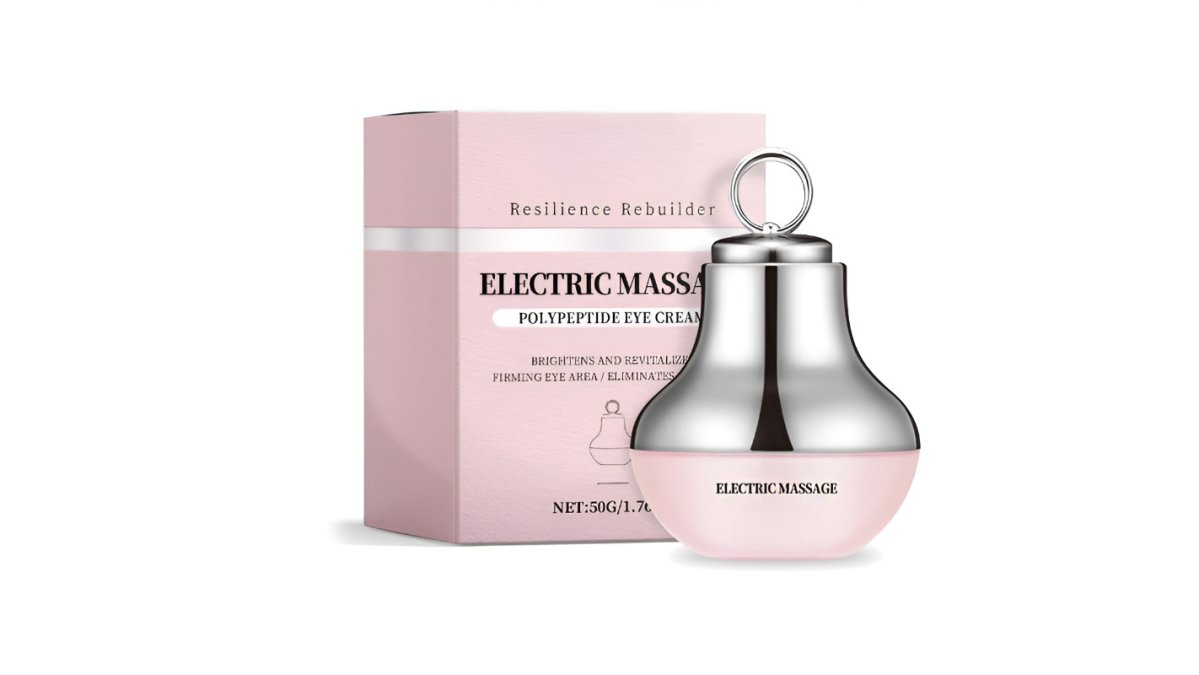
For gentle, effective under-eye care, the Electric Massage Eye Cream combines a firming formula with soft micro-vibration to boost absorption and reduce puffiness. Start with one product, stay consistent for a few weeks, and add the next step only when the first feels automatic.
Frequently Asked Questions
Is it normal to have fine lines under the eyes at 26 years old?
Yes, it is common. The skin around the eyes is the thinnest on the body, and factors like genetics, sun exposure, dehydration, and screen time can cause fine lines to appear in your 20s. At this stage, lines are often dehydration lines rather than permanent wrinkles. A routine focused on hydration, SPF, and gentle application can soften their appearance and slow further development.
Can you actually reverse fine lines around the eyes?
Some fine lines can be improved, especially dehydration lines. Ingredients like hyaluronic acid, glycerin, and niacinamide help plump the skin and reduce their visibility. Retinoids support collagen production over time, which can smooth early lines. Deeper wrinkles may only soften rather than disappear. Consistency with a preventative skincare routine is key, and results typically take 8 to 12 weeks.
What lifestyle habits contribute most to under-eye wrinkles?
Sun exposure without SPF is the biggest contributor, followed by smoking, alcohol, poor sleep, and dehydration. Rubbing your eyes, whether from allergies or fatigue, also breaks down collagen and elasticity. Blue light from screens and repeated facial expressions add cumulative stress. Addressing these habits alongside a topical routine gives the best chance of preventing fine lines around eyes.
What ingredients should I look for in an eye cream?
Look for hyaluronic acid and glycerin for hydration, niacinamide for barrier repair and tone, peptides for firmness, and retinoids for cellular turnover. Vitamin C and antioxidants help defend against free radicals and UV radiation. Cucumber extract and other soothing botanicals can calm delicate skin. Avoid harsh fragrances if your skin is sensitive, and always patch test new products.