

Table of Contents
- The Honest Verdict on High Frequency Wands for Mature Skin
- How High Frequency Wands Actually Work on Aging Skin
- High Frequency Wand Benefits for Aging Skin: What Changes
- How to Use a High Frequency Wand for Wrinkles: A Step-by-Step Guide
- High Frequency Wand vs Microcurrent for Mature Skin
- How Long Does It Take to See Results from a High Frequency Wand?
- Safety, Contraindications, and Common Mistakes to Avoid
- Conclusion: Who Should Buy a High Frequency Wand?
- Frequently Asked Questions
Last Updated: September 7, 2026
The Honest Verdict on High Frequency Wands for Mature Skin
Ask whether a high frequency wand is worth it for mature skin and you will get passionate answers from both camps. The honest verdict: yes, for most women over 45, but only with realistic expectations.
We have evaluated dozens of facial devices against the specific needs of aging skin. The wand does not replace professional treatments, and it will not erase deep wrinkles. What it can do is improve skin texture, reduce the look of fine lines, and support the skin barrier when used consistently.
Below, we walk through the science, the step-by-step routine, how it compares to microcurrent, and the timeline for visible results, plus the safety contraindications most guides skip.
How High Frequency Wands Actually Work on Aging Skin
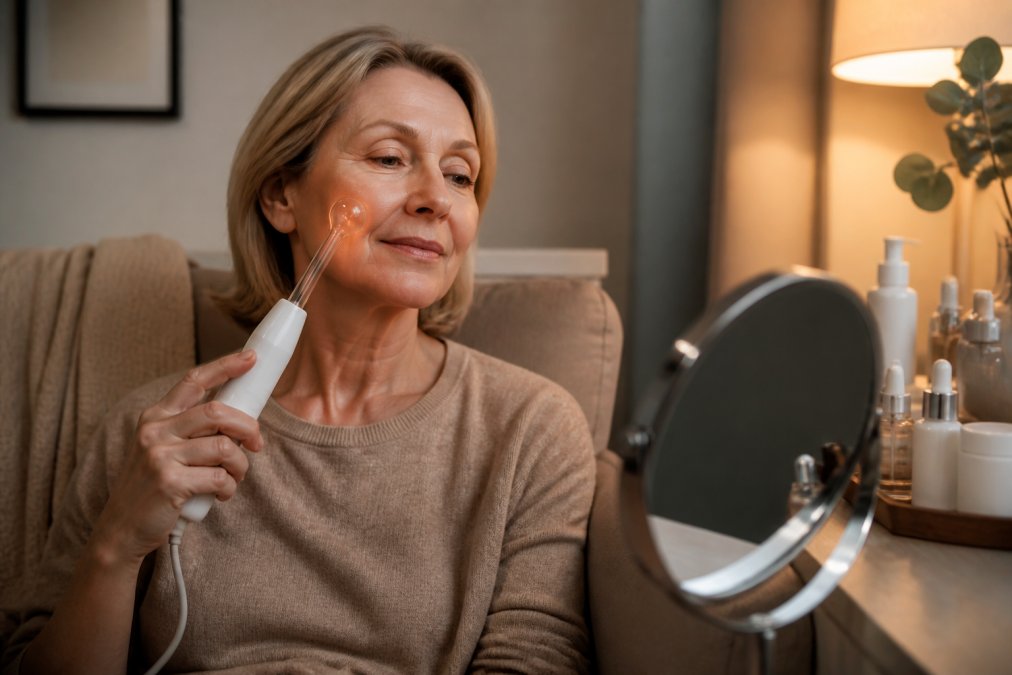
A high frequency wand generates a gentle alternating current through a gas-filled glass electrode, typically argon. When the electrode touches your skin, the current produces a mild thermal and antiseptic effect on the surface rather than penetrating deep into the dermal layer.
This distinction matters for mature skin. Unlike microcurrent, which targets facial muscles, high frequency works primarily on the surface and upper layers. The current increases oxygenation and promotes vasodilation, bringing fresh blood to the area, which supports cellular turnover and gives skin a brighter, more rested appearance.
The thermal energy also has a mild antibacterial effect, helping keep pores clear and calming inflammation, which becomes more common as the skin barrier thins with age. The result is a clearer, smoother surface that reflects light better, which is why many users report an immediate glow after the first session.
High Frequency Wand Benefits for Aging Skin: What Changes
The benefits of a high frequency wand for aging skin fall into two categories: what changes on the surface and what changes over time with consistent use. Immediate effects include reduced puffiness, a brighter complexion, and a temporary tightening sensation.
Collagen and Elastin: The Cellular Turnover Question
The most common claim is that high frequency stimulates collagen synthesis. The science is more nuanced. The current does stimulate fibroblasts and increase adenosine triphosphate (ATP) production in skin cells, giving cells more energy for repair and regeneration.
However, penetration depth is limited. A high frequency wand encourages the skin's own repair mechanisms at the epidermal and upper dermal levels, supporting the skin rather than rebuilding it from scratch. Used alongside a serum with peptides or retinol, the wand can improve topical absorption.
The Evidence Gap: What Clinical Research Actually Shows
Here is the honest truth most affiliate-driven articles omit: there is no large-scale, placebo-controlled clinical trial proving that at-home high frequency wands reduce wrinkles in women over 50. The FDA classifies these devices as low-risk cosmetic tools, not medical devices, so manufacturers are not required to submit the same efficacy data as a prescription drug or Class II medical device (the FDA).
What we do have is decades of clinical use in dermatology offices, primarily for treating acne, where the antibacterial and anti-inflammatory effects are well-documented. For anti-aging, the evidence is largely extrapolated from wound healing and tissue repair studies.
In practice, the wand produces a measurable but modest improvement in skin texture and tone over 8 to 12 weeks, not a structural change comparable to prescription retinoids, chemical peels, or laser resurfacing. Most practitioners position it as an adjunct, not a primary anti-aging therapy.
Oxygenation and Circulation for a Brighter Complexion
The more immediately visible benefit is oxygenation. The electrical current encourages blood flow to the surface, delivering oxygen and nutrients while supporting lymphatic drainage. For mature skin that often looks dull or sallow, this is the difference you notice after the first few sessions.
Improved circulation also helps fade post-inflammatory hyperpigmentation. The combination of better oxygenation, reduced inflammation, and enhanced cellular turnover gradually evens out skin tone, which is why the wand is often described as a "glow tool" first and an anti-wrinkle tool second.
How to Use a High Frequency Wand for Wrinkles: A Step-by-Step Guide
Using a high frequency wand correctly is the difference between visible results and wasted effort. The most common error is holding the electrode in one spot too long, which can cause burning or arcing. Here is the proper routine.
Start with clean, completely dry skin; the current travels unevenly over damp skin and can cause discomfort. Apply a thin layer of a lightweight serum, then choose your electrode. A mushroom-shaped electrode works best for the cheeks and forehead, while a smaller point electrode targets fine lines around the eyes and mouth.
Set the intensity to the lowest level for your first week. Glide the electrode in small, circular motions, keeping constant contact, and spend no more than three minutes on the entire face. Focus on visible fine lines, but avoid the delicate skin directly under the eyes and never use the wand over the eyelids.
Use the wand two to three times per week, not daily. Overuse can dry out the skin and disrupt the moisture barrier. After the session, rinse your face, apply a hydrating moisturizer, and follow with sunscreen the next morning, as the treatment can temporarily increase photosensitivity.
High Frequency Wand vs Microcurrent for Mature Skin
The choice between a high frequency wand and a microcurrent device comes down to what you are trying to change. Microcurrent works on facial muscles to tone and lift; high frequency works on the skin surface and upper layers, improving texture, clarity, and circulation.
For mature skin with noticeable sagging or loss of muscle tone, microcurrent is the stronger option for lifting. For skin that looks dull, has visible pores, or shows fine lines rather than deep folds, the high frequency wand is the better daily tool. Many users find the two complement each other: microcurrent for structure, high frequency for glow.
| Tool | Primary Action | Best For | Results Timeline | Frequency |
|---|---|---|---|---|
| High Frequency Wand | Surface treatment, oxygenation, antibacterial | Fine lines, dullness, texture, breakouts | Immediate glow, gradual over 4-6 weeks | 2-3 times weekly |
| Microcurrent | Muscle stimulation, lifting | Sagging, loss of contour, deeper wrinkles | Gradual over 6-8 weeks | 3-5 times weekly |
The high frequency wand is also more forgiving for beginners, with a gentler learning curve and lower risk of overdoing it. Microcurrent requires careful gel application and precise placement to avoid uneven results.
How Long Does It Take to See Results from a High Frequency Wand?
Most users notice an immediate improvement in skin brightness and puffiness after the first session. This is the oxygenation effect, real but temporary. For changes in fine lines and elasticity, the timeline extends to four to six weeks of consistent use.
The reason is cellular turnover. Mature skin cycles more slowly than younger skin, and visible improvement requires several full cycles. By week three, most users report smoother texture and more even tone; by week six, fine lines around the eyes and mouth often appear softened, though not erased.
Consistency matters more than intensity. Two sessions per week for two months will outperform daily use for one week followed by a three-week gap. Set a schedule and treat it like any other skincare commitment.
Safety, Contraindications, and Common Mistakes to Avoid
A high frequency wand is non-invasive and generally safe for home use, but it is not for everyone. The FDA classifies these devices as low-risk cosmetic tools, yet specific medical conditions rule out their use entirely. According to FDA guidance on cosmetic devices, consumers should follow manufacturer instructions carefully and stop use if irritation develops.
Absolute Contraindications: When You Must Not Use the Wand
The current from a high frequency wand, while mild, is an electrical current, making it unsafe for certain individuals. Do not use a high frequency wand if any of the following apply to you:
- You have a pacemaker, defibrillator, or any other implanted electrical device. The current can interfere with the device's function, potentially causing a serious cardiac event (the FDA). This is a hard stop, not a caution.
- You are pregnant. While no direct harm has been proven, the medical consensus is to avoid electrical stimulation of any kind during pregnancy as a precautionary measure.
- You have a history of seizures or epilepsy. Electrical stimulation can lower the seizure threshold in susceptible individuals.
- You have metal implants in the treatment area. This includes dental implants, facial plates, or permanent jewelry. The current can concentrate around metal, causing discomfort or burns.
- You have active skin cancer or are undergoing radiation therapy in the treatment area.
Relative Contraindications: Proceed with Caution
Beyond the absolute contraindications, use the wand with care or after consulting a dermatologist if you have:
- Rosacea or severe facial redness. The vasodilation effect can temporarily worsen flushing in some users. Start with a single session at the lowest intensity and monitor your skin for 24 hours.
- Autoimmune skin conditions like psoriasis or eczema. The thermal and circulatory effects can trigger a flare in some individuals, though others find it calming. There is no consistent clinical guidance, so err on the side of caution.
- Very thin or fragile skin, common after long-term topical steroid use. The mild heat can be irritating. If your skin tears easily, skip the wand entirely.
Integrating with Professional Treatments: The Missing Safety Guide
If you are over 50, you may also see a dermatologist or esthetician for professional treatments. Here is the safety guidance most articles skip: do not use your home wand immediately before or after professional procedures.
- After a chemical peel: Wait at least 7 to 10 days, or until all peeling has stopped and your skin barrier feels fully restored. The wand's thermal effect on freshly exfoliated skin can cause significant irritation and hyperpigmentation.
- After microneedling: Wait a minimum of 2 weeks. Microneedling creates micro-channels that take time to close and heal. Applying electrical current to healing skin increases the risk of infection and scarring.
- After laser resurfacing or IPL: Wait 3 to 4 weeks, or until your dermatologist clears you for regular skincare products. The skin is in a compromised state, and the wand's current can interfere with the healing cascade.
- Before a professional treatment: Stop using the wand 3 to 4 days before any chemical peel, microneedling, or laser appointment. This gives your skin barrier time to normalize and reduces the risk of over-sensitization.
Common Mistakes to Avoid
Common mistakes include using the wand on damp skin, which causes uneven current and discomfort, and holding the electrode stationary, which can create arcing and burns. Another frequent error is skipping moisturizer afterward, as the treatment can be mildly drying and mature skin needs barrier support.
If combining the wand with prescription retinoids or professional chemical exfoliation, give your skin a day of rest between treatments. Overlapping strong actives with the wand's thermal effect can trigger irritation. When in doubt, start with once per week and increase gradually.
Conclusion: Who Should Buy a High Frequency Wand?
A high frequency wand is worth it for mature skin when you understand what it can and cannot do. It is the right purchase if your concerns are dullness, fine lines, enlarged pores, and uneven texture. It is the wrong purchase if you expect it to lift sagging skin or erase deep wrinkles.
For most women over 45, the wand earns its place as a weekly glow treatment that also enhances your serums' effectiveness. It is gentle, non-invasive, and delivers visible surface improvements without downtime. Pair it with a solid moisturizer and sunscreen routine, and it becomes a reliable part of your anti-aging arsenal.
If you are building a home facial toolkit, consider the Face Massager Mini Device from Ageless Glow (USD 336.98). For targeted eye care, the Electric Massage Eye Cream (USD 31.99) combines gentle vibration with a firming formula to smooth fine lines and reduce puffiness.


Frequently Asked Questions
Do high frequency wands really work for mature skin wrinkles?
High frequency wands work by delivering mild electrical current through argon gas to oxygenate skin and stimulate cellular turnover. For mature skin, this can support collagen synthesis and improve fine line appearance over time. They are most effective for shallow wrinkles and overall skin texture, not deep folds. Consistent use, typically 2-3 times per week for 8-12 weeks, is necessary to see visible changes. Think of it as a maintenance tool that complements, rather than replaces, your skincare routine.
What are the downsides of using a High-Frequency Wand?
The main downsides include the time commitment and the risk of user error. Results are gradual and require consistent use over months. Incorrect technique, such as holding the wand in one spot too long, can cause burns or redness. The devices also require careful cleaning to maintain hygiene. For mature skin with existing sensitivity, the current can feel uncomfortable. Always start on a low intensity level and patch test a small area before full-face use.
How often should you use a high frequency wand on mature skin?
For mature skin, limit sessions to 2-3 times per week. Each session should last no more than 10-15 minutes total for the face. Overuse can dry out the skin and compromise the skin barrier, especially if you have post-menopausal dryness. Consistency matters more than frequency. Pair each session with a hydrating serum afterward to replenish moisture. If you have sensitive skin or rosacea, reduce usage to once per week to gauge tolerance.
Can high frequency wands cause skin damage?
When used correctly, high frequency wands are considered non-invasive and safe. However, misuse can lead to burns, hyperpigmentation, or broken capillaries. Never use the device on broken skin, active acne with open lesions, or areas with metal implants. Avoid use if you are pregnant or have a pacemaker. Always follow the manufacturer's instructions and keep the wand moving in circular motions to prevent heat buildup. Consulting a dermatologist first is wise for mature skin with pre-existing conditions.
The honest answer to whether a high frequency wand is worth it for mature skin is yes, with caveats. It will not reverse time, but it will make your skin look brighter, smoother, and more rested, and it will help your skincare products work harder. Get started with Ageless Glow and build a routine that delivers visible results for fine lines and skin firmness.