

Table of Contents
- Facial Steamer vs Exfoliating Scrub for Blackheads: Side-by-Side Comparison
- How to Use a Facial Steamer for Blackheads
- Physical vs Chemical Exfoliation for Blackheads
- Facial Steaming Frequency: How Often Is Safe?
- The Correct Order: Steam First, Then Exfoliate
- Risks of Over-Exfoliation and Over-Steaming
- Alternative Extraction Methods for Stubborn Blackheads
- Frequently Asked Questions
Last Updated: September 20, 2026
Facial Steamer vs Exfoliating Scrub for Blackheads: Side-by-Side Comparison
Choosing between a facial steamer vs exfoliating scrub for blackheads comes down to one question: soften the plug or scrub it away? Steam loosens sebum and dead skin cells so pores release their contents with less force. A scrub physically buffs the surface. They are not interchangeable, and using both in the wrong order is where most people damage their skin.
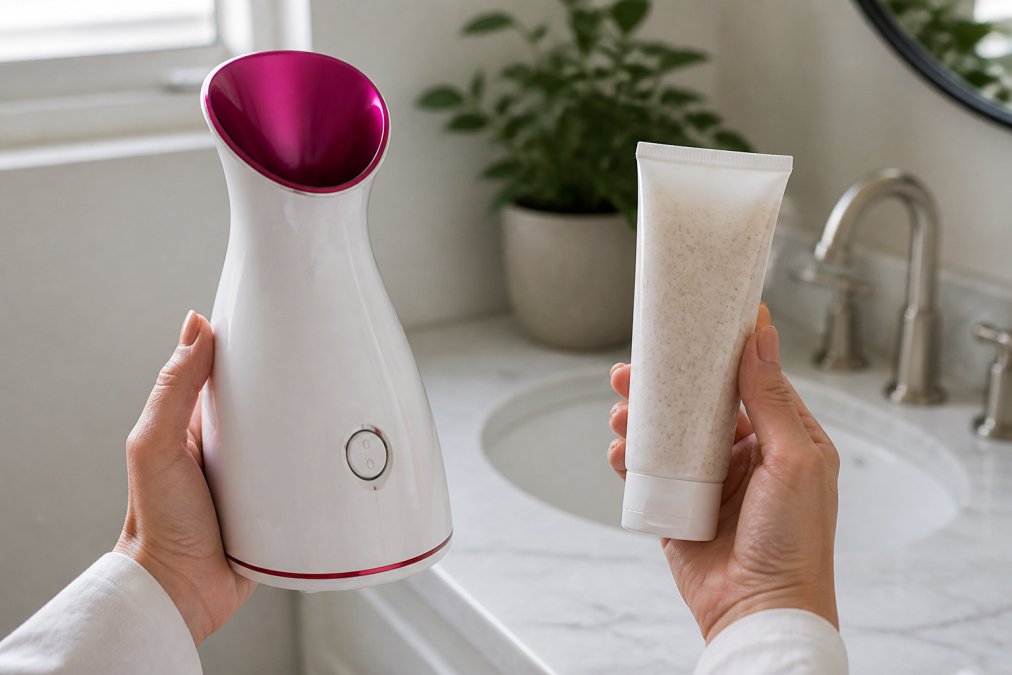
How Steam and Scrubs Differ
Facial steaming is a heat-based method that softens the sebum plug inside a pore so it releases more easily. Warm vapor raises epidermal temperature, loosens hardened oil, and increases blood flow.
Steam targets the contents. Scrubs target the surface.
Pros and Cons of Each Method
Each method has a clear strength and a clear limit.
| Method | Best For | Main Strength | Main Limitation | Risk |
|---|---|---|---|---|
| Facial steamer | Softening sebum and loosening debris | Reaches the plug inside the pore | Does not remove the plug on its own | Over-steaming weakens the skin barrier |
| Exfoliating scrub | Surface texture and shallow comedones | Immediate smoothness | Cannot reach deep blackheads | Micro-tears and irritation if overused |
| Steam + gentle exfoliation | Most blackhead-prone skin | Softens first, then clears the surface | Requires correct order and spacing | Compounding irritation if done back-to-back |
How to Use a Facial Steamer for Blackheads
The correct way to use a facial steamer for blackheads is to steam clean skin for 8 to 10 minutes, then gently wipe away what the pores have released. The goal is softening, not sweating your face off.
Step-by-Step Steaming Routine
Total Time: 15 minutes Difficulty: Beginner
What You'll Need
- Facial steamer
- Gentle cleanser
- Soft cotton pad or clean towel
- Moisturizer or soothing essence
- Cleanse first. [Time: 2 minutes] Remove makeup, sunscreen, and surface oil. Steam cannot penetrate through a layer of product.
- Position your face 8 to 10 inches from the steam. [Time: 1 minute] Closer is not better. You want warm mist, not heat that stings.
- Steam for 8 to 10 minutes. [Time: 8-10 minutes] Keep your eyes closed and breathe normally.
- Wipe gently. [Time: 1 minute] Use a soft pad to lift loosened debris. Do not press or scrape.
- Follow with hydration. [Time: 1 minute] Apply a moisturizer or soothing essence while skin is still damp.
Expected Result: Softer, more pliable skin and pores that look less congested, not empty. Steam prepares the skin. It rarely finishes the job.
Physical vs Chemical Exfoliation for Blackheads
Physical and chemical exfoliation both clear dead skin cells, but they behave very differently on freshly steamed skin, and that difference matters more for blackheads than most guides admit.
- AHAs (alpha-hydroxy acids), glycolic and lactic acid. Water-soluble, work on the surface, good for texture and dullness. Glycolic has the smallest molecule and penetrates fastest; lactic is gentler and hydrating.
- BHAs (beta-hydroxy acids), salicylic acid. Oil-soluble, which is the key property for blackheads. It travels into the sebum-filled pore and breaks down the plug from inside the lining.
Why Chemical Exfoliation Is Safer After Steam
Here is the angle most guides skip. Steam softens the stratum corneum, the outermost layer of dead cells, and temporarily increases permeability. That releases sebum, but also makes skin more vulnerable to mechanical trauma.
How to Sequence Them
If you steam and want to exfoliate, the safer path is:
- Steam for 8 to 10 minutes to soften debris.
- Wait at least 24 hours. Let the barrier recover before applying any acid.
- Apply a BHA (salicylic acid) on a non-steam day to work inside the pore.
- Reserve AHAs for surface texture, not blackheads, they do not reach the plug.
When a Physical Scrub Is Still Fine
A gentle physical scrub is not the enemy. For surface texture, dullness, and shallow comedones on unsteamed skin, a soft scrub with rounded beads is acceptable once a week. The problem is pressure and timing, scrubbing hard, or on softened skin, causes damage.
Facial Steaming Frequency: How Often Is Safe?
Steam once or twice a week is safe for most skin. Oily, congestion-prone skin can handle twice weekly. Dry or sensitive skin should stay closer to once a week, or every ten days.
The Correct Order: Steam First, Then Exfoliate
Steam first, then exfoliate, and only if your skin tolerates both. Steam softens debris; a gentle exfoliant clears what has loosened. Reversing the order means scrubbing firm skin, which encourages harder rubbing and more irritation.
Electric Pore Cleaner & Blackhead →
- Day 1: Steam for 8-10 minutes, then cleanse gently. No scrub.
- Day 3: Gentle chemical exfoliation, no steam.
- Day 5: Rest day, hydration only.
- Day 7: Repeat, or skip if skin feels sensitive.
Risks of Over-Exfoliation and Over-Steaming
Over-exfoliation damages the skin barrier, and a damaged barrier makes blackheads worse, not better. The harder you scrub, the more oil your skin produces to compensate, and the more visible your pores become.
What the Skin Barrier Actually Does
The stratum corneum is your barrier, dead cells (bricks) held together by lipids like ceramides and cholesterol (mortar). It keeps water in and irritants out. When you strip it, two things happen:
- Transepidermal water loss rises. Skin loses moisture faster, feels tight, and looks dull.
- Inflammation increases. The barrier signals the sebaceous glands to ramp up oil production, which feeds more blackheads.
Micro-Tears on Steamed Skin
Steam softens the stratum corneum and increases permeability. That releases sebum, but also means skin offers less resistance to mechanical force. Rubbing granules across steamed skin can create micro-tears, invisible at first, but showing up hours later as redness, stinging, or new breakouts.
Warning Signs to Watch For
- Persistent redness or stinging after cleansing
- Flaking, tight, or shiny skin
- New breakouts in areas that were previously clear
- Sensitivity to products that never bothered you before
- A raw, burning sensation when applying moisturizer
If you see two or more of these, stop all exfoliation and steaming for at least a week.
Over-Steaming: The Other Extreme
Long, hot sessions strip natural oils and leave skin tight and reactive. Ten minutes is the ceiling for most people. Beyond that, you are not loosening more sebum, you are dehydrating the barrier and dilating capillaries, causing flushing that can linger.
How to Repair a Compromised Barrier
If you have overdone it, the fix is subtraction, not addition:
- Stop all exfoliation and steaming for 7 to 10 days.
- Cleanse with a gentle, non-foaming cleanser, no acids, no scrubs, no hot water.
- Apply a barrier-repair moisturizer with ceramides, niacinamide, or cholesterol.
- Use an occlusive like petrolatum at night to reduce water loss.
- Reintroduce actives slowly, one product at a time, spaced a week apart.
The Safe Frequency Ceiling
For most skin, the ceiling is:
- Steaming: once or twice a week, 8 to 10 minutes max
- Chemical exfoliation: two to three times a week, on non-steam days
- Physical scrubs: once a week at most, and never on steamed skin
If your skin is dry or sensitive, cut those numbers in half. The goal is not maximum exfoliation. It is consistent, low-level clearing that the barrier can tolerate.
Alternative Extraction Methods for Stubborn Blackheads
When steam and exfoliation are not enough, a suction-based tool can help. Avoid manual extraction with fingers or metal tools at home, it is the fastest route to scarring and infection.
Frequently Asked Questions
Can a face steamer help remove blackheads?
Yes, a facial steamer helps soften the sebum and dead skin cells clogging your pores, making them easier to remove. Steam won't pull blackheads out on its own, but it loosens debris so a gentle cleanser or extraction tool can clear them more effectively. For best results, steam for 8-10 minutes, then follow with a gentle cleanser and an exfoliating product like the Orange Facial Exfoliating Gel to lift away loosened impurities.
Do facial scrubs get rid of blackheads?
Physical scrubs can remove some blackheads by sloughing off the top layer of dead skin cells, but they rarely reach deep enough to clear stubborn blockages. Over-scrubbing can cause micro-tears and irritate your skin barrier. For a safer approach, use a gentle exfoliating gel once or twice a week, and consider a chemical exfoliant like salicylic acid to penetrate deeper into the pore. Always follow with a hydrating moisturizer to support your skin barrier.
Which should be done first, steaming or scrubbing?
Steam first, then exfoliate. Steaming softens the sebum and debris inside your pores, so when you follow with a gentle scrub or cleanser, it's easier to remove loosened impurities without harsh rubbing. Wait a few minutes after steaming for your skin to cool slightly, then use light pressure. This order minimizes irritation and helps you get more from both steps.
How long should I steam my face to get rid of blackheads?
Keep steaming sessions to 8-10 minutes. That's enough time to soften debris without over-hydrating or irritating your skin. If you have sensitive skin, start with 5 minutes and see how your skin responds. Using a facial steamer more than 2-3 times per week can lead to dryness or inflammation, so space sessions out and always follow with a gentle cleanser and moisturizer.
Can I combine facial steaming and exfoliating in one routine?
Yes, you can combine them in one routine, but do it in the right order and with gentle products. Steam for 8-10 minutes, pat your face dry, then apply a mild exfoliating gel or scrub using light circular motions. Rinse thoroughly and follow with a hydrating essence or moisturizer. Avoid combining steam with harsh physical scrubs or strong chemical peels on the same day, as that can compromise your skin barrier and cause irritation.