

Table of Contents
- Why Acne and Aging Collide After 30
- Retinol for Acne-Prone Skin: How to Get Results Without the Peel
- The Best Non-Comedogenic Anti-Aging Serum Ingredients
- How to Prevent Adult Acne While Treating Fine Lines
- How to Layer Actives Without Causing Irritation
- Building a Daily Routine for Anti-Aging Skincare for Acne-Prone Skin
- Hormonal Acne vs. Aging Skin: What Changes After 40
- Frequently Asked Questions
Last Updated: September 29, 2026
Why Acne and Aging Collide After 30
Anti-aging skincare for acne-prone skin is a balancing act: the ingredients that smooth fine lines often trigger the breakouts you're trying to prevent. Sebum production starts to slow in your 30s, yet pores still clog, while collagen production declines and cell turnover drags, leaving dead skin to trap oil. The result is adult acne sitting right alongside fine lines. According to the American Academy of Dermatology, adult acne affects a meaningful share of women well past their teens, and it rarely behaves like teenage acne. The fix isn't stronger products.
Retinol for Acne-Prone Skin: How to Get Results Without the Peel
Retinol is the rare active that treats both concerns at once: it speeds cell turnover to unclog pores while supporting collagen production to soften wrinkles. The catch is irritation. A common mistake is starting too strong, too fast, then quitting when the skin barrier rebels.
Choosing a Retinol Strength That Respects Your Barrier
Start with a low-concentration retinol two nights a week, buffered over moisturizer. Build tolerance before increasing frequency. If you want a gentler entry point, the Korean Retinol Moisturizing Essence & Exfoliating Eye Cream pairs retinol with deep hydration, so it exfoliates and rejuvenates without stripping sensitive skin.

The Best Non-Comedogenic Anti-Aging Serum Ingredients
A non-comedogenic anti-aging serum delivers wrinkle-fighting actives without pore congestion. The ingredients that earn their place: niacinamide for sebum regulation and pore refinement, hyaluronic acid for hydration, and antioxidants for environmental defense.

Niacinamide and Hyaluronic Acid: The Pore-Safe Hydration Pair
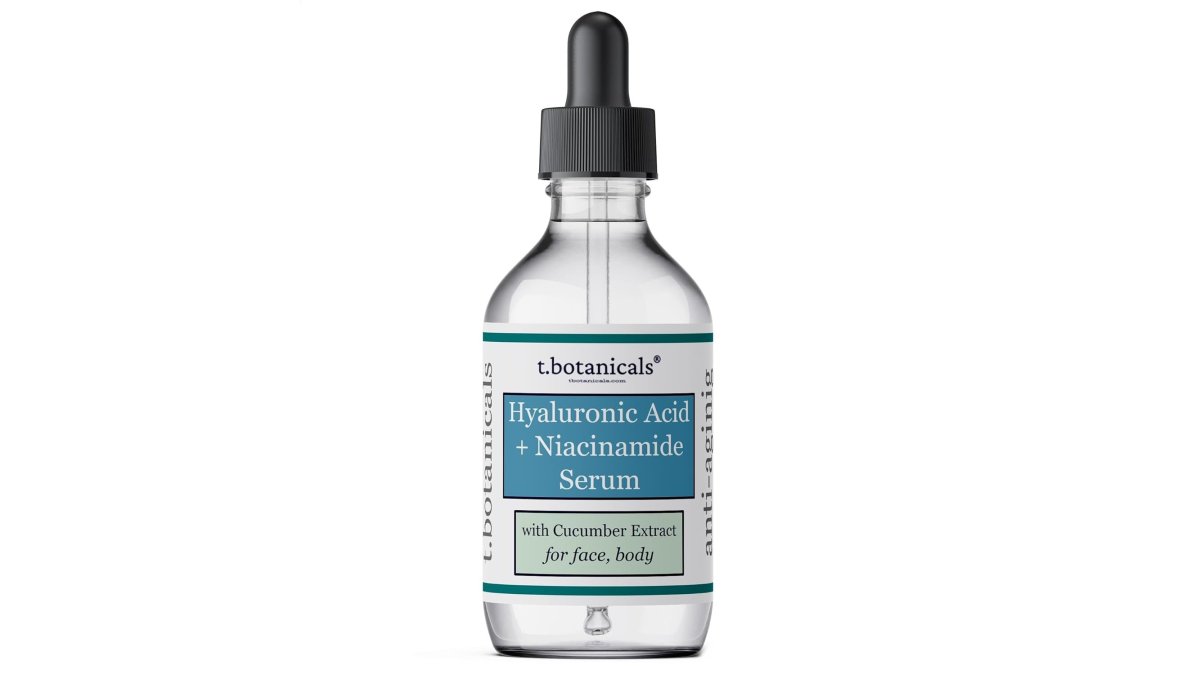
Niacinamide balances oil and calms inflammation; hyaluronic acid plumps fine lines by attracting moisture. Together they hydrate without heaviness. The Hyaluronic Acid & Niacinamide Hydrating Serum combines both with soothing cucumber extract, refining pores while it smooths early lines.
| Ingredient | Primary Benefit | Best For |
|---|---|---|
| Niacinamide | Sebum regulation, pore refinement | Oily, congestion-prone skin |
| Hyaluronic acid | Deep hydration, plumping | Dehydrated, fine-line-prone skin |
| Retinol | Cell turnover, collagen support | Wrinkles plus clogged pores |
| Salicylic acid | Pore clearing | Active breakouts |
How to Prevent Adult Acne While Treating Fine Lines
Preventing adult acne means keeping pores clear without stripping the barrier that keeps aging skin resilient. Cleanse gently, treat bacteria at the source, and never skip moisturizer. For breakout-prone skin, the Hypochlorous Acid Facial Cleanser Spray targets acne-causing bacteria and flushes pores while calming redness, all without over-drying. A Cleveland Clinic overview of adult acne notes that adult breakouts often cluster along the jaw and chin, which points to hormonal drivers as much as surface congestion.

How to Layer Actives Without Causing Irritation
Layering is where most routines fail, and it is the single biggest reason people abandon anti-aging actives. The problem is not the ingredients themselves, it is stacking two barrier-stressing actives in the same session. Retinol accelerates cell turnover by speeding up how quickly surface skin sheds, while salicylic acid and other beta hydroxy acids dissolve the intercellular "glue" holding dead cells together.
Safe vs. Unsafe Active Pairings
| Pairing | Same Session? | Why |
|---|---|---|
| Retinol + salicylic acid (BHA) | No | Both accelerate exfoliation; together they overwhelm the barrier |
| Retinol + glycolic or lactic acid (AHA) | No | Same overlap, plus AHAs lower skin pH and can destabilize retinol |
| Retinol + benzoyl peroxide | No | Benzoyl peroxide can oxidize and deactivate retinol, and both dry the skin |
| Retinol + niacinamide | Yes | Niacinamide supports the barrier and buffers retinol irritation |
| Retinol + hyaluronic acid | Yes | Hydration reduces flaking without interfering with turnover |
| Salicylic acid + niacinamide | Yes | BHA clears the pore, niacinamide calms oil and redness |
| Vitamin C + sunscreen | Yes (morning) | Antioxidant support under SPF, no conflict |
| Vitamin C + retinol | Separate sessions | Different pH needs; use vitamin C in the morning, retinol at night |
A Weekly Layering Schedule That Works
- Morning, every day: gentle pH-balanced cleanse, hydrating serum on damp skin, moisturizer, then broad-spectrum sunscreen with SPF 30 or higher.
- Monday, Wednesday, Friday nights: cleanse, hydrating serum, a pea-sized amount of low-concentration retinol, moisturizer.
- Tuesday and Thursday nights: cleanse, hydrating serum, a BHA treatment on breakout-prone zones only, moisturizer.
- Weekend nights: cleanse, hydrating serum, moisturizer, and a soothing mask if skin feels reactive. No actives.
How to Tell You Are Over-Layering
A common pattern is a routine that feels fine for the first week, then turns. Watch for persistent stinging when you apply anything, tightness that moisturizer cannot fix, flaking around the mouth and nose, or breakouts appearing in new areas rather than the usual spots. Any of those signals means drop to one active, cut frequency in half, and lean on hydration and barrier-supporting ingredients until skin settles.
Building a Daily Routine for Anti-Aging Skincare for Acne-Prone Skin
A workable routine is short enough to repeat daily and flexible enough to adjust when skin turns reactive. The goal is to treat breakouts and fine lines in one regimen without asking any single product to do both jobs.
Morning Routine
- Cleanse. Use a gentle, pH-balanced cleanser. If skin is oily, a foaming formula is fine; if it is dry or reactive, choose a cream or gel cleanser. Rinse with lukewarm water, never hot.
- Hydrating serum on damp skin. Apply a hyaluronic acid and niacinamide serum while skin is still damp so the humectants have water to pull in. This step plumps fine lines and regulates oil without heaviness.
- Moisturizer. Choose a lightweight, non-comedogenic gel or lotion in summer and a slightly richer cream in winter. Acne-prone skin still needs moisture; skipping it triggers more oil production, not less.
- Sunscreen. Broad-spectrum SPF 30 or higher, every morning, rain or shine. This is the single most effective anti-aging step, and it also prevents the post-inflammatory dark marks that linger after breakouts heal.
Evening Routine
- Cleanse. Remove sunscreen and makeup thoroughly. If you wore heavy SPF, a double cleanse (oil or balm first, then a gentle water-based cleanser) reduces the chance of clogged pores overnight.
- Treat. This is your active slot. Use retinol or a BHA, not both, following the layering schedule above.
- Moisturize. Seal everything in. On retinol nights, apply moisturizer before and after the active to buffer irritation.
- Spot-treat only if needed. Keep a targeted treatment for individual breakouts rather than applying it across the whole face.
Choosing Textures for Your Skin Type
Texture matters as much as ingredients. Oily, congestion-prone skin usually does best with gels, serums, and lotions, which absorb quickly and are less likely to sit in pores. Dry or dehydrated skin that still breaks out often needs a cream or a serum layered under a lighter moisturizer, because heavy occlusives can trap oil while rich creams can still be non-comedogenic.
Korean Retinol Moisturizing Essence & →
Adapting the Routine on Reactive Nights
Some nights skin will not tolerate an active. On those nights, skip the retinol or acid entirely and focus on calming and barrier support. A soothing sheet mask with centella asiatica can reduce redness and help skin recover before you resume actives. For evenings when skin is calm, a retinol face cream smooths wrinkles and evens tone while hydrating botanicals keep sensitive skin comfortable.
What to Skip
Avoid stacking multiple exfoliants, using harsh scrubs on active breakouts, and applying more than one new product at a time. Introduce one new active every two weeks so you can identify what is working and what is causing irritation. If a product stings on application, it is not a sign it is working; it is a sign the barrier needs a break.
Hormonal Acne vs. Aging Skin: What Changes After 40
Diet and lifestyle matter too. Research summarized by Harvard Health Publishing links high-glycemic diets and stress to acne flares, so sleep and steady blood sugar support your topical routine.
Frequently Asked Questions
Which anti-aging cream is best for acne-prone skin?
Look for a non-comedogenic formula that combines retinol with hydrating botanicals. The Retinol Face Cream from Ageless Glow ($41.99) is lightweight, absorbs quickly, and is suitable for sensitive skin. It targets fine lines and uneven tone without clogging pores, making it a solid choice for acne-prone skin that also needs anti-aging support.
Does retinol for acne-prone skin actually help with both wrinkles and breakouts?
Yes. Retinol accelerates cell turnover, which helps clear pore congestion and reduces the appearance of fine lines over time. Start with a low concentration twice a week, then build up. The Korean Retinol Moisturizing Essence & Exfoliating Eye Cream ($14.99) pairs retinol with deep hydration, so you get renewal without stripping your skin barrier.
Can anti-aging creams cause breakouts?
Some can if they contain heavy oils, fragrances, or comedogenic ingredients. Choose products labeled non-comedogenic and patch-test first. A non-comedogenic anti-aging serum like the Hyaluronic Acid & Niacinamide Hydrating Serum ($95.99) delivers hydration and pore refinement without clogging. If you are prone to adult acne, avoid thick creams and opt for lightweight essences or gels.
How do you build a skincare routine that targets both wrinkles and acne?
Keep it simple: a gentle cleanser, a non-comedogenic anti-aging serum, a retinol treatment at night, and a moisturizer plus sunscreen in the morning. The Hypochlorous Acid Facial Cleanser Spray ($69.99) calms breakout-causing bacteria without over-drying. Introduce one active at a time and wait two weeks before adding another to see how your skin responds.
How often should you exfoliate if you have acne and fine lines?
Two to three times a week is enough for most people. Over-exfoliating damages the skin barrier and triggers more breakouts. Use a gentle chemical exfoliant with salicylic or lactic acid, and skip physical scrubs. If you use retinol, alternate nights so you are not exfoliating and renewing on the same evening. Always follow with a hydrating moisturizer.
Managing anti-aging skincare for acne-prone skin comes down to patience and the right formulas, not more products. Ageless Glow builds targeted, nutrient-rich solutions for exactly this overlap, from retinol essences to barrier-soothing masks, so you can treat fine lines and breakouts in one routine. Explore the collection and find the combination that fits your skin. Add to cart and start your routine tonight.